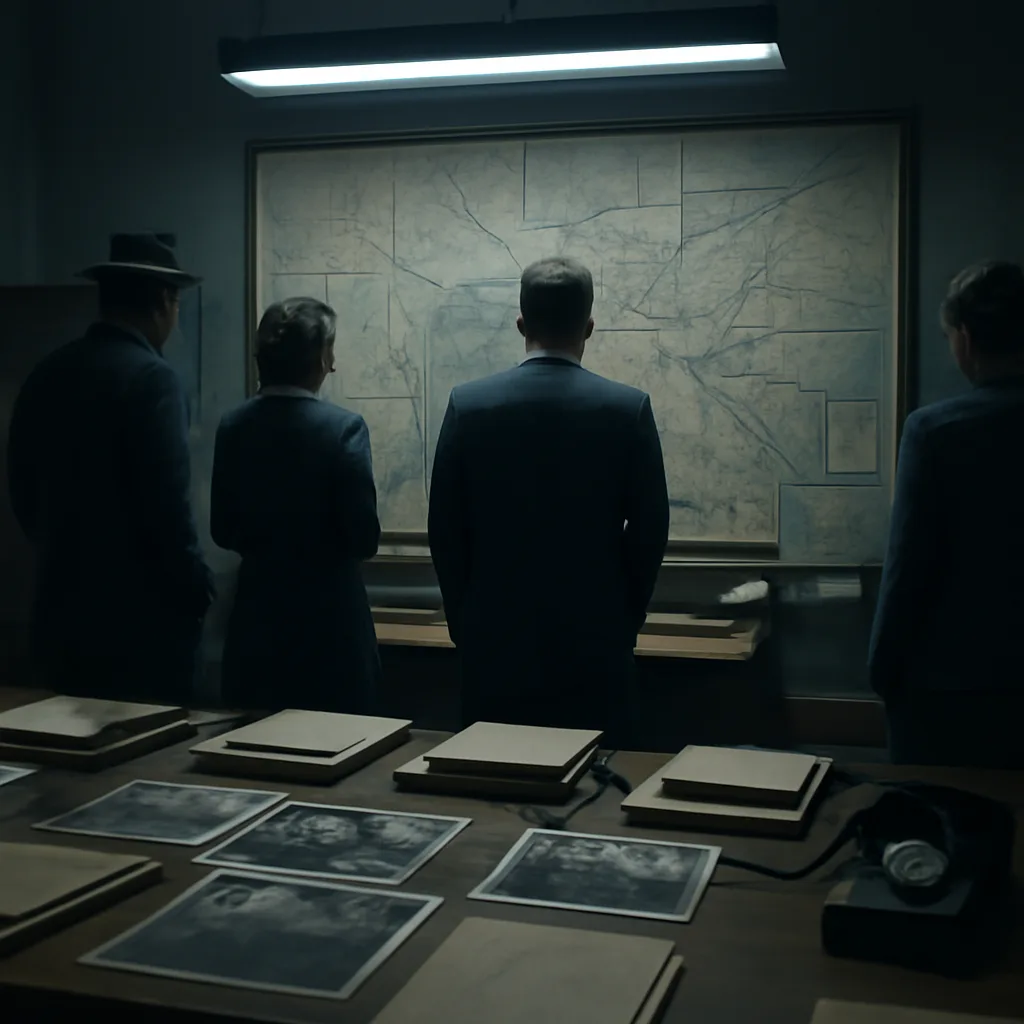
On February 10, 1957, a milestone in criminal investigation and forensic psychology reached public notice with the publication of what is widely regarded as the first documented profile of a serial offender. The profile was prepared by law enforcement and behavioral analysts to characterize an unknown perpetrator based on crime scene evidence, victimology, and patterns of behavior. This work represented an early professional application of systematic behavioral inference intended to assist investigators in narrowing suspect pools and anticipating future actions. Historical context The mid-20th century saw growing interest in applying psychological concepts to policing. Investigative methods prior to this period relied heavily on physical evidence, witness statements, and traditional detective work. After World War II, advances in psychiatry, forensic science, and statistical methods encouraged interdisciplinary approaches. The 1950s in particular produced a number of high-profile violent crimes that pressured police departments to seek new tools for understanding offenders whose crimes lacked obvious motive or forensic linkage. What the 1957 profile represented The 1957 document synthesized observable elements from multiple crime scenes—timing, choice of victim, method of approach, and post-offense behavior—into a coherent set of inferences about the offender’s likely age range, employment status, personality traits, and probable habits. Its format emphasized behavioral patterns over physical description when direct forensic evidence was lacking. Investigators used it to generate leads, prioritize interviews, and propose preventive measures. The profile also circulated in academic and professional circles, influencing early training in criminal psychology and investigative strategy. Limits and disputes Claims that the 1957 profile was the absolute first instance of offender profiling should be treated cautiously. Earlier informal or localized attempts to infer offender characteristics from crime patterns appear in policing records and psychological literature dating back decades. What distinguishes the 1957 case is its documentation, broader distribution, and recognition by contemporaneous law-enforcement and academic communities as a formal analytical product. Scholars note that profiling techniques continued to evolve substantially after 1957, incorporating more systematic data collection and theoretical grounding in the ensuing decades. Impact and legacy The 1957 profile helped legitimize behavioral analysis as a tool in criminal investigations and spurred further collaboration between police departments and mental-health professionals. Over time, profiling methods became more sophisticated, integrating statistical analysis, victimology, and criminological theory. By the late 20th century, formalized units and training programs were established to produce behavioral assessments. The 1957 publication is often cited in histories of forensic psychology and investigative practice as an early, influential example of applying behavioral inference to unsolved serial offenses. Why it matters today Understanding the origins of offender profiling clarifies both its strengths and limitations. The 1957 profile illustrates the potential for behavioral analysis to generate investigative hypotheses when physical evidence is sparse, while also underscoring the need for caution: early profiles relied heavily on expert judgment and could reflect contemporary biases. Current standards emphasize empirical validation, transparent methodology, and multidisciplinary review—developments that trace back to the early experiments and publications of the 1950s. Further research Researchers and readers interested in this episode should consult contemporaneous law-enforcement reports, archival records of the agencies involved, and scholarly reviews in the history of forensic psychology. Because some details of early cases and internal reports remain fragmented or were never publicly released, comprehensive assessments rely on cross-referencing archival materials and later historiographical studies.