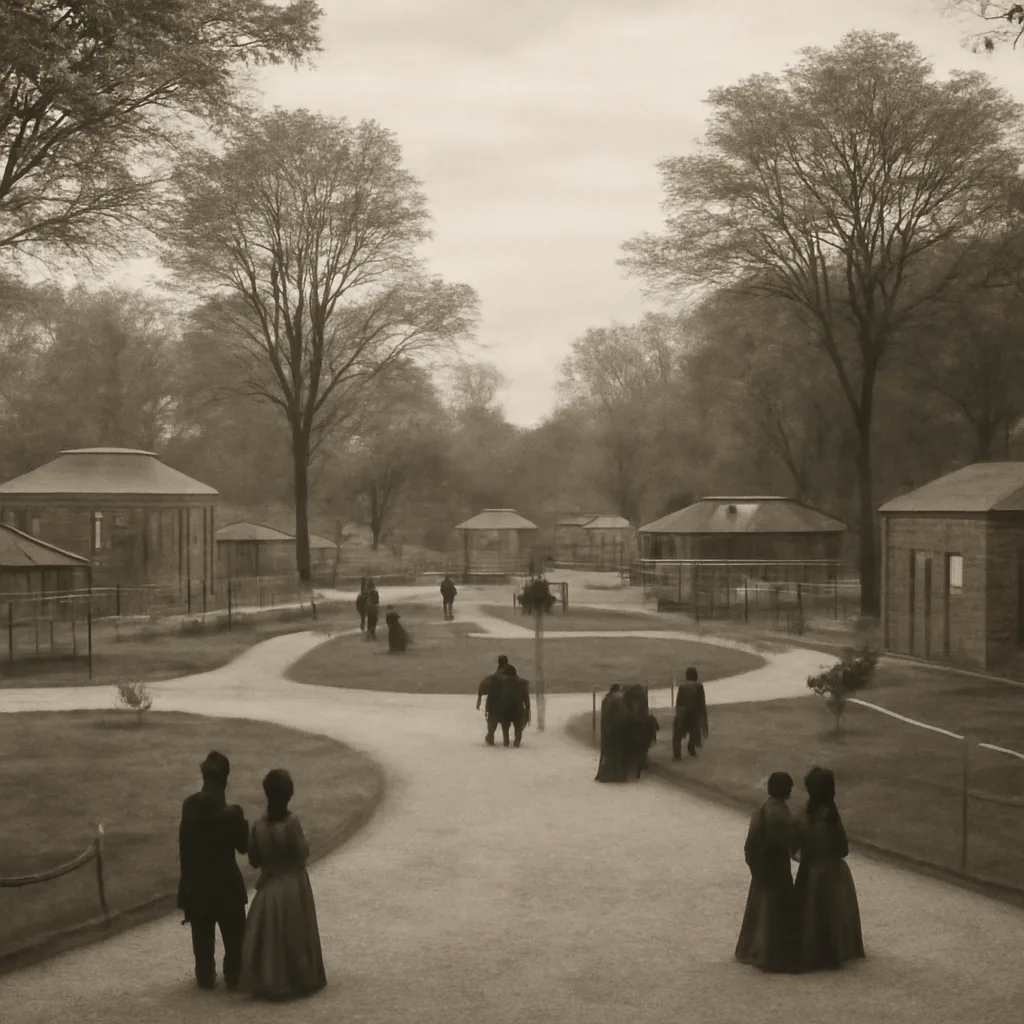
On March 27, 1874, the Zoological Garden in West Fairmount Park, Philadelphia, opened to the public. Established by the Fairmount Park Commissioners and supported by civic and private interests, the garden is widely cited by historians as the first public zoological garden in the United States—organized as a municipal cultural and educational institution rather than a private menagerie or traveling collection. Origins and purpose The zoo’s origins grew out of 19th-century urban park and civic-improvement movements. Philadelphia’s park system, shaped earlier in the century by the development of Fairmount Park and the desire for public green space, provided a setting seen as suitable for a zoological institution. Advocates framed the garden as a space for scientific study, moral improvement, and family recreation: an orderly, landscaped environment where citizens could observe animals and learn about natural history. Collections and early layout Early reports describe a collection of both exotic species—brought from abroad or acquired via exchanges—and native North American animals. The garden’s initial enclosures and buildings were typical of the era: cages, fenced paddocks, and glass houses in a landscaped park setting. Architectural treatments and exhibit design reflected contemporary ideas about animal display, emphasizing classification and accessibility for visitors rather than modern standards of habitat simulation. Public access and reception The opening attracted public interest and press coverage, and the zoo became part of Philadelphia’s civic identity. As a municipally supported institution, it contrasted with private menageries and contributed to the broader American trend of creating public cultural institutions—museums, libraries, and parks—during the late 19th century. Attendance and local engagement validated proponents’ hopes that a public zoo could provide educational opportunities and wholesome leisure. Context and legacy Scholarly accounts attribute a pioneering status to Philadelphia’s 1874 zoo because it was established by public authorities for broad citizen access. However, historians note distinctions among early U.S. animal collections: some earlier private or semi-public collections existed, and the precise claim of “first” can depend on definitions (for example, public ownership, continuous operation, or formal charter). Despite such nuances, Philadelphia’s Zoological Garden clearly influenced later American zoos and the institutionalization of zoological parks as civic amenities. Throughout the 20th century, changing attitudes toward animal welfare, exhibit design, and conservation led to major transformations in Philadelphia’s zoo facilities, programming, and mission—shifts mirrored at many older zoos worldwide. Today, historians place the 1874 opening in the larger story of urban reform, scientific popularization, and the evolving relationship between cities and nature in the United States.