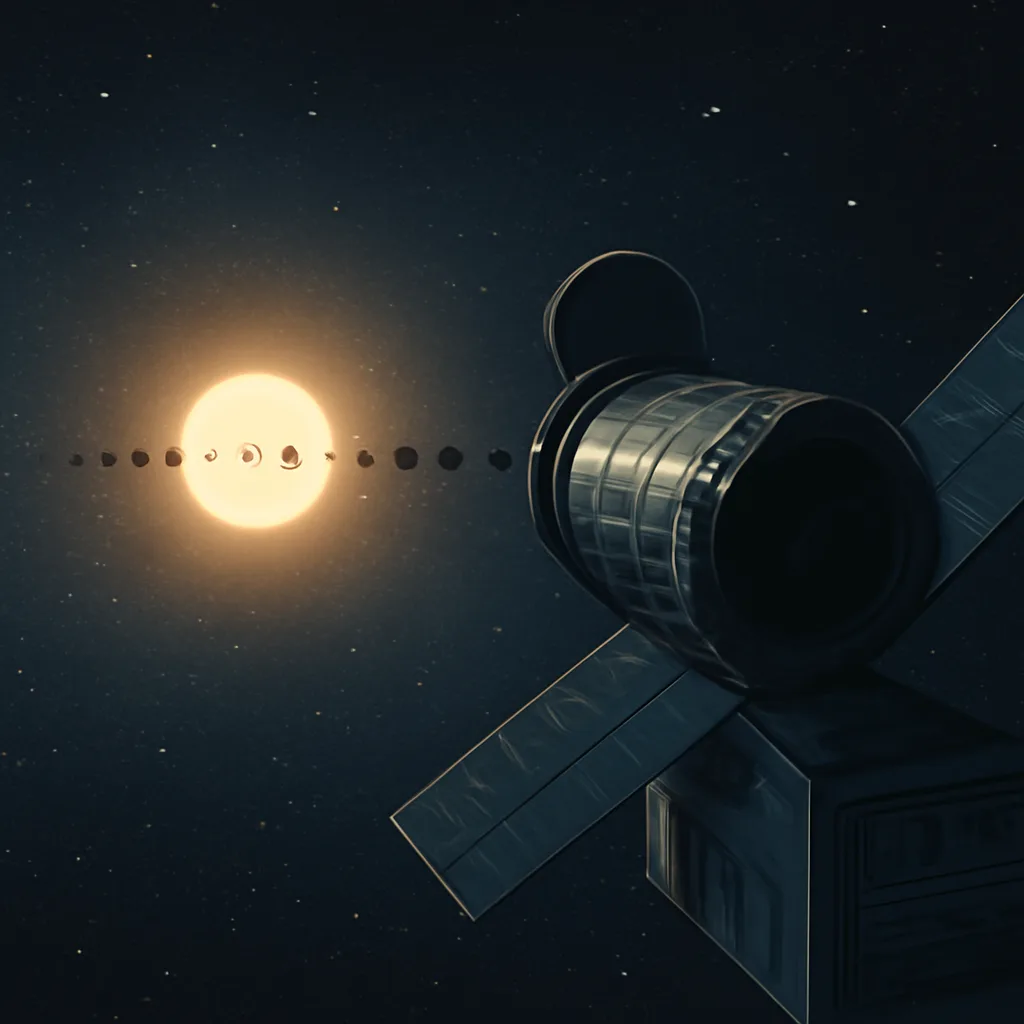
On September 4, 2014, NASA announced the discovery of multiple exoplanets identified via data from ongoing space- and ground-based observations. The notice continued a steady stream of exoplanet findings since the first confirmed detections in the 1990s and reflected improvements in telescope sensitivity, data analysis, and follow-up verification. Context and methods By 2014, NASA’s Kepler space telescope had transformed exoplanet science by monitoring more than 150,000 stars for periodic dimming caused by transiting planets. Transit photometry, combined with radial-velocity measurements from ground-based spectrographs and other follow-up observations, allowed astronomers to confirm candidate planets and estimate their sizes and orbital periods. Some discoveries announced in 2014 also derived from reanalysis of earlier data sets and from complementary instruments such as the Spitzer Space Telescope and various ground observatories. Significance of the announcement The September 4 announcement added new entries to the catalog of confirmed exoplanets, including a mix of planet sizes and orbital characteristics. Each confirmed object contributed to statistical studies of planet occurrence rates, particularly for small, Earth-size and super-Earth planets, and helped refine estimates of how common potentially habitable worlds might be. Incremental discoveries like these also informed target selection for follow-up atmospheric characterization with current and planned facilities. Verification and limits Exoplanet confirmations typically require careful vetting to rule out false positives such as eclipsing binary stars, instrumental artifacts, or background objects. In 2014 the community increasingly relied on multi-instrument confirmation and statistical validation techniques to assign confidence levels to candidates. The physical properties of newly confirmed planets—such as mass, radius, and composition—were often only loosely constrained without precise radial-velocity masses or transit-timing variations, leaving some parameters uncertain or subject to revision. Broader trajectory of the field The September 2014 announcement fit within a decade of rapid growth in exoplanet discovery: from the first confirmed planets around a main-sequence star in 1995 to thousands of candidates and hundreds of confirmed planets by mid-2010s. These cumulative discoveries shaped priorities for future missions and observatories aimed at measuring exoplanet atmospheres and searching for biosignatures, including designs that would eventually inform missions such as TESS (launched 2018) and the James Webb Space Telescope (launched 2021). What the announcement did not claim Public announcements of new exoplanets generally report detections and confirmations rather than definitive statements about habitability. Unless specific atmospheric or surface properties had been measured—rare for small planets in 2014—claims about life or Earth-like conditions were avoided. Additionally, catalog entries and parameters are subject to revision as new observations refine orbital or physical measurements. Sources and verification This summary is based on the general record of NASA and community exoplanet research up to and including 2014: the Kepler mission’s candidate and confirmed-planet catalogs, peer-reviewed follow-up studies, and public NASA press releases from that period. For specifics about the individual planets announced on September 4, 2014—including their designations, measured parameters, and discovery teams—consult the NASA Exoplanet Archive and contemporaneous peer-reviewed papers and mission press releases for primary-source details.