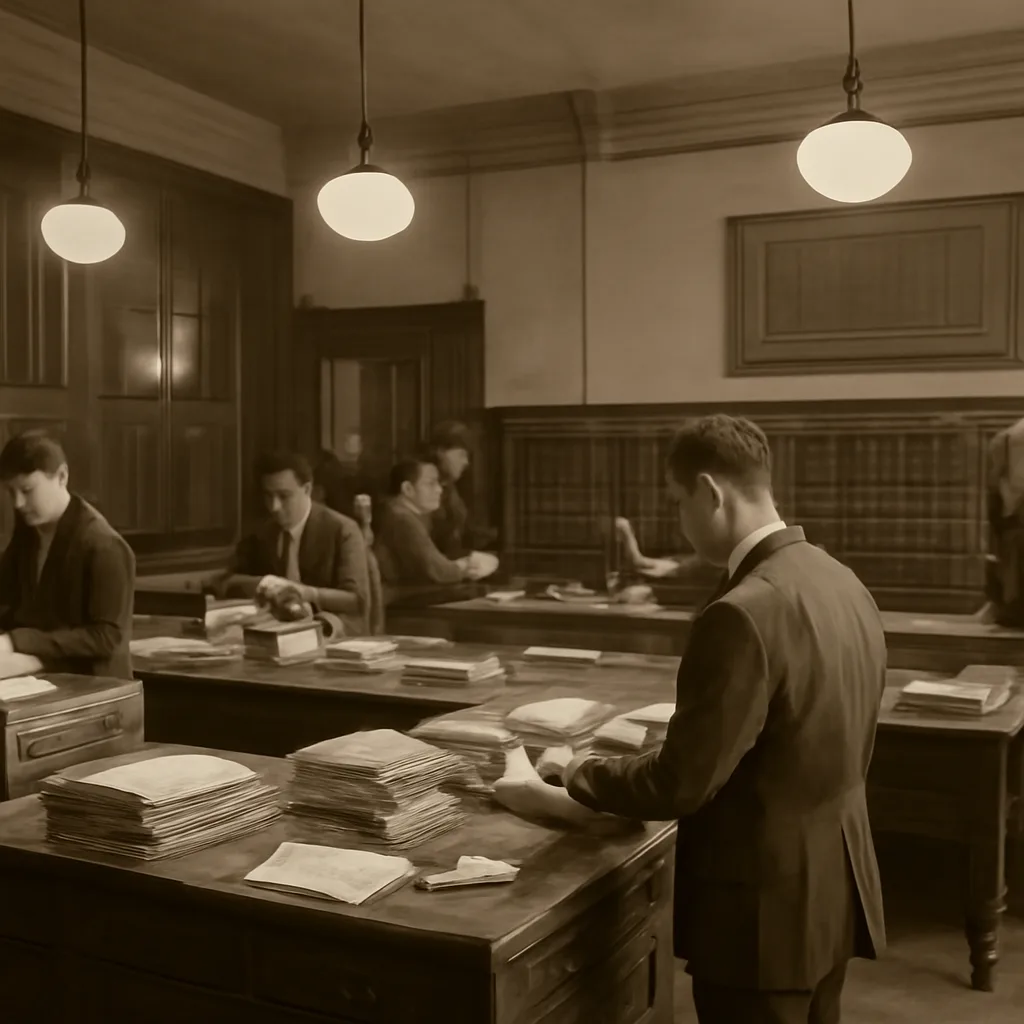
On March 28, 1910, court and postal records from the United States record a case that legal historians frequently cite as the earliest clearly documented instance of identity theft conducted through the mail. The scheme combined impersonation with forged or misused mailed documents to obtain credit and control over property belonging to another man. While earlier acts of impersonation and fraud occurred, this episode is notable because contemporaneous authorities explicitly identified the use of mailed papers and communications as central to the misappropriation of another person’s legal and financial identity. Background At the turn of the 20th century, rapid expansion of postal services, increasing reliance on written contracts and certificates, and relatively limited central record systems created opportunities for fraud. Individuals commonly established credit, transferred property, and proved identity through letters, bills of sale, deeds, and affidavits sent through the post. This reliance on physical documents made postal channels attractive to fraudsters and complicated law-enforcement responses. The 1910 case Court filings, newspaper coverage, and postal investigative reports from 1910 describe an impostor who, by means of mailed documents and false communications, presented himself as another man to creditors and local officials. The impostor used forged documentation and letters sent through the mail to open accounts, incur debt in the victim’s name, and effect transactions that transferred or encumbered property. Postal inspectors became involved after complaints about fraudulent letters and suspicious use of registered mail, and prosecutors pursued charges that referenced the mail as the instrument by which fraudulent identity and related financial harm were effected. Legal and historical significance Contemporaries treated the case as part of a broader pattern of mail-based frauds; it contributed to evolving legal frameworks for prosecuting schemes that used postal channels to commit crimes. The episode predates specific modern statutes against identity theft, but it influenced how postal inspectors and courts conceptualized crimes that relied on impersonation combined with mailed instruments. Legal historians point to the case as early evidence that identity-based fraud could be prosecuted not only as common-law fraud or forgery but also under statutes concerning mail fraud and fraudulent use of postal services. Limits and caveats Historians and legal scholars caution that earlier instances of impersonation or name misuse undoubtedly occurred, but they were often recorded under other headings (forgery, imposture, or fraud) and did not always emphasize the role of mailed documents. Surviving records from the period can be fragmentary, and terminology varied: newspapers and court documents sometimes used imprecise language that modern readers might reinterpret as “identity theft.” The 1910 matter stands out because archival materials explicitly describe the use of mailed papers as central to the scheme and because postal authorities formally investigated and documented the mail’s role. Legacy The case illustrates how the growing centrality of written and mailed communications to commerce and legal affairs created new vulnerabilities. It also shows the early involvement of postal inspectors in investigating what would later be categorized as identity-related crimes. Over the ensuing decades, legal systems adapted with statutes and investigative techniques aimed at frauds that relied on identity deception and postal or communications channels. For readers interested in further research, original sources include 1910 contemporaneous newspaper coverage, postal inspection reports, and court dockets; consult archival holdings of federal postal inspection records and local court archives for primary documents. Scholars of legal history treat this episode as an instructive early instance of identity-related fraud rather than as the absolute first human deception of this kind, given the fragmentary nature of older records.