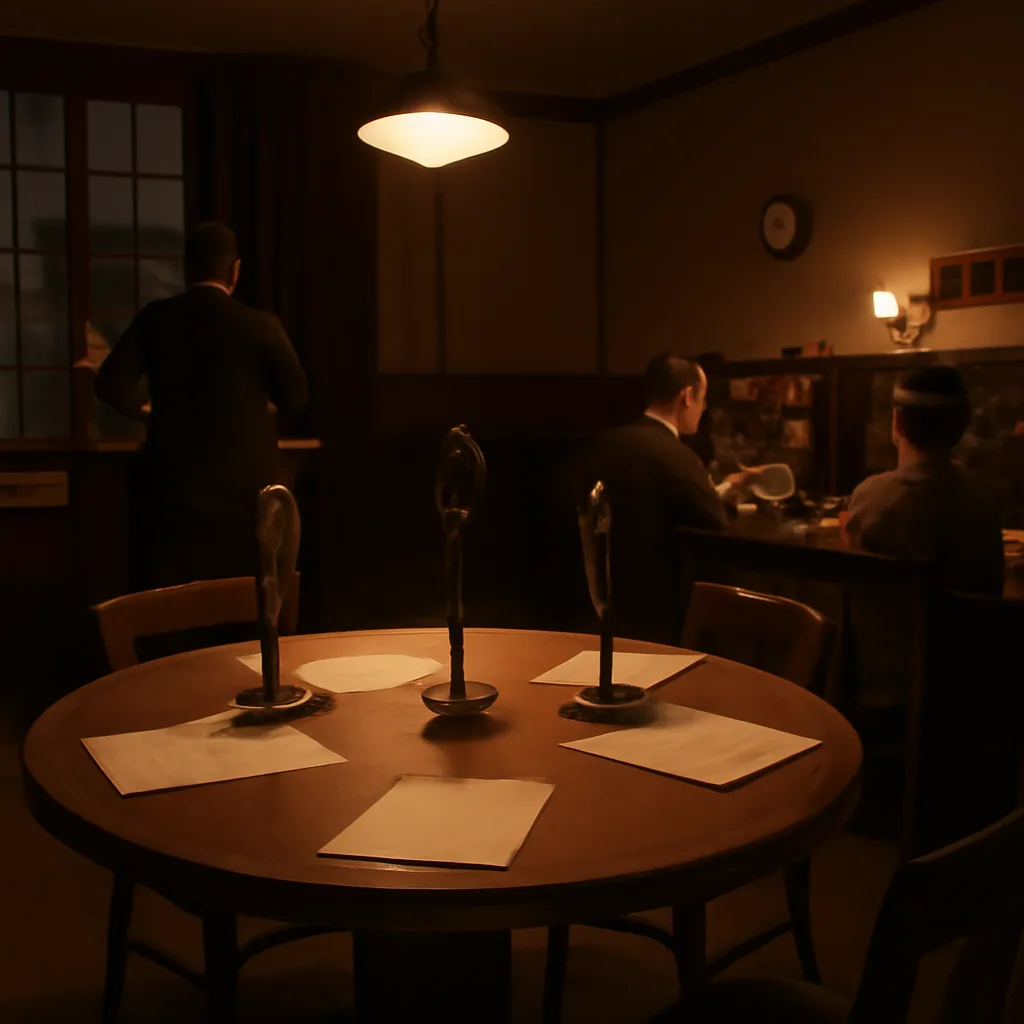
How a 1938 Radio Drama Triggered the First Widely Documented Mass Panic
On October 30, 1938, Orson Welles’s radio adaptation of The War of the Worlds—presented as simulated news bulletins—provoked widespread alarm across parts of the United States, producing one of the first well-documented examples of mass panic driven by radio broadcasting.
On the evening of October 30, 1938, the Mercury Theatre on the Air, directed and narrated by Orson Welles, broadcast a radio adaptation of H. G. Wells’s novel The War of the Worlds. Formatted to resemble interrupted news bulletins reporting a Martian invasion, the program ran on CBS and reached a large national audience during radio’s heyday. The broadcast is widely cited as producing one of the earliest and best-documented instances of mass panic attributable to radio.
Structure and format
The 60-minute drama opened with a brief musical introduction and then shifted into a series of simulated news reports describing explosions on Mars and a rapidly escalating series of attacks on New Jersey and surrounding areas. Announcers and actors presented eyewitness accounts, live updates, and emergency notices—techniques that, in several locales, created the impression that events were unfolding in real time rather than dramatized fiction. The program included periodic announcements that it was a drama, but some listeners either tuned in after those disclaimers or missed them amid the program’s realistic pacing.
Immediate effects
Reports from the night and the following days described varying reactions. In some communities listeners panicked, fled homes, or sought refuge; in others, reaction was limited to curiosity or annoyance. Newspaper accounts and police reports documented instances of calls to authorities, traffic congestion, and people gathering near radio stations or public spaces. Estimates of the number of frightened listeners vary widely across sources, and later scholarship has shown earlier sensational claims of nationwide hysteria were likely overstated. Still, contemporary documentation establishes that significant localized fear and public disturbance occurred in multiple places.
Media environment and context
The broadcast took place in a media environment where radio was the primary real-time news medium for many Americans. The 1930s also featured social anxieties—economic uncertainty, geopolitical tensions in Europe—that made apocalyptic scenarios emotionally resonant for some listeners. These contextual factors contributed to the plausibility of the program’s premise for certain audiences and help explain why radio, a trusted medium, could produce heightened alarm when it presented events in a news-like format.
Aftermath and interpretation
In the days after the broadcast, newspapers ran prominent stories about the panic, and public officials and broadcasting networks debated the responsibilities of radio producers. The Federal Communications Commission (FCC) received complaints and examined whether the show had violated broadcasting standards. The incident prompted broadcasters to consider clearer disclaimers and the potential consequences of dramatic realism. Orson Welles and the Mercury Theatre faced both criticism and acclaim; Welles’s national profile increased, and the episode became a landmark case in discussions about media effects.
Scholarly perspective
Historians and media scholars have reassessed the extent and nature of the panic over subsequent decades. Early contemporary reports tended to amplify the scale of the public reaction; later research—drawing on archival records, police logs, and audience surveys—shows a more complex picture, with panic concentrated in particular localities and often mixed with curiosity and ridicule. Most scholars nonetheless treat the broadcast as a pivotal example illustrating how realistic media presentations can trigger fear and confusion, especially when delivered through a dominant and trusted news medium.
Legacy
The October 1938 broadcast remains a touchstone in the study of media-induced public reaction. It is cited in discussions about journalistic responsibility, emergency communication protocols, and the psychological effects of simulated realism in mass media. While debates continue over the magnitude of its immediate impact, the event's documentation and subsequent analysis secure its place as a key early case of radio-driven mass panic.