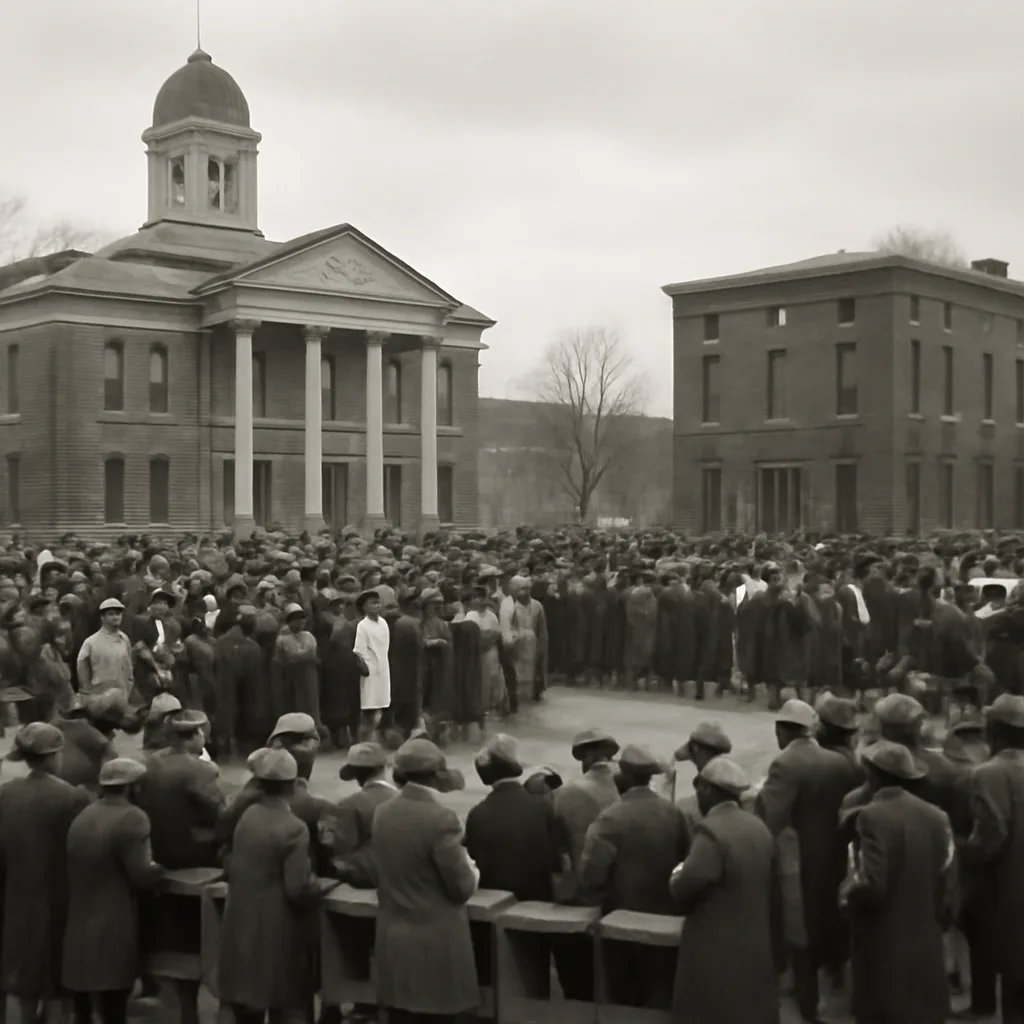
First woman executed by electric chair in U.S. is put to death
On January 12, 1928, in Kentucky, 26-year-old Rainey Bethea became the first woman in the United States publicly executed by electric chair after being convicted of rape and murder—a case that prompted national debate about capital punishment and public executions.
On January 12, 1928, Rainey Bethea was executed in Owensboro, Kentucky, becoming the first woman in the United States put to death in the electric chair. The case drew intense national attention for several reasons: the crime itself, the rarity of female executions at the time, the circumstances of the execution, and the broader social debates it provoked about capital punishment and spectacle.
Rainey Bethea, an African American man in his mid-20s, was convicted of the August 1927 rape and murder of 70-year-old Lischia Edwards, a white woman, in Daviess County, Kentucky. (Some contemporary reports and later summaries misidentify genders or names in circulation; the widely accepted historical record is that Bethea was a man and Edwards a woman.) Bethea was arrested, tried, and convicted rapidly under local authorities. His case became highly publicized locally and nationally, in part because officials initially announced that the execution would be a public spectacle.
Kentucky law at the time allowed executions to be carried out by electric chair. The state had adopted electrocution as its method of execution in the early 20th century; many states were transitioning away from hanging to the electric chair in that period. Public executions had been increasingly controversial, but local officials in Daviess County permitted the public to attend Bethea’s hanging in the town square—later changed to an execution by electric chair at the county jail—allowing thousands of onlookers to gather. The large, unruly crowd, presence of vendors, and the media circus around the event generated criticism and calls for reform.
A key reason the event is often described as the "first electric execution of a woman" in secondary accounts is that the executioner, a woman named Florence Thompson (sometimes reported as Lillie or Lyda), was involved in administering the electrocution. Historical records indicate confusion and dispute over who physically operated the switch. William Kemmler and other early electric chair cases had established electrocution as a method; by 1928, states varied in procedures and who could serve as executioner. Contemporary newspaper accounts and later historians differ on whether the switch was operated by a woman official or by an appointed male mechanic; some reports claim a female assistant or deputy was at the switch, which led to headlines highlighting the presence of a woman in that role. This ambiguity has contributed to inconsistent retellings of the event.
Regardless of the specifics of who operated the chair, Bethea’s execution exposed deep cultural and legal tensions. Critics condemned the public nature of the event and the carnival atmosphere around it, arguing that such spectacles degraded the justice system and the community. The execution led to swift legislative and administrative responses in Kentucky and elsewhere: public executions were curtailed and procedures for carrying out capital punishment were tightened. The national press used the Owensboro case to debate the morality, efficacy, and dignity of the death penalty, and the incident helped accelerate the move away from public executions in the United States.
The Bethea case also intersected with issues of race, criminal justice, and media coverage in the Jim Crow era. Sensational reporting and the racial dynamics of the South shaped public perceptions and responses. Legal scholars and historians note that the trial and execution occurred in a context of unequal legal protections for Black defendants and heightened public emotion around crimes involving white victims.
Historians continue to examine primary sources—court records, contemporaneous newspaper accounts, and state documents—to clarify aspects of the case, including the role of any female executioner and the decision-making that allowed a public gathering. Some details remain contested in secondary retellings, and reputable accounts emphasize the documented facts: Rainey Bethea’s conviction and execution on January 12, 1928, the large public turnout, the controversy that followed, and the subsequent policy shifts curbing public executions and refining execution procedures.
The Owensboro execution is remembered not simply as a legal milestone but as a flashpoint in American debates over capital punishment, public spectacle, and the administration of justice in a racially segregated society.