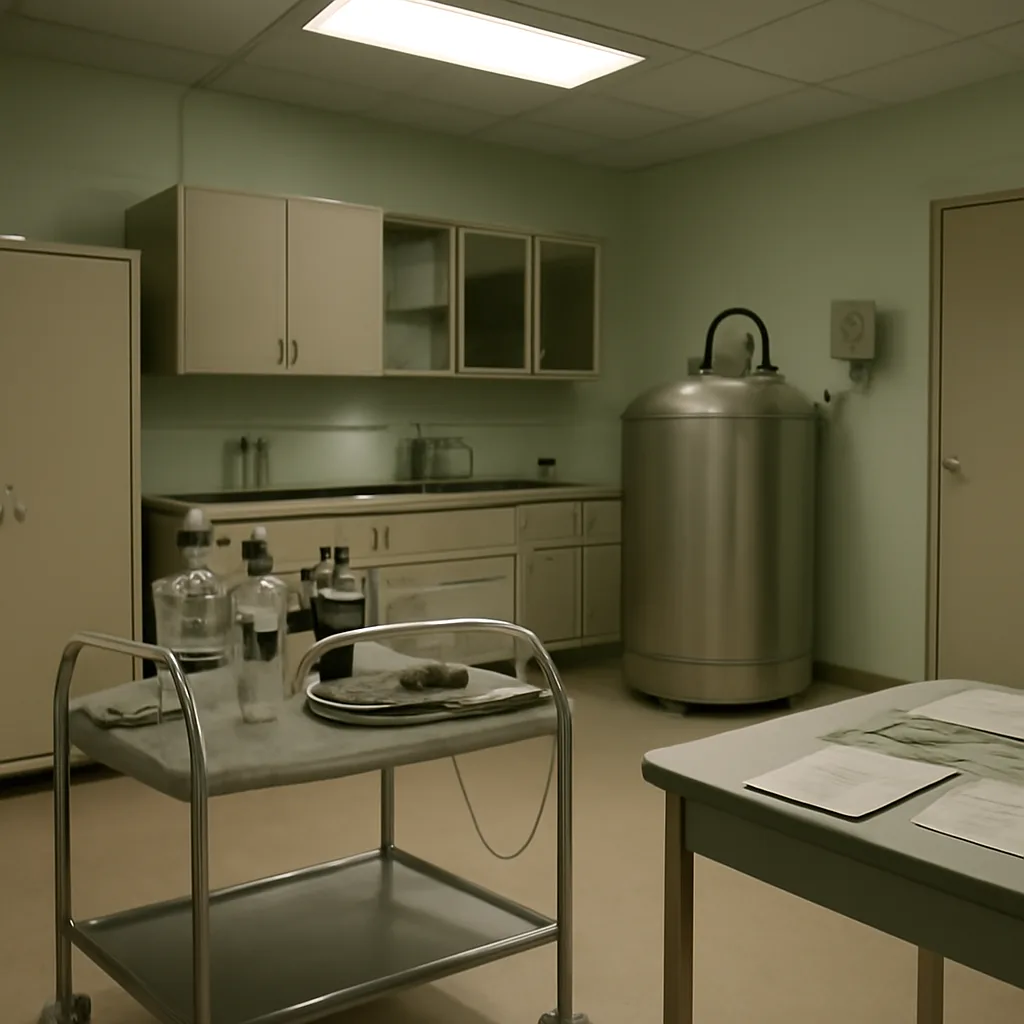
First Recorded Cryonic Preservation of a Human Conducted, January 1967
On January 12, 1967, the first documented attempt at cryonic preservation of a human body took place, marking an early and controversial milestone in the history of cryonics and the broader discussion of death, medicine, and emerging life-extension technologies.
On January 12, 1967, physicians and proponents of an experimental field now called cryonics carried out the first recorded attempt to preserve a human body at very low temperatures with the stated goal of future resuscitation. The event occurred within the context of mid-20th-century interest in life extension, advances in low-temperature physiology, and growing public discussion about the boundaries between death and reversible clinical states.
Background
Cryonics grew out of advances in medical science—especially developments in cardiopulmonary resuscitation, organ preservation, and low-temperature biology—and philosophical and cultural debates about mortality. In the 1960s a small but active group of scientists, physicians, and private citizens began exploring whether bodies could be cooled and stored to halt biological decay until future technologies might repair damage and restore life. The term “cryonics” and organized advocacy around it date to this period.
The 1967 Preservation
The January 12, 1967, procedure is widely cited in historical accounts as the first time a human body was placed into prolonged low-temperature storage with the explicit purpose of possible future revival. The patient had died by contemporary medical standards; those involved undertook steps to cool the body, replace blood with antifreeze-like solutions to reduce ice damage (an early form of what would later be refined as cryoprotectant perfusion), and transfer the remains to long-term storage in liquid nitrogen or another low-temperature environment available at the time. Documentation from the moment is limited and sometimes fragmentary, and later cryonics organizations built on and modified early protocols.
Contemporary Reactions and Controversy
The procedure immediately generated ethical, legal, and scientific debate. Critics argued that the practice exploited grieving families, violated legal definitions of death, or rested on speculative promises about future technology. Supporters portrayed it as an experimental medical intervention aimed at extending life prospects. Because cryonics operated largely outside mainstream medical institutions in its early years, records can be incomplete and accounts sometimes conflict about technical details, participants, and the exact methods used in the first preservation.
Legacy and Scientific Context
Technically, cryopreservation of tissues and small organs was already an area of laboratory research in the 1960s, but whole-body preservation posed unique problems: ice crystal formation, chemical toxicity of protective agents, and damage from freezing and thawing. Over subsequent decades, cryonics organizations developed more systematic protocols (including improved perfusion with cryoprotectants and better low-temperature storage) while researchers in cryobiology explored vitrification and organ preservation at smaller scales.
Legally and culturally, the 1967 event helped catalyze public discussion about end-of-life choice, the definition of death, and the boundary between experimental medicine and speculative futurism. Cryonics remains a minority practice and is regarded with skepticism by most mainstream medical and scientific institutions. Its historical importance derives less from demonstrating reversible preservation than from introducing a persistent challenge to assumptions about irreversibility in death and promoting sustained interest in low-temperature biology.
Limitations and Sources
Historical records about the January 12, 1967, preservation are limited, and some details—such as precise protocols used, the identities of all participants, and the subsequent fate of the preserved body—are variably reported. This summary relies on contemporaneous reporting and later historical accounts in the fields of medical history and cryobiology; because early cryonics activities were often undertaken by small private groups, primary documentation can be incomplete and secondary sources sometimes disagree on specifics. No claim is made here about successful revival; to date, there is no verified instance of a human restored to life after long-term cryonic storage.