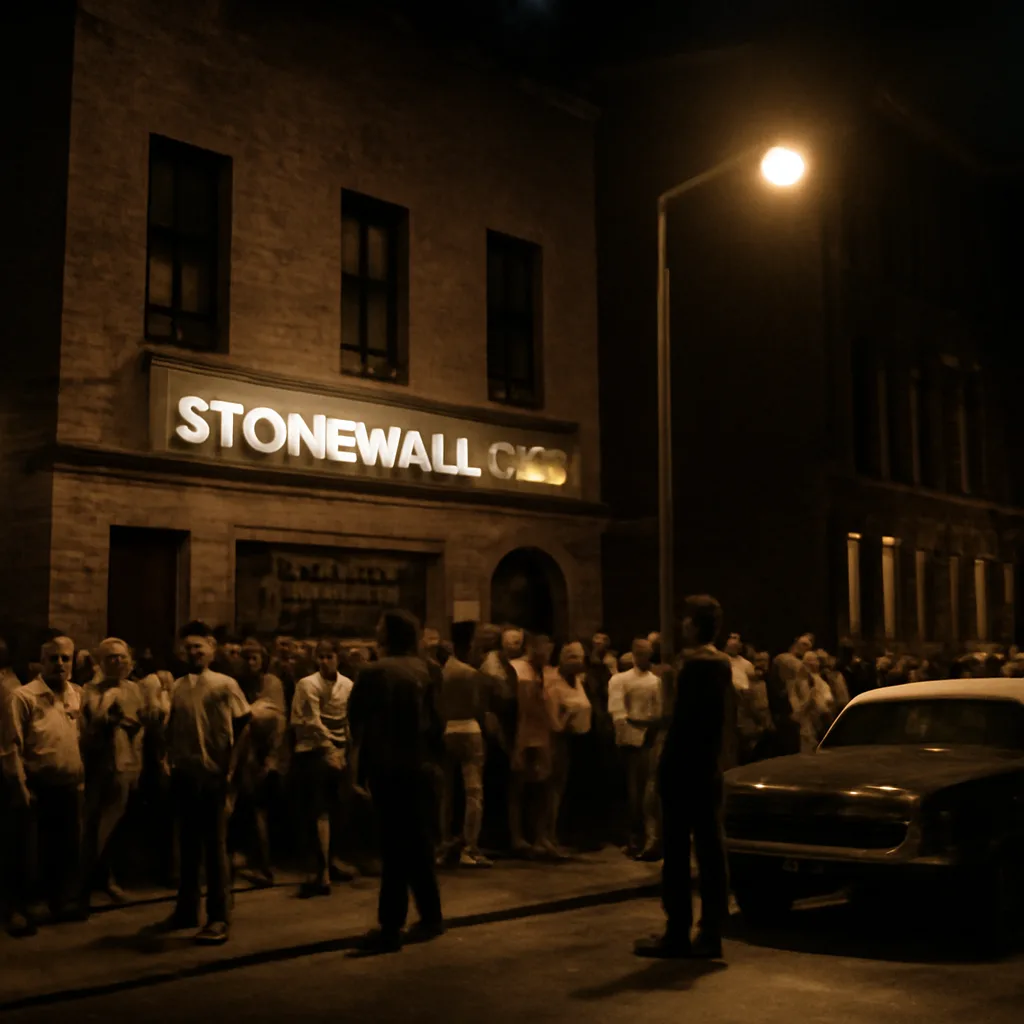
On the night of June 28, 1969, a police raid on the Stonewall Inn, a gay bar in New York City’s Greenwich Village, prompted a series of confrontations between patrons, neighborhood residents and law enforcement. The disturbances, which lasted through the night and continued in various forms over subsequent days, are widely regarded by scholars and activists as a pivotal turning point that galvanized lesbian, gay, bisexual and transgender communities into more visible, organized political action. Context During the 1960s, homosexual acts were criminalized in many U.S. jurisdictions, and police raids on bars known to serve LGBTQ patrons were common. Many bars operated without proper licenses and were subject to fines, closures and harassment. The Stonewall Inn, owned by a Mafia-affiliated operator and frequented by a diverse crowd including gay men, transgender people, drag performers and others, was one of several establishments targeted by such enforcement. The raid and immediate aftermath Accounts from participants, contemporary press reports and later historical studies describe police entering the bar in the pre-dawn hours. As patrons resisted arrest or protested the treatment of those detained, a crowd gathered outside. Tensions escalated into acts of stone-throwing and clashes with officers; police withdrew to the precinct and more people assembled, prompting further confrontations over the next several nights. The events included singing, speeches, and public demonstrations demanding an end to harassment and legal discrimination. Impact and significance Although there had been prior protests and organizing within LGBTQ communities, Stonewall served as a catalyst for public, sustained activism. In its aftermath, demonstration groups and advocacy organizations proliferated, and the first Pride marches—held in June 1970 in New York, Los Angeles and Chicago to commemorate the anniversary—helped shift gay rights from largely private advocacy to open political protest. Historians note that Stonewall did not single-handedly create the movement; it was one significant spark among broader social currents, including earlier local organizing, the civil rights movement and changing cultural attitudes. Disputed and clarified points Details about exactly who participated and who played leading roles in the initial confrontations have been subject to differing accounts. Participants included a mix of people—gay men, lesbians, transgender women, drag performers, homeless youth and neighbors—and several individuals have been highlighted in oral histories and memoirs, but specific timelines and actions can vary across sources. Likewise, while Stonewall is emblematic and widely commemorated, some historians emphasize continuity with prior activism (for example, earlier demonstrations and legal challenges) rather than portraying it as an absolute beginning. Legacy Stonewall occupies a central place in public memory and LGBTQ historiography. It is commemorated annually during Pride month and has inspired scholarship, memorials and preservation efforts, including the later designation of the Stonewall Inn and surrounding area as a site of historical significance. The riots’ legacy is reflected in ongoing efforts for legal equality and in debates about inclusion, representation and the role of protest in social change. Sources and further reading This summary is based on established historical literature, contemporary reporting from 1969, and oral histories from participants and witnesses. For detailed, sourced accounts, consult academic histories of the gay rights movement, archived newspaper coverage from June 1969, and collections of oral testimony held by libraries and LGBTQ research centers.