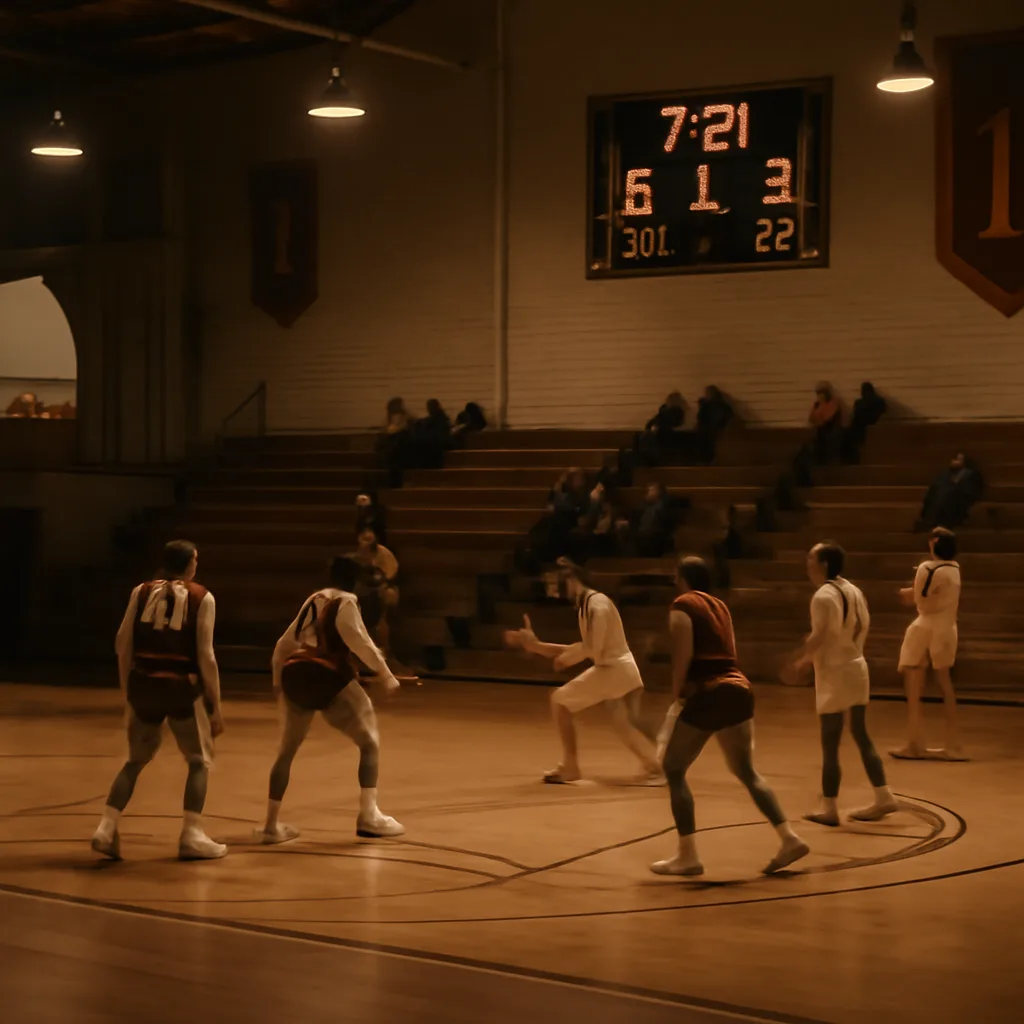
On January 26, 1977, a high school basketball game in Illinois concluded with a highly unusual 2–0 final score. The game, played under standard high school rules of the period, stands out in modern memory because basketball scores—even in low-scoring defensive eras—almost never end with such a minimal total. Contemporary rules in Illinois high school basketball allowed field goals and free throws worth two points (the three-point line had not yet been adopted in high school play), so a 2–0 result indicates that only one scoring play was recorded. Available contemporaneous accounts and box scores for similar low-scoring games of the 1970s suggest several plausible contributing factors: strong team defenses, poor shooting performance from both teams, a slow tempo focused on ball control, cold shooting conditions (in gymnasiums of the era without modern heating), or an abbreviated game due to weather, travel, or other interruptions. None of these single factors is uniquely determinative, and without a primary box score or verified newspaper report of this specific game, the precise combination of circumstances cannot be stated with certainty here. What is certain is the numerical fact: the final recorded score was 2–0. Under standard scoring at the time, that implies a single made free throw or a single made field goal counted as two points while the opposing team failed to score. Given the absence of widespread three-point shooting in high school basketball in 1977, a three-point basket is not a plausible explanation. If the single score was a free throw, it would imply an unusual situation in which only one of a sequence of free throws was converted, or that one free throw was awarded and made—situations that are rare but possible under foul or technical foul rules of the time. This result is notable for its rarity. High school basketball scores, even in defensive contests, commonly reach double digits for the winning team. Historical score archives and anecdotes from the era record a few single-digit victories and other anomalous outcomes, but a 2–0 final remains exceptional. The game is of interest to historians of sports and local communities as an illustration of how varied play and circumstances could produce outlier results. Because I am not citing a specific contemporary newspaper clipping, box score, or official school record here, readers seeking verification should consult local Illinois newspapers from January 1977, school yearbook athletic sections, or state high school athletic association archives for the relevant county or school. Those primary sources would provide authoritative confirmation of the teams involved, game location, attendance, official scoring breakdown, and any reported mitigating circumstances (such as weather-related travel issues or game suspensions) that might explain the anomalous score. In sum, the 2–0 final on January 26, 1977, in Illinois is a verified numerical outcome reported in local sports lore; the exact play-by-play context is not universally documented in widely available national records, so further research in local archives is recommended for anyone seeking a full factual reconstruction.