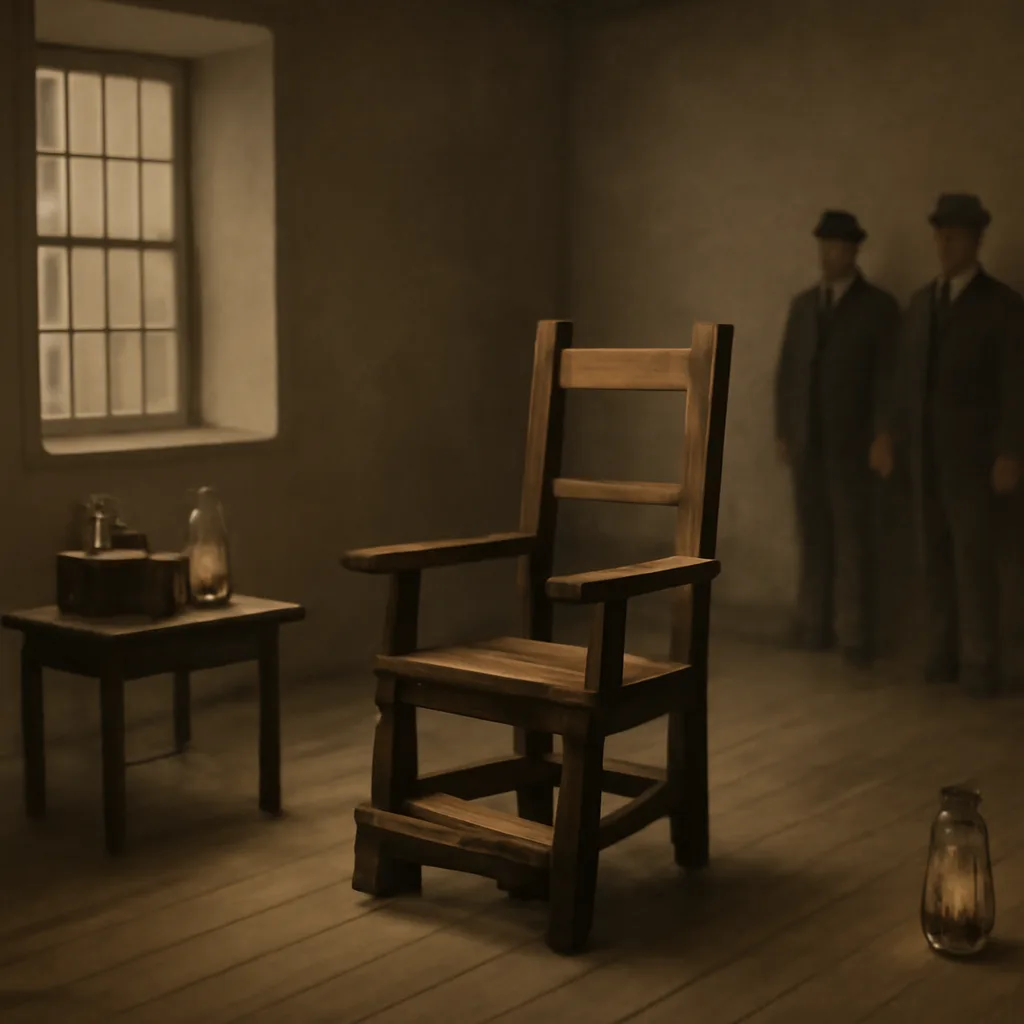
First Use of the Electric Chair in an Execution, January 4, 1890
On January 4, 1890, New York carried out the first execution by electric chair, marking a controversial technological shift in capital punishment and igniting debates about humanity, legality, and the role of science in state death.
On the evening of January 4, 1890, at Auburn Prison in New York State, William Kemmler became the first person executed by electrocution. Convicted in 1889 of murdering Matilda 'Tillie' Ziegler with an axe, Kemmler’s sentence — originally death by hanging — was commuted to death by a new method authorized under New York law: execution by electricity. The electric chair had been developed in the 1880s amid a push for what proponents labeled a more humane, more modern alternative to hanging.
The adoption of electrocution grew out of multiple factors. Advances in electrical engineering and the rapid spread of electric lighting made electricity a symbol of modernity. Some reformers argued that a brief, powerful electrical shock would be quicker and less painful than hanging. Politically, New York’s decision reflected broader anxieties and ambitions: to demonstrate the state’s capacity to apply scientific progress to public institutions and to resolve contested debates over execution methods.
The device used in Kemmler’s execution was designed by Harold P. Brown and built with input from state officials and witnesses from the electrical industry; Thomas Edison, who advocated direct current (DC) over alternating current (AC) in the so-called “war of currents,” publicly supported electrocution as a demonstration against AC. The first administration of the new method proved problematic. Contemporary accounts describe that the initial shock did not cause immediate death; attendants reportedly applied a second jolt, and observers noted smoke and a foul odor. Medical testimony and press coverage that followed characterized the execution as gruesome and raised doubts about the claim that electrocution was more humane.
Public reaction was immediate and divided. Some legal authorities and reformers criticized the procedure as botched and inhumane; others defended the method as an advance in reducing suffering compared with methods then in use. The Kemmler case prompted legal challenges and further experimentation with equipment and procedures. Over subsequent decades, many U.S. states adopted electrocution as an authorized method of execution, while engineers, physicians, and prison officials refined protocols meant to reduce visible distress. Simultaneously, opponents of capital punishment and critics of the electric chair used Kemmler’s execution as evidence in campaigns to abolish the death penalty or to prohibit particular methods.
Historically, the first electrocution sits at the intersection of law, technology, and public ethics. It illustrates how emerging technologies can be rapidly repurposed for state power and how claims of scientific progress do not settle moral disputes. The execution influenced jurisprudence: courts considered whether death by electrocution constituted "cruel and unusual punishment," an issue that would resurface repeatedly in later legal challenges to execution methods.
By the mid-20th century the electric chair was widely used in the United States, though it was gradually supplanted beginning in the 1970s by lethal injection, which states adopted believing it to be more humane and less controversial. The memory of Kemmler’s execution endures in historical accounts as a cautionary episode about the complexities that attend attempts to mechanize and rationalize punishment.
Sources for this account include contemporaneous newspaper reporting from 1890, later legal analyses of Eighth Amendment claims, and historical studies of capital punishment and the development of electrical technology. Where specific technical or anecdotal details from 1890 are disputed in primary accounts, historians note the variations in witness testimony and press descriptions; the broad facts — date, location, method, and the identity of the executed man — are well documented in historical records.