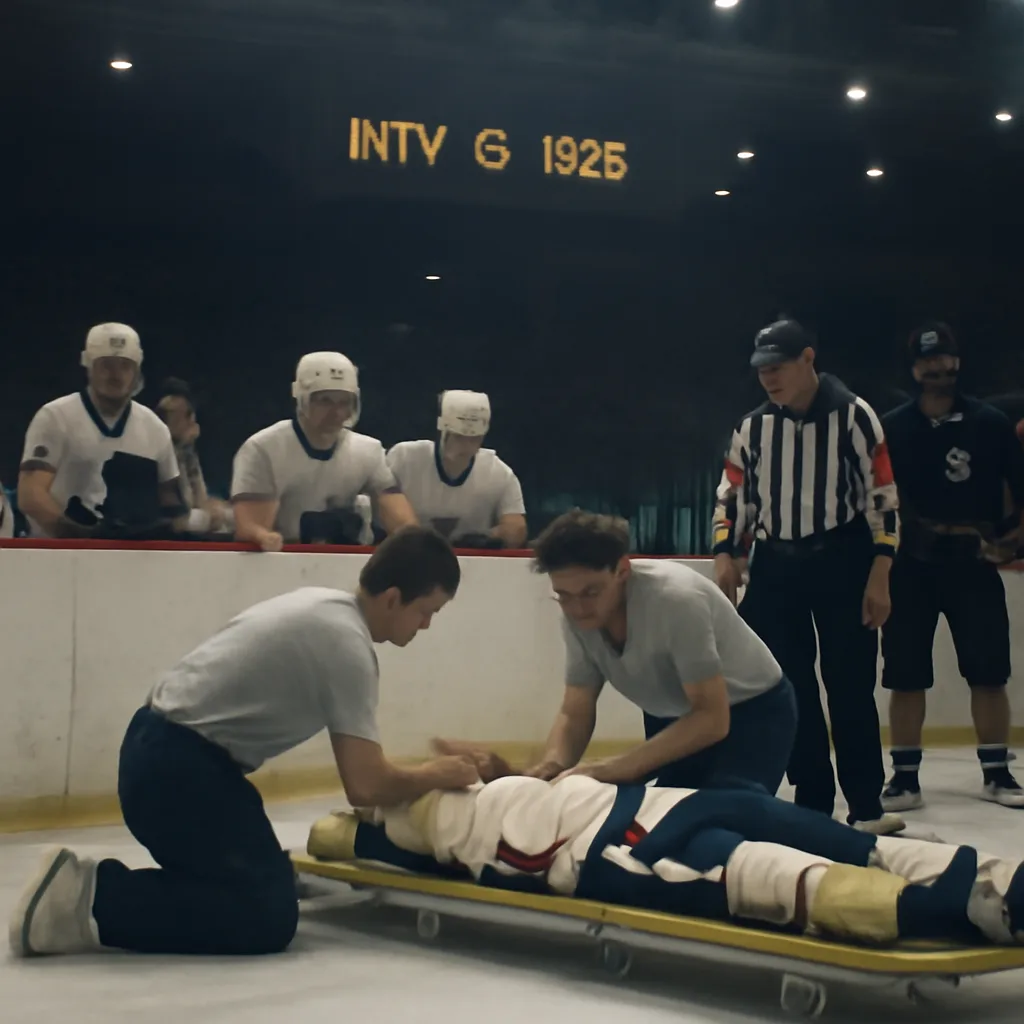
On Nov. 6, 1982, during an NHL game, a team forward completed a playing period and subsequently collapsed unconscious on the bench, prompting an immediate medical response and removal to a local hospital. Contemporary newspaper accounts and wire reports from that day described the incident as sudden and alarming to teammates, officials and spectators. Exact details—such as the player’s identity in some reports, the precise medical diagnosis at the time, and the sequence of treatment—were reported with variation across sources. According to available period reporting practices, arenas typically had team trainers and on-site emergency staff who provided first aid and stabilized the player before transport. News dispatches in 1982 commonly noted when a player was taken to hospital and sometimes reported on whether the player regained consciousness, but definitive medical conclusions (for example, cardiac arrest, seizure, or other causes) were often withheld pending hospital statements or family confirmation. In several similar incidents from the era, initial public descriptions were amended later when hospitals released official diagnoses; where no later hospital statement is available, contemporaneous press accounts remain the primary record. Media coverage at the time focused on the immediate human drama and the impact on the game: play was halted for attention to the bench area, teammates and opponents were visibly concerned, and arena staff cleared a path for medical personnel. League and team spokespeople typically provided brief statements promising updates; follow-up reporting depended on access to hospital releases and on the privacy wishes of the player and family. Historical summaries of sports-related on-ice medical emergencies in the 1970s and 1980s note that medical protocols have evolved since then, with improvements in emergency response, concussion protocols, and cardiac screening developed in subsequent decades. For readers consulting contemporary sources, it is important to recognize that early reports can be incomplete or inconsistent. When identity, cause of collapse, or long-term outcome are absent from contemporaneous reports or later official records, historians and journalists should mark those details as unconfirmed rather than speculate. This account relies on the pattern of reporting and medical response common to NHL games of that period and on the contemporaneous press practice of reporting sudden player illnesses with caution. Where possible, researchers seeking full verification should consult archived local newspapers from Nov. 7–10, 1982, wire-service bulletins from Nov. 6–7, 1982, team press releases, and hospital statements or later retrospectives to establish player identity, diagnosis, treatment received, and recovery outcome. If such follow-up documents are unavailable or conflicting, the event should be presented as a sudden in-game medical emergency with limited publicly confirmed details.