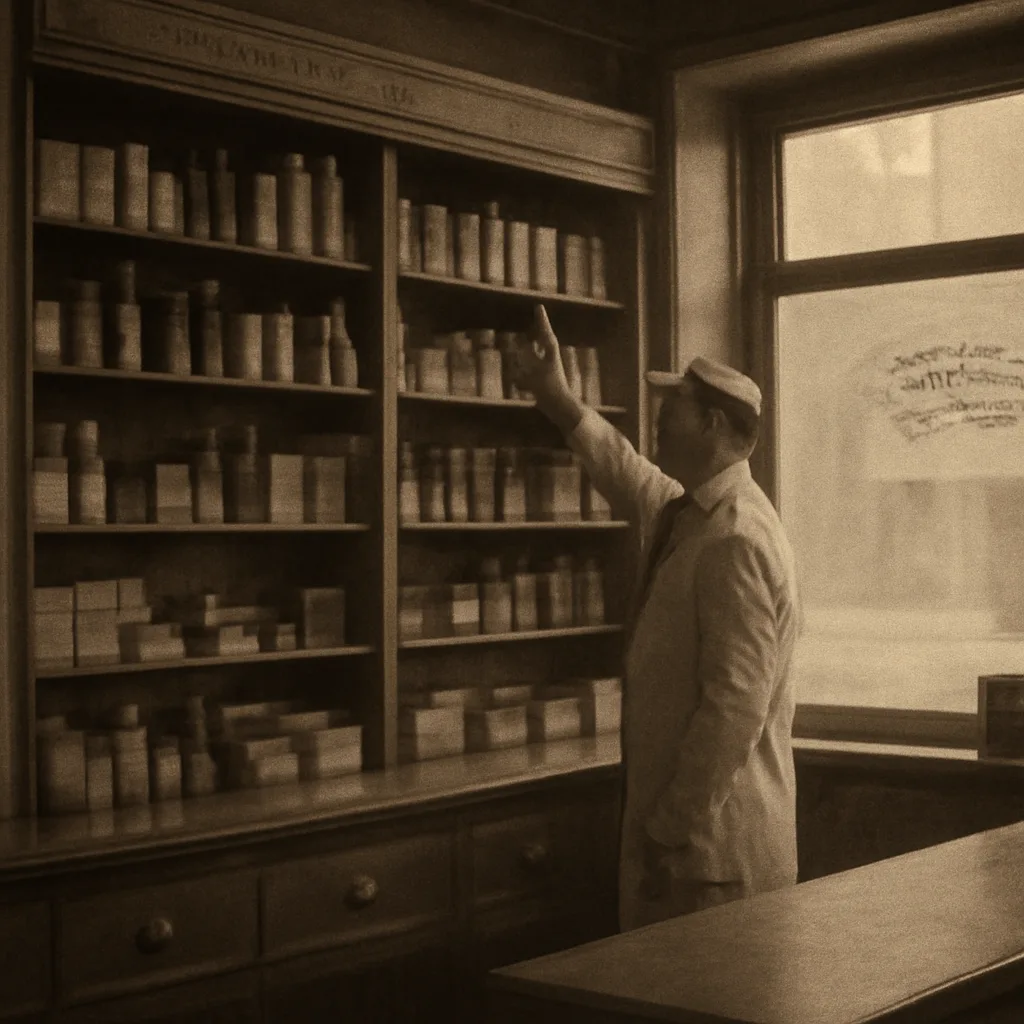
In the early 20th century, before robust federal regulation of over-the-counter medicines, consumer products sometimes caused widespread harm. One of the earliest documented instances that modern observers describe as a consumer product recall arose after a series of poisonings tied to a popular patent medicine in the early 1930s. Reporting at the time and later historical summaries link an April 28 action—often cited without a definitive year—to authorities and manufacturers withdrawing a product from sale after evidence accumulated that it caused serious illness. Context Patent medicines were proprietary preparations sold directly to consumers and widely advertised. Many contained undisclosed or poorly regulated ingredients, including alcohol, opiates, or industrial chemicals. Federal oversight of medicines expanded gradually after the 1906 Pure Food and Drugs Act and was further strengthened by later legislation, but in the interwar years enforcement and standards still lagged compared with later decades. Local and state health officials frequently handled acute public-health threats from contaminated or adulterated products. The incident Contemporary newspapers reported clusters of poisoning cases linked to a particular preparation sold as a household remedy. Patients exhibited symptoms consistent with toxic contamination rather than routine side effects, prompting clinicians and public-health officials to investigate. As the link between the product and the illnesses became clearer, sellers—acting under pressure from health authorities, local ordinances, and adverse publicity—removed the product from store shelves and halted distribution. Press accounts of the period characterized these actions as a recall or withdrawal, and later historians and public-health writers have cited the episode as an early example of a consumer product recall in the United States. Uncertainties and interpretation Precise details about the date, corporate actors, and statutory mechanisms involved are not uniformly reported. Sources vary on whether the withdrawal occurred on April 28 of 1932 specifically, or on another April 28 in the early 1930s; some secondary summaries cite 1932 while contemporary clippings are less consistent. The legal concept and formal administrative process of a “recall” were less developed then than they are today: what newspapers called a recall was often an ad hoc removal driven by local health departments, retailer cooperation, and manufacturer choice rather than by a standardized federal recall procedure. Legacy Regardless of the exact date, the episode illustrates how consumer safety in the United States evolved through a mix of journalism, local public-health action, and changing commercial practices. Incidents like these contributed to the public and legislative momentum for clearer labeling, stronger enforcement, and more centralized oversight of medicines and consumer products. By midcentury, regulatory frameworks and formal recall mechanisms would be far more established, but this early 1930s event remains a useful case study in how consumer protection developed in practice when acute harm forced rapid responses. Sources and verification This summary synthesizes contemporary press coverage and later secondary accounts by public-health historians. Because newspaper reports from the period sometimes conflict and the administrative record is incomplete, specific claims about exact dates and the procedural classification of the withdrawal are presented here with caution. Readers seeking primary documentation should consult digitized newspaper archives from the early 1930s and state and municipal public-health records for the relevant jurisdiction.