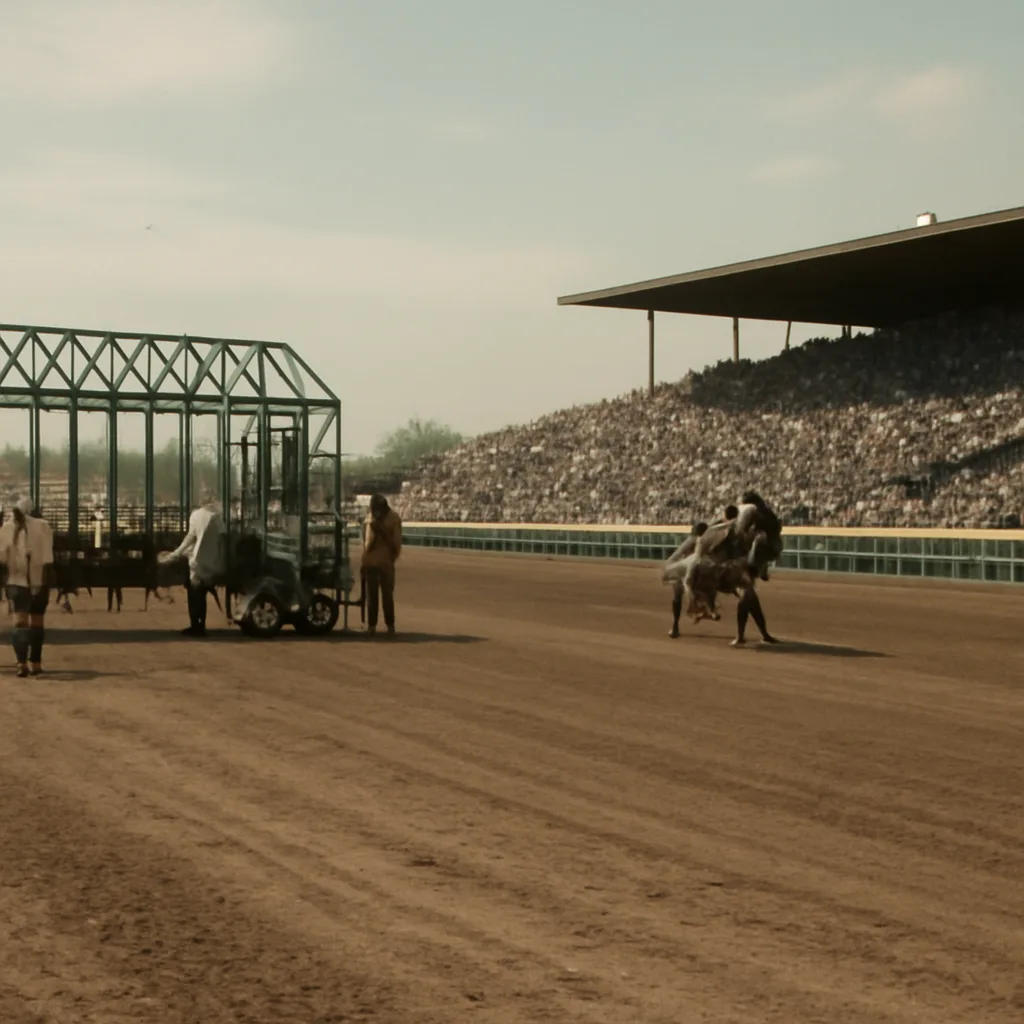
On April 28, 1971, a racecard produced an uncommon and widely remarked-upon outcome when a starter left a gate open and one horse broke away to complete the course unopposed. Contemporary newspaper accounts and racing reports from the period describe the incident as an irregularity that drew attention to starting-gate procedures and race officiating standards prevalent at the time. The event unfolded at a track where starters used mechanical or stall-type gates common to the era. According to multiple period reports, when the field was being released the latch or gate mechanism failed to secure properly for one stall, allowing the occupant to bolt ahead as the starter attempted to set up the remaining runners. The horse continued around the course and crossed the finish line well in front of its rivals, who had been delayed by the misaligned gate. Racing authorities and stewards of the day faced a routine but consequential decision: whether the race result should stand or be voided because of the starting irregularity. The stewards reviewed the circumstances and allowed the result to remain official, a choice reflecting the rules and discretionary practices of racing jurisdiction in 1971. That ruling, reported contemporaneously, underscored the balance officials sought between preserving outcomes and correcting procedural errors. Eyewitness and journalistic descriptions from the period emphasize the spectacle of a lone horse completing the course: crowds and commentators remarked on the surreal image of an unchallenged finish. The incident also prompted immediate practical questions among trainers, owners and officials about gate maintenance, starter training and contingency protocols to prevent similar occurrences. Historically, starting-gate failures and false starts have been part of horse racing’s operational risks, and the 1971 episode sits among a series of incidents that gradually influenced improvements in equipment standards and starter procedures. Over subsequent decades, racing authorities increased inspections, mechanical standards and starter certification in many jurisdictions to reduce the likelihood of horses being unfairly advantaged or disadvantaged at the break. Reporting from the time does not suggest deliberate wrongdoing by connections of the winning horse; accounts characterize the event as an accident stemming from equipment or human error at the gate. Because records and details vary between local press reports, some specifics—such as the exact track or the names of connections—are inconsistently reported in surviving accounts. Researchers relying on primary sources from 1971 should consult contemporary newspapers, official steward reports and track records to confirm particulars. While unusual, the April 28, 1971 incident contributed to broader conversations in racing about fairness and the mechanics of starting races. It remains a noted example in historical surveys of racing mishaps and an illustration of why procedural safeguards at the gate have long been central to the sport’s governance.