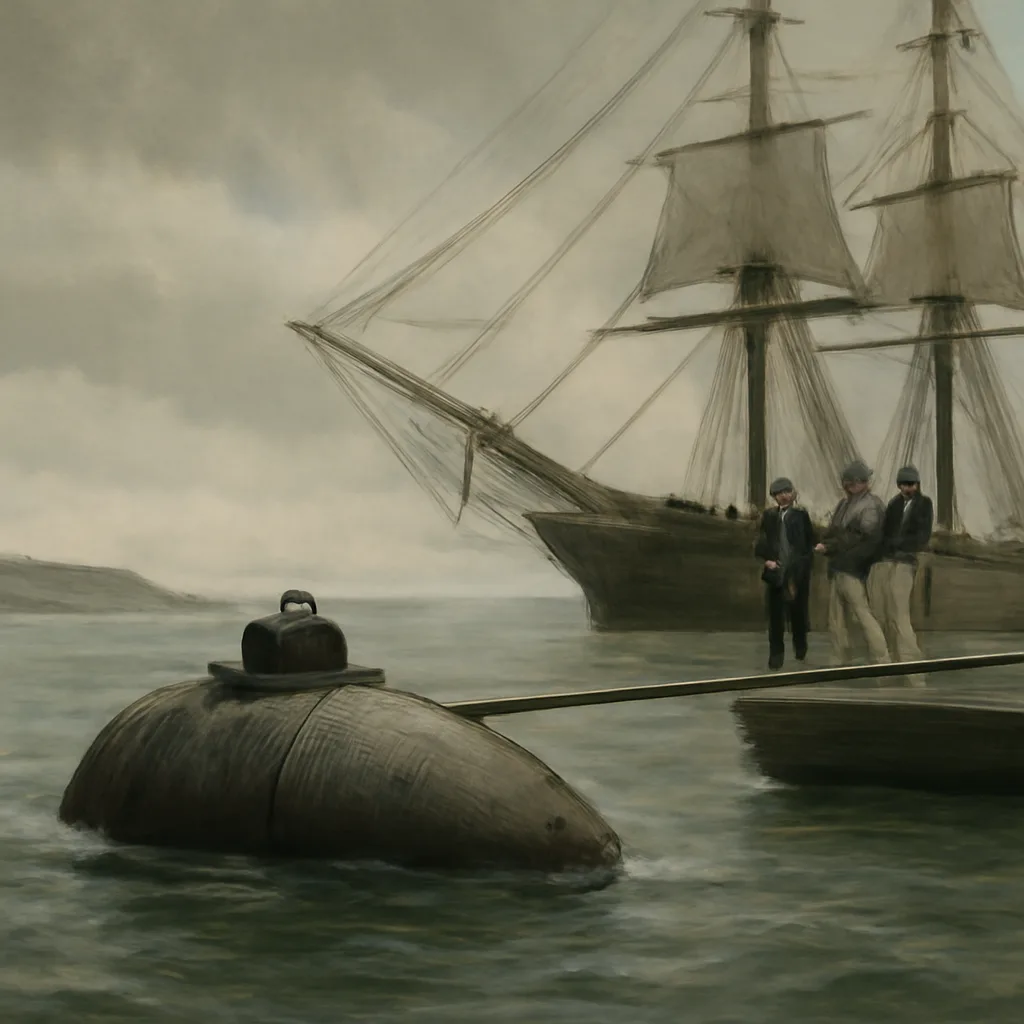
On March 17 (most commonly associated with 1864 in secondary accounts), a submarine attack is recorded as the first successful sinking of a ship by a submersible-launched explosive device. This event is part of a complex and contested early history of submarine warfare in the mid-19th century, when inventors and naval forces experimented with underwater craft, spar torpedoes, and other methods to attack enemy vessels. Background By the 1850s and 1860s, several inventors and naval services were developing submersible craft and explosive devices intended to damage or sink ships. These early efforts included hand-powered submersibles, semi-submersible torpedo boats, and the use of spar torpedoes—explosive charges mounted on poles intended to be detonated against a target’s hull. Records from this era are fragmented, sometimes nationalistic, and often technically ambiguous about what constituted a “submarine” or a direct submarine-launched attack. The incident associated with March 17 Later accounts attribute a March 17 action to a submersible that approached and attached or detonated an explosive against a surface vessel, resulting in its sinking. Many narratives link such early successes to Confederate or other privately built submersibles during the American Civil War period or to experimental attacks in European waters. However, primary-source documentation naming the submarine, its crew, the exact year, and the vessel sunk is limited or contradictory in surviving records. Why the date and attribution are disputed Contemporary newspapers, naval logs, and official reports from the mid-19th century sometimes describe similar incidents but differ on details. Some events recorded as successful attacks were later reinterpreted as failed attempts, accidental sinkings, or actions by surface craft rather than submerged vessels. The lack of standardized terminology—“submarine,” “submersible,” “torpedo boat,” and “spar torpedo”—and uneven preservation of documents make firm, single-year attribution difficult. As a result, while March 17 is cited in several secondary sources, historians caution that assigning the label “first successful submarine attack” and pinning it to 1864 remains uncertain. Historical significance Even with uncertainties, these mid-19th-century experiments signaled a turning point in naval warfare. The demonstrated ability to approach a warship below or at the waterline and deliver an explosive charge presaged later, better-documented submarine actions in the 20th century. The technical lessons learned—about hull strength, underwater propulsion, stealth, and weapon attachment—directly influenced subsequent submarine design and naval doctrine. Caveats and scholarly practice Because primary evidence is sparse and sometimes contradictory, reputable histories present this episode with caveats. Researchers rely on surviving ship logs, government correspondence, patents, and contemporary press reports, assessing their reliability case by case. Where details conflict, historians note the dispute rather than inventing specifics. Readers should expect variations in accounts and look to annotated scholarly works or archival documents for the fullest, most cautious reconstructions. Conclusion The March 17 action commonly linked with 1864 occupies an important place in the narrative of early undersea warfare: it exemplifies the era’s technical daring and ambiguous record-keeping. While it is widely cited as an early instance of a submarine causing the sinking of a ship, the exact date, participants, and classification remain subjects of historical caution and ongoing research.