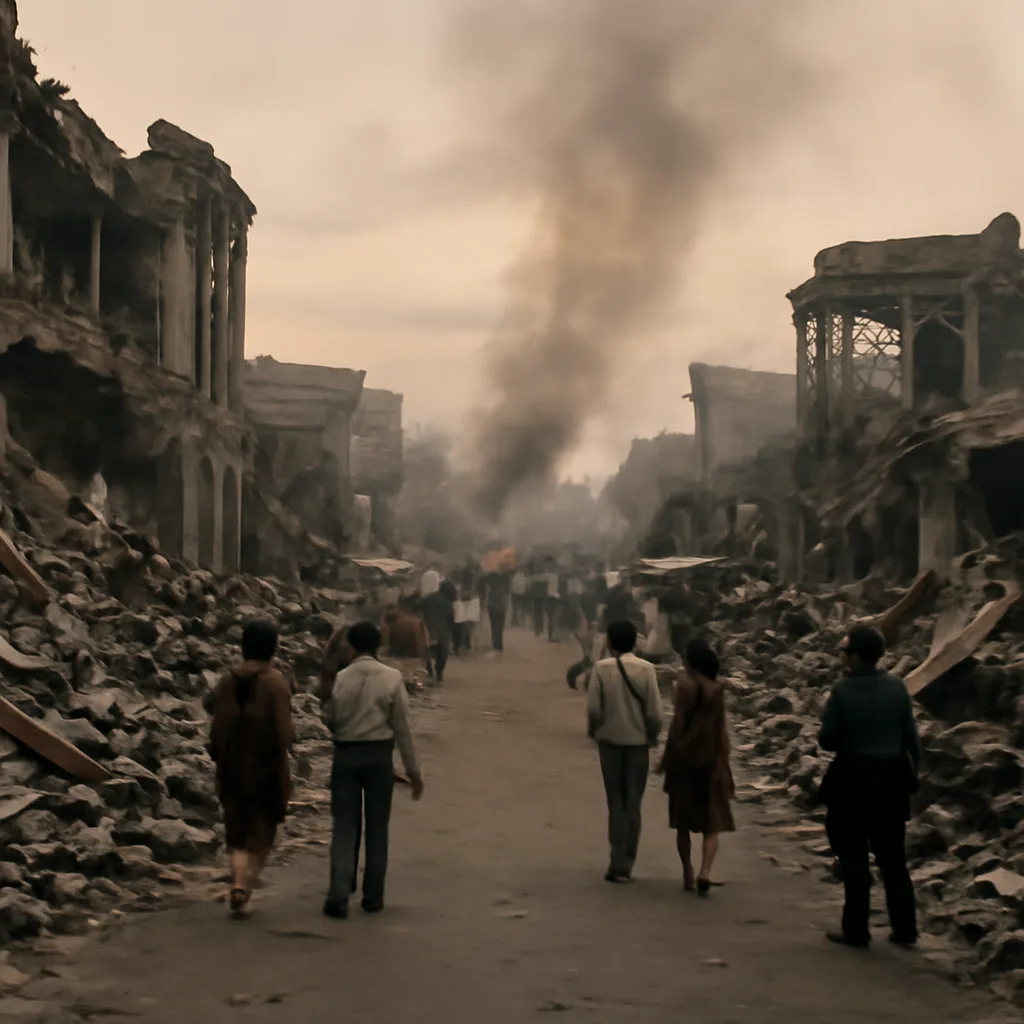
On the night of June 23, 1972, a major earthquake struck Managua, the capital of Nicaragua, causing catastrophic damage across the city. The quake — widely reported as one of the most destructive in Nicaraguan history — flattened large swaths of central Managua, including residential neighborhoods, commercial districts and key public infrastructure. The official and independent estimates of casualties varied, but the disaster resulted in thousands of deaths, tens of thousands injured, and left a large portion of the urban population homeless. Geology and immediate impact The earthquake occurred along local fault structures in the region. Strong ground shaking and subsequent fires compounded structural collapses. Many buildings in Managua were constructed of unreinforced masonry and concrete that performed poorly under the intense shaking; entire blocks of older houses and apartment buildings pancaked. Fires broke out in the devastated urban core, hindering rescue efforts and destroying what remained of some neighborhoods. Human toll and displacement Accurate casualty figures have long been contested. Government tallies, hospital records and international assessments produced differing counts in the chaotic aftermath; nevertheless, consensus among historians and contemporary reporting is that casualties numbered in the thousands, and that a substantial fraction of the city’s population was rendered homeless. Makeshift camps and temporary shelters were established as families sought safety and basic necessities amid disrupted water, sanitation and medical services. Relief, reconstruction and controversies Domestic and international aid arrived in the days and weeks after the quake, including food, medical supplies and temporary housing materials. The emergency response faced severe challenges: damaged roads and communication lines slowed deliveries, and the scale of destruction overwhelmed local capacities. The disaster also exposed and intensified political and social tensions. Critics argued that reconstruction efforts were uneven and that political favoritism influenced distribution of relief and rebuilding contracts. Some reconstruction decisions reshaped the urban footprint of Managua, with parts of the historic center not rebuilt to their previous form. Long-term effects The 1972 earthquake had lasting consequences for Managua’s urban development, housing policy and disaster preparedness. Large-scale displacement and the destruction of central commercial areas altered economic patterns; many residents relocated to peripheral neighborhoods or informal settlements. The event prompted changes in building codes and greater attention to seismic risk in Nicaragua, though enforcement and resources for retrofitting and resilient construction remained uneven in subsequent decades. Historical memory The earthquake remains a defining event in recent Nicaraguan history. It is remembered for the sudden scale of destruction, the human cost, and the political and social debates that followed. Exact numbers and some specifics of the response are still subject to differing accounts in historical records and contemporary reporting, but the broad outline — a devastating quake on June 23, 1972 that leveled much of Managua and caused thousands of deaths and mass homelessness — is well established.