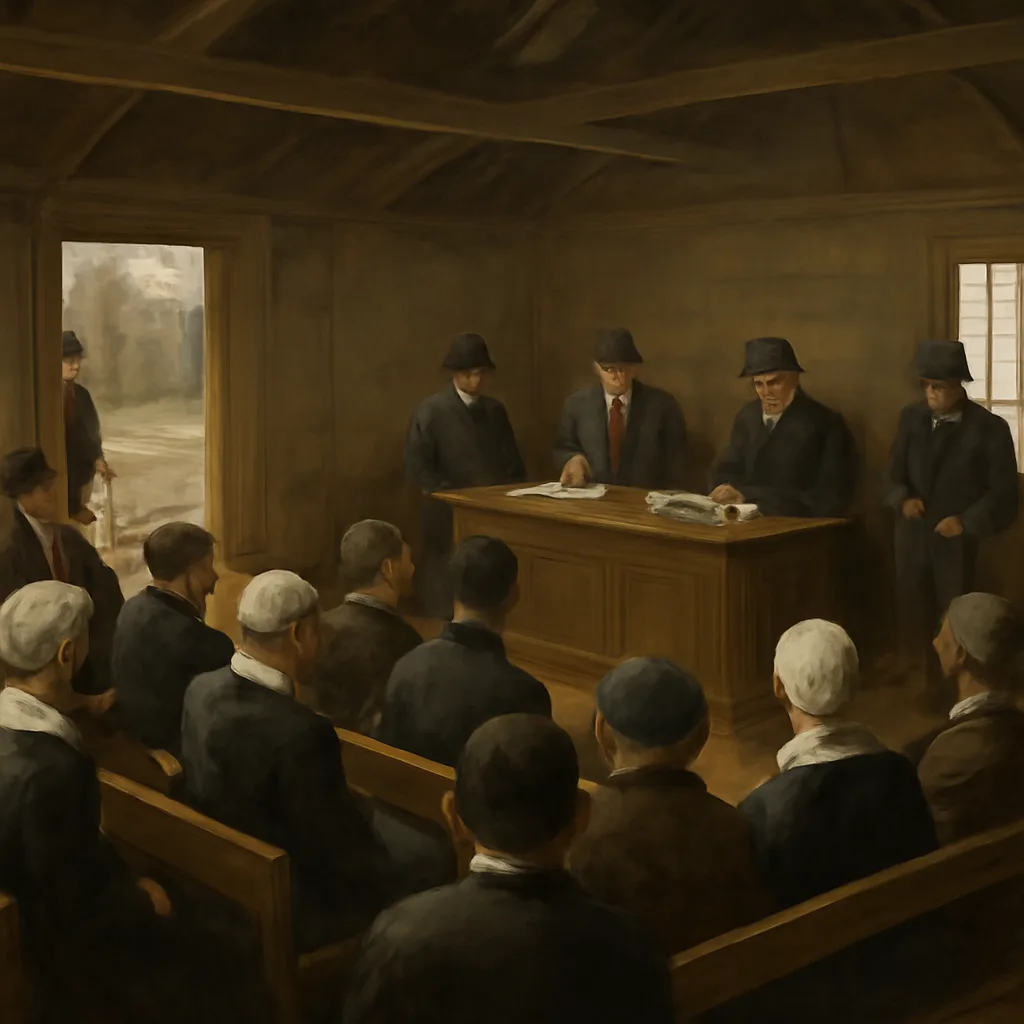
In the winter and spring of 1692–1693, the Massachusetts Bay Colony experienced a series of prosecutions for witchcraft centered on Salem Village, Salem Town and nearby communities. By late March 1693 the special court that had heard most of the high-profile cases ceased to function: judges and magistrates stopped convening sessions, indictments were not pursued with the same vigor, and community and governmental attitudes toward the prosecutions had shifted. The transition away from active prosecution followed months of contentious trials, contested evidence (including the use of “spectral” testimony), and growing doubts among both local clergy and some civil authorities about the fairness and reliability of the proceedings. Several key developments contributed to the court’s effective suspension. Public outcry over certain executions and the recognition that coerced confessions and questionable testimony had led to convictions undermined confidence in the court process. Additionally, influential figures such as Increase Mather and others criticized the reliance on spectral evidence, arguing it was unreliable and dangerous. On March 31, 1693, the special court that had been trying many of the cases did not resume its work in any substantive way. In the weeks and months that followed, Governor William Phips—who had returned from military service in the Caribbean earlier in 1693—took pragmatic steps that further curtailed prosecutions. In October 1692 Phips had established a new court of oyer and terminer to handle witchcraft cases, but by May 1693 he dissolved that court. In October 1693 he issued a general proclamation pardoning those still imprisoned on witchcraft charges, effectively ending the remaining legal actions against the accused in the colony. The court’s suspension and the subsequent pardons did not instantly resolve the social and personal harms inflicted during the panic. Several people had been executed, others had died in prison, and many families were stigmatized or economically damaged. The collapse of the court’s activity marked the beginning of a longer process of legal and social reckoning: petitions for reversals of attainder and legislative compensation for the victims’ families would be pursued in the following years, and public apologies and acknowledgments of error emerged gradually. Historians view the suspension of formal prosecutions in early 1693 as a turning point that reflected both changing elite opinion and practical governance concerns. The episode illustrates how legal institutions, community pressures, religious belief, and political leadership interacted during a crisis. While some contemporaries regarded the end of active prosecution as a restoration of due process, others later emphasized the need for legal and religious reforms to prevent a recurrence. Although many details about individual motivations and local disputes remain subjects of historical study and debate, the factual sequence—trials and executions in 1692, the court’s failure to continue convening in late March 1693, Governor Phips’s dissolution of the special court, and his later pardons—marks the closure of the formal judicial phase of the Salem witchcraft panic.