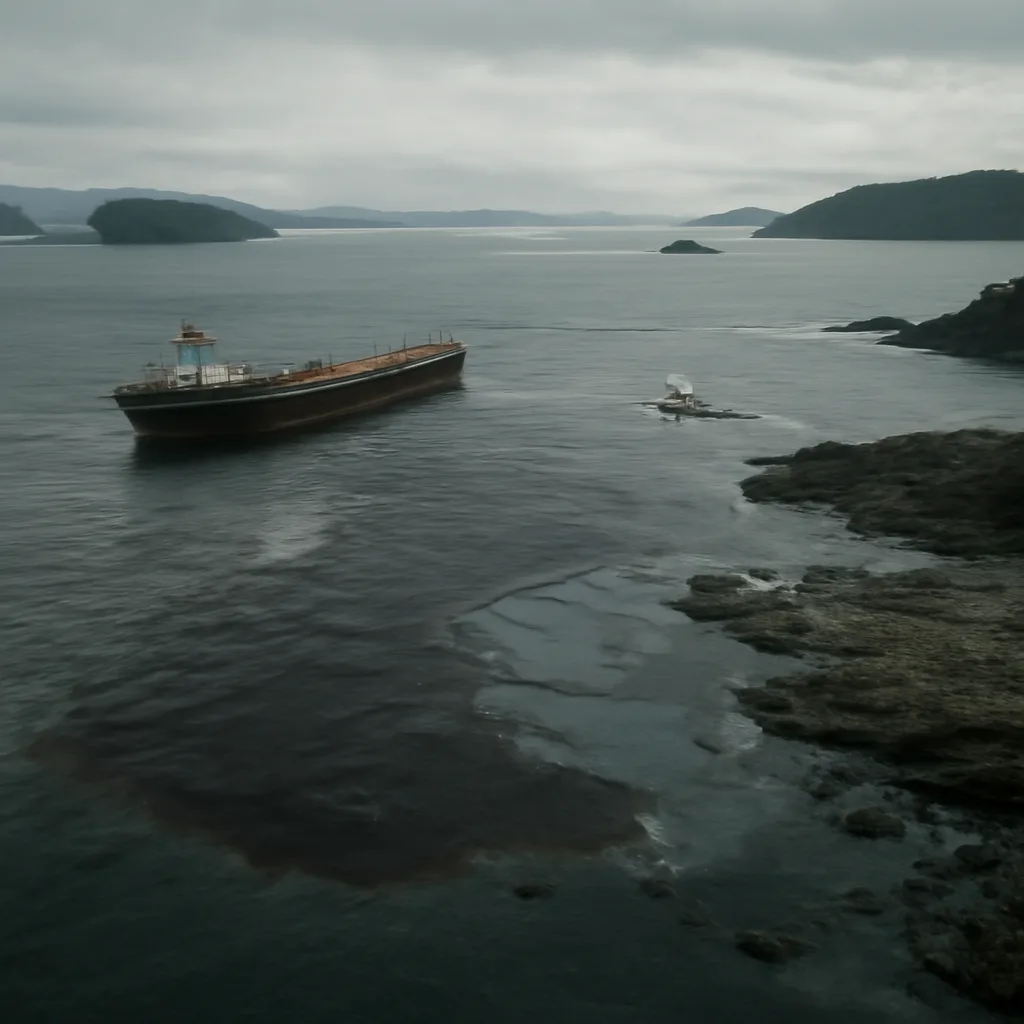
Exxon Valdez runs aground, triggering one of Alaska’s worst oil spills
On March 24, 1989, the oil tanker Exxon Valdez struck Bligh Reef in Prince William Sound, Alaska, releasing hundreds of thousands of barrels of crude oil and causing extensive ecological, economic, and social damage across the region.
On the morning of March 24, 1989, the oil tanker Exxon Valdez, en route from Valdez, Alaska, struck Bligh Reef in Prince William Sound and began spilling crude oil into the surrounding waters. The vessel, owned by Exxon Shipping Company and operated under charter by Exxon, was carrying a large cargo of North Slope crude destined for refineries in the continental United States. The grounding punctured cargo tanks and released oil into a complex network of fjords, islands, and coastal wetlands.
Scale and immediate impacts
Estimates of the volume spilled vary by source, but commonly cited figures place the release at roughly 10.8 million gallons (about 257,000 barrels) of crude oil. Strong winds and currents helped spread oil widely through Prince William Sound and toward the Gulf of Alaska. Slicks coated shorelines, and tar balls and oil-stained debris washed up across hundreds of miles of coastline. The spill directly affected marine mammals, seabirds, fish, and intertidal communities; thousands of seabirds and hundreds of sea otters were observed dead or dying in the weeks following the spill. Commercial fisheries, particularly salmon and herring fisheries, were disrupted or closed, producing significant economic losses for local communities, many of them Alaska Native.
Response and cleanup
Response efforts involved ExxonShipping, federal and state agencies, local fishermen, commercial cleanup contractors, and volunteer labor. Techniques used included skimming, burning, dispersant application, and manual shoreline cleanup. Remoteness, severe weather, and the complex coastal geography complicated operations. Cleanup continued for months and in some form for years; subsistence and commercial harvests remained affected in many areas. The incident exposed gaps in oil-spill preparedness and response capacity in the region.
Legal, regulatory, and industry consequences
The Exxon Valdez spill prompted widespread public attention and led to major legal and regulatory changes. The Oil Pollution Act of 1990, passed by the U.S. Congress, strengthened federal response authority, increased liability for oil spills, and required improved contingency planning and double-hull designs for certain tankers. Litigation between Exxon and plaintiffs—Alaska residents, businesses, and governments—resulted in substantial civil judgments and appeals over compensatory and punitive damages; those legal battles continued for many years and involved reductions and adjustments by higher courts. The spill also prompted changes within the tanker industry, including accelerated moves toward double-hulled vessels.
Long-term environmental and social effects
Scientific studies in the decades after the spill documented both recovery and long-lasting impacts that varied by species and habitat. Some shoreline habitats showed visible recovery over years to decades, while localized populations of certain species (notably some intertidal organisms and specific subpopulations of fish and marine mammals) exhibited persistent effects. The spill had pronounced social and cultural impacts on Alaska Native communities and other residents dependent on subsistence resources and commercial fisheries. The event reshaped public expectations about corporate responsibility, government oversight, and the ecological risks associated with large-scale oil transport.
Historical significance
The Exxon Valdez spill remains a reference point in discussions of oil spill risk, environmental policy, and crisis response. It catalyzed legislative reform in the United States and influenced international discourse on tanker design and spill preparedness. While some impacted ecosystems have shown substantial recovery, the spill’s legacy endures in legal precedents, regulatory frameworks, and community memory.
Notes on sources and uncertainties
Key factual elements—date of grounding, location (Bligh Reef, Prince William Sound), and broad estimates of oil released—are well documented. Precise tallies of environmental mortality, long-term ecological impacts at fine geographic scales, and the full economic cost have been the subject of extensive study and some dispute; scientific assessments vary by methodology and time scale.