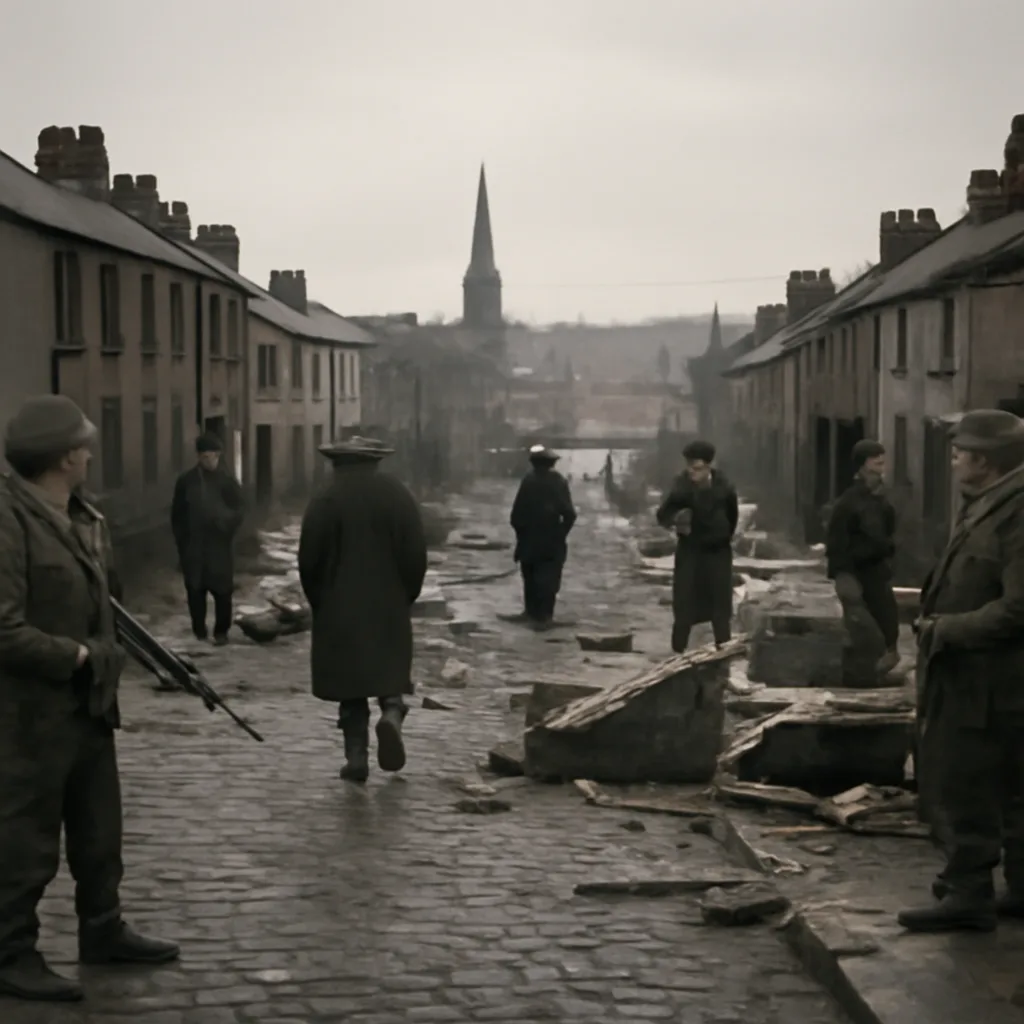
On 30 January 1972 in the Bogside area of Derry (also known as Londonderry), Northern Ireland, a civil rights march ended in shootings by soldiers of the British Army's 1st Battalion, Parachute Regiment. The march had been organized to protest internment without trial and to call for civil rights reforms. Civilian eyewitnesses, journalists, and later investigations reported that the march was largely unarmed and included families and bystanders. During the confrontation, paratroopers fired multiple volleys into the crowd. Fourteen people were killed on the day and another man died later from injuries; dozens were wounded. Some of those shot were fleeing or helping the wounded when they were hit, according to witnesses and medical evidence presented in later inquiries. The immediate official military account described soldiers returning fire at gunmen and responding to threats from rioters. This account was widely disputed by survivors, witnesses, and journalists who said there had been no armed or organized opposition among the marchers. The conflicting narratives prompted public outrage, civil unrest across Northern Ireland, and intensified sectarian tensions. In the years after the shootings there were multiple investigations. A 1972 British government inquiry, the Widgery Tribunal, largely accepted the soldiers' account and was criticized as a whitewash by many residents, victims' families, and nationalist politicians. Decades later, sustained campaigning by relatives and human rights groups led to a new inquiry: the Saville Inquiry, established in 1998 and reporting in 2010. The Saville Inquiry concluded that the killings were unjustified and that none of the fatalities were posing a threat sufficient to justify the use of lethal force. The report found that soldiers had fired the first shots and that some soldiers had given inaccurate accounts. The British government, through Prime Minister David Cameron, formally apologized for the unjustified killings following the Saville Report. Bloody Sunday had major political and social consequences. The events strengthened support for the Irish nationalist community's grievances, increased recruitment to the Provisional Irish Republican Army (IRA), and deepened mistrust between nationalist communities and British authorities. The massacre remains a central and contested event in the history of the Northern Ireland Troubles, cited in discussions of state use of force, accountability, and transitional justice. Legal and political follow-ups continued after the Saville Report. Some soldiers were referred for possible prosecution; however, efforts to secure convictions faced evidentiary and procedural difficulties, and by the mid-2010s most prosecutions had not resulted in convictions. The families and survivors have continued to seek closure and recognition, and Bloody Sunday remains commemorated annually in Derry. Historical assessments stress that Bloody Sunday cannot be understood in isolation: it occurred during a period of escalating violence and controversial security policies, including internment, non-jury Diplock courts, and paramilitary activity. The event's legacy endures in debates over memory, responsibility, and reconciliation in Northern Ireland.