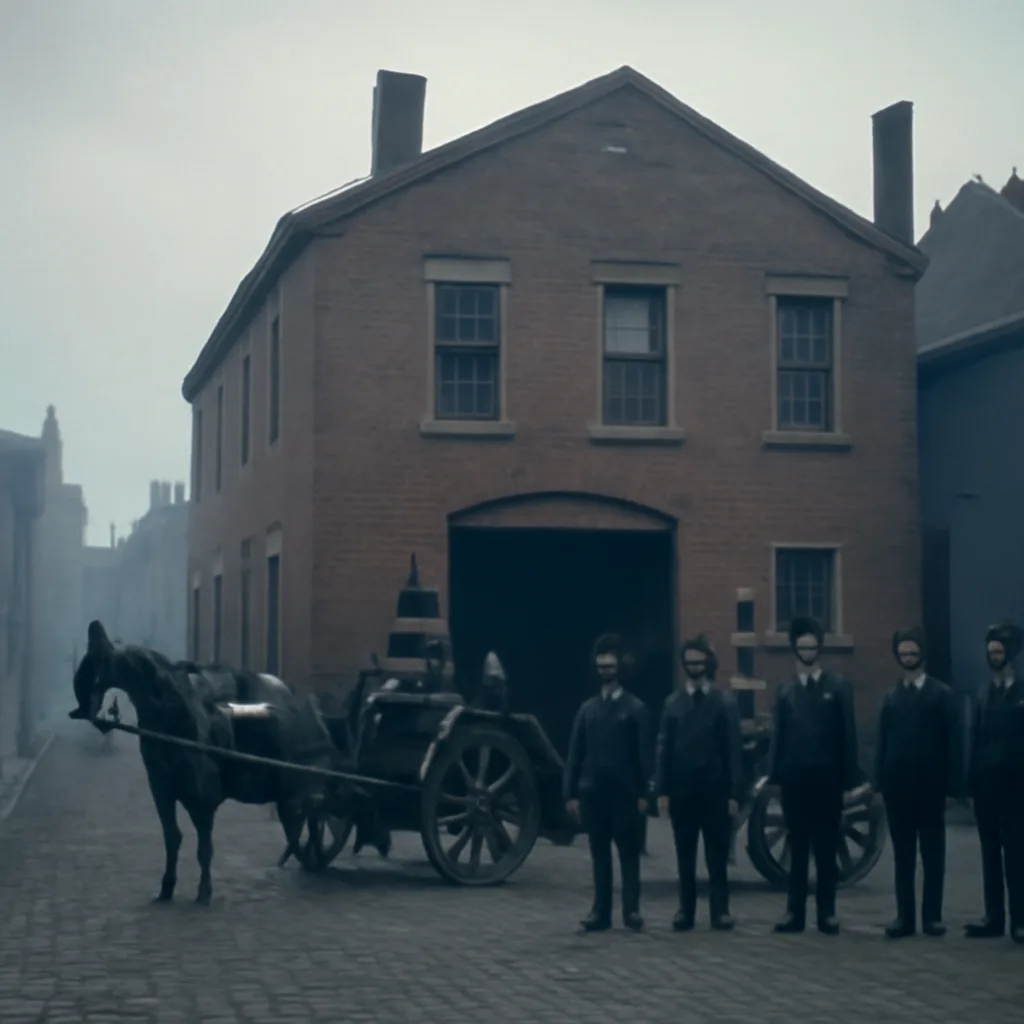
Boston Forms First Modern Municipal Fire Department, March 30 (year uncertain)
On March 30 (year disputed in sources), Boston reorganized firefighting into a municipally controlled, professional department, replacing volunteer companies and marking a shift toward centralized funding, standardized equipment, and salaried firefighters.
In the early 19th century, American firefighting was dominated by volunteer companies—organized, locally rooted groups that varied widely in training, equipment, and discipline. Urban growth, denser building stock, and several catastrophic fires prompted debates about whether cities needed a different model. Boston was among the first U.S. cities to act on those debates, moving toward a municipal, professional fire force in the mid-19th century.
The pivot in Boston culminated in measures taken on March 30 (the exact year is variously reported in contemporary and later accounts). These reforms centralized firefighting authority under city government rather than independent or privately run volunteer companies. Responsibilities shifted to a paid, uniformed corps accountable to appointed municipal officials. Changes included standardized apparatus procurement, establishment of regular watch rotations, salaried personnel, basic training expectations, and clearer chains of command—all intended to improve responsiveness and reduce rivalry and disorder at fire scenes.
The municipal model addressed several practical problems. Volunteer companies often competed for credit and control at fires, sometimes hindering coordinated efforts. Volunteers’ availability varied with the season and personal commitments. Municipalization meant funding from city budgets rather than donations or subscription fees, enabling more consistent maintenance of water pumps, ladders, and later, steam-powered engines. It also allowed the city to place companies strategically to match changing urban density.
Boston’s reforms echoed and influenced developments elsewhere. Cities such as Cincinnati, New York, and Philadelphia debated or adopted similar measures in the ensuing decades as industrialization and urbanization intensified demands on firefighting services. The shift also reflected broader trends in municipal governance: professionalization of public services, expansion of bureaucratic oversight, and expectations that city governments manage essential infrastructure for public safety.
Historians caution about precise dating and singular causation. Sources from the period and later histories sometimes attribute different years to Boston’s transition or emphasize incremental steps—ordinances, equipment purchases, and reorganizations—rather than a single founding date. What is clear is that by the mid-19th century Boston had moved decisively away from a volunteer-dominated model toward a municipally controlled, paid department with standardized practices, a development that helped define the modern American municipal fire department.
The legacy of Boston’s shift included professional norms—regular drills, standardized uniforms, hierarchical command—that became central to firefighting identity. It also raised new issues: municipal control brought political oversight, questions about labor conditions for paid firefighters, and debates over resource allocation in growing cities.
In sum, Boston’s actions around March 30 (mid-19th century) are best seen as a key moment within a broader, multi-year transformation from volunteer to municipal fire services. The change improved coordination, funding, and equipment standards and contributed to the national evolution of modern fire departments, even as precise dating and specific attributions remain subject to differing historical accounts.