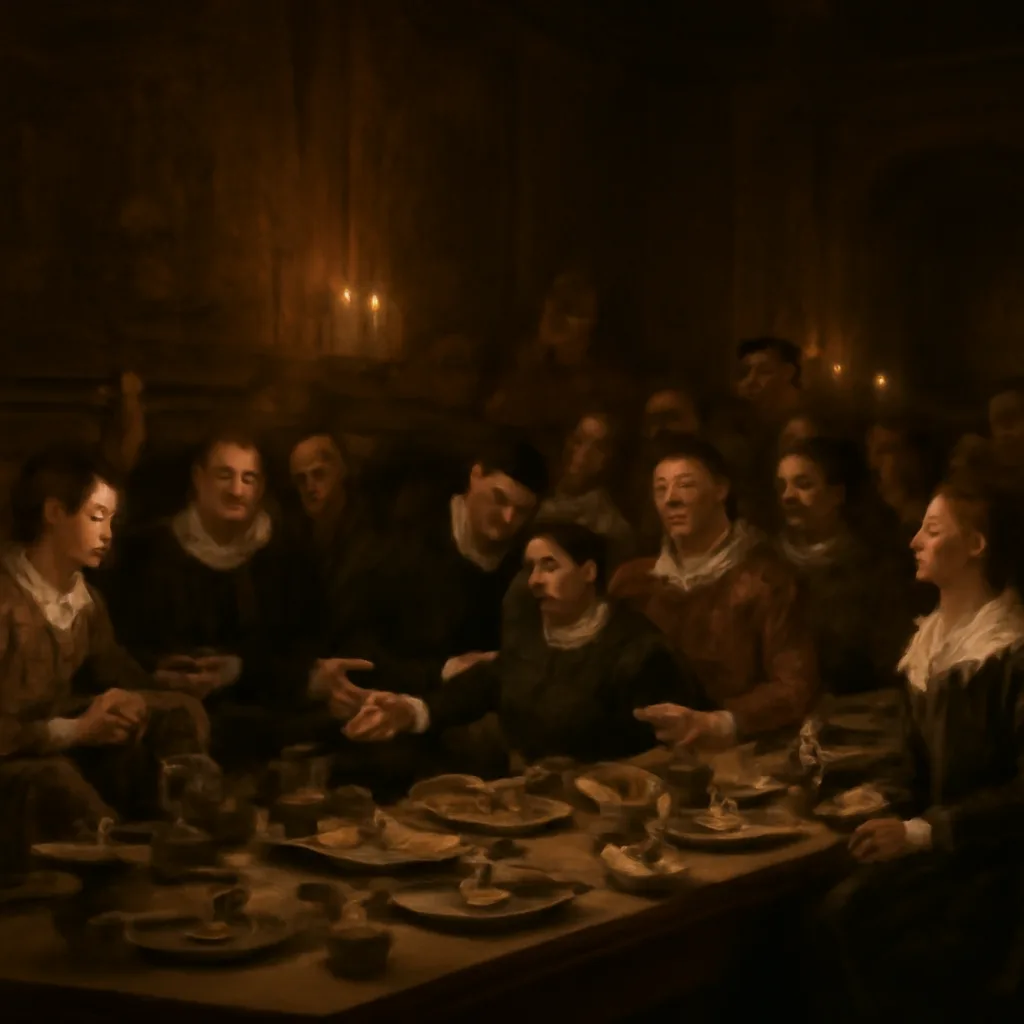
On 25 February 1599 a mass poisoning took place at a banquet held in the court of the Gonzaga family in Mantua, then an important ducal seat in northern Italy. Contemporary and near-contemporary accounts record that numerous guests fell ill after dining; some authorities report deaths among attendants and guests, while others indicate fewer or no fatalities. Because source accounts conflict and later retellings sometimes conflate incidents, historians caution that particulars of who was harmed, how many died, and the precise means of poisoning remain uncertain. Context The Gonzaga court in the late 16th century was a prominent cultural and political center. Banquets and feasts were key occasions for diplomacy and display. Food safety by modern standards was precarious, and the term "poisoning" in early sources could encompass deliberate poisoning, accidental food contamination, or the effects of spoiled provisions or heavy spicing. Political rivalries, court factionalism, and personal vendettas in Italian courts of the period make intentional poisoning a plausible interpretation, but documentary evidence does not provide a single, unambiguous narrative. Sources and disputes Accounts of the 1599 incident appear in various chronicles and diplomatic correspondence of the era. Some contemporaries report that several guests and servants became violently ill after the banquet and that at least a few succumbed. Other reports—drawing on different informants—minimize fatalities and suggest the illness was severe but not uniformly fatal. Because chroniclers often relied on hearsay, and because later historians have sometimes repeated the more dramatic versions, modern scholars treat the event with caution, noting both the likelihood of an acute toxic event at the feast and the lack of conclusive proof of deliberate mass murder. Possible causes Scholars and historians propose several possible explanations: (1) deliberate poisoning by a political or personal enemy using contaminant(s) in food or drink; (2) accidental foodborne illness from spoiled or contaminated provisions (such as botulism or bacterial contamination, though retrospective medical diagnosis is speculative); (3) poisoning from naturally occurring plant toxins or contaminated wine; or (4) exaggeration or misreporting by contemporary observers. No surviving forensic evidence can confirm any single cause. Aftermath and significance The incident contributed to a climate of suspicion within the Gonzaga court and among neighboring states, and it was cited in diplomatic dispatches of the time. It also joined a broader pattern: tales of court poisonings were a persistent element of early modern Italian political culture and historiography. For historians, the 1599 banquet episode is significant as an example of how early modern communities perceived and recorded sudden mass illness in elite settings, and how such events could be politicized. Conclusion The 25 February 1599 banquet in Mantua is recorded as an episode of mass poisoning in sources from the period, but the precise facts—number of victims, cause, and whether the poisoning was intentional—remain disputed. Modern accounts present the event cautiously, emphasizing conflicting reports and the limits of the surviving evidence.