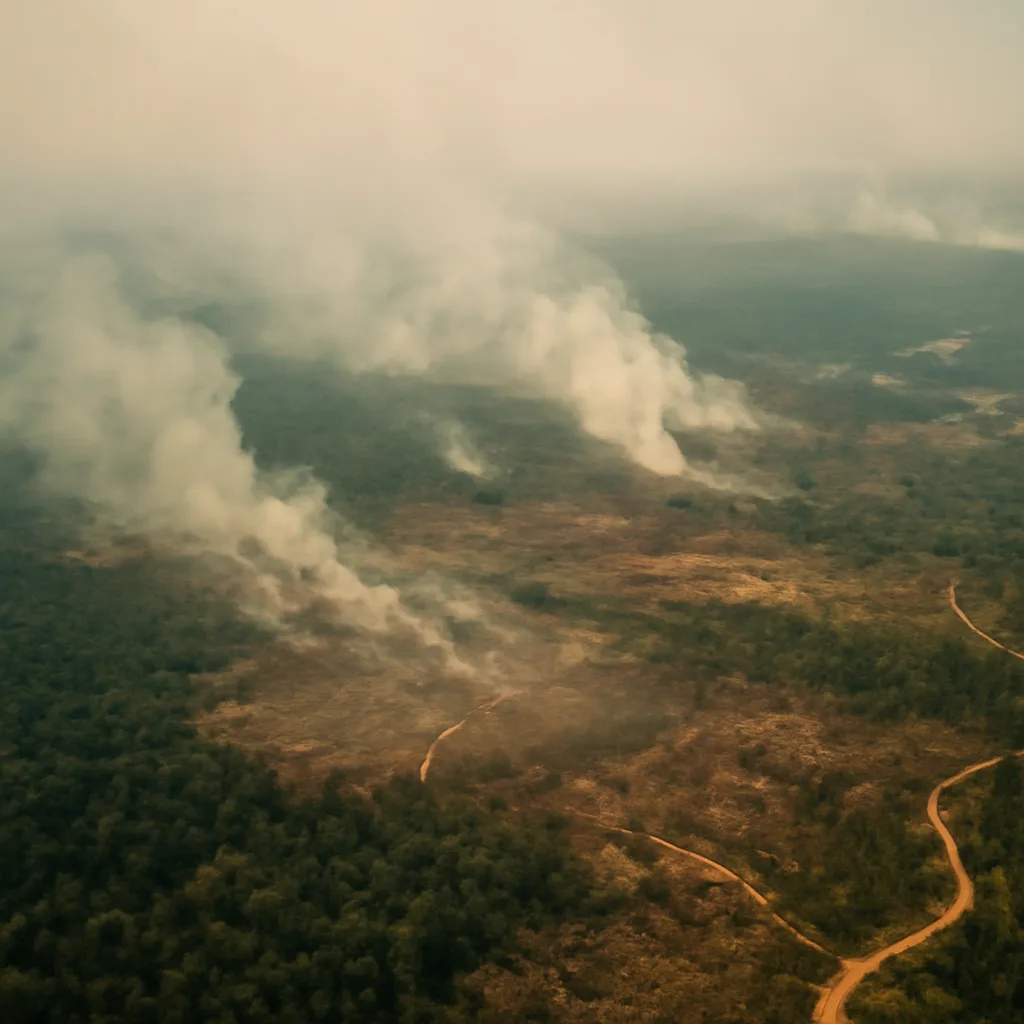
In June 1998, unusually widespread fires flared across the Amazon Basin, prompting alarm from scientists, environmental groups and governments. The blazes came during a strong El Niño event that produced drier-than-normal conditions across large portions of tropical South America, reducing soil and fuel moisture and making forests and cleared lands far more susceptible to ignition and spread. Context and causes The Amazon has long been shaped by the interaction of human land use and climatic variability. In the 1990s, agricultural expansion, cattle ranching and deliberate burning to clear pasture and cropland were common drivers of landscape fires. Under normal, wetter conditions many fires are contained to cleared fields or savanna patches; however, El Niño episodes periodically create extended dry spells that allow fire to escape into forest margins. In 1998 this combination—active clearing, accumulated dry fuel, and meteorological drought—produced unusually intense and extensive burning across parts of Brazil, Bolivia, Paraguay and neighboring areas. Scale and impacts Estimates of the burned area varied among institutions and were influenced by the limited satellite coverage and differing methodologies of the time. Fire hotspots detected by satellites and reports from local authorities indicated a marked spike in active fires compared with preceding years. The impacts were multiple: immediate loss of biomass and wildlife habitat, degradation of air quality from smoke (affecting urban and rural populations), and the release of significant quantities of carbon and other greenhouse gases, contributing to broader climate concerns. Scientific and policy response Researchers emphasized the role of El Niño in amplifying fire risk and highlighted the need to distinguish between fires set intentionally for land conversion and those that escaped control under extreme drought. The 1998 events reinforced calls for improved monitoring—both ground-based and satellite—and better land-management practices to reduce the risk of runaway fires. International attention bolstered funding and collaboration for Amazon research and conservation, though responses varied among countries depending on national priorities and capacities. Uncertainties and longer-term significance Quantifying exact burned area, emissions and ecological loss from the 1998 fires remains subject to uncertainty because of differences in satellite products, cloud cover during observations, and uneven ground verification. Nonetheless, the episode is widely cited by scientists and policy analysts as a clear example of how climate variability and land-use practices interact to raise fire risk in tropical forests. It also helped frame subsequent regional and international discussions about deforestation, carbon accounting and the resilience of tropical ecosystems under a warming climate. Legacy The 1998 Amazon fires did not represent a single uniform event but rather a period of heightened fire activity linked to climatic and human factors. They contributed to growing global awareness of the Amazon’s vulnerability and helped spur initiatives aimed at better fire prevention, monitoring and sustainable land-use strategies, while also informing scientific understanding of the relationships among drought, land clearing and forest fire dynamics.