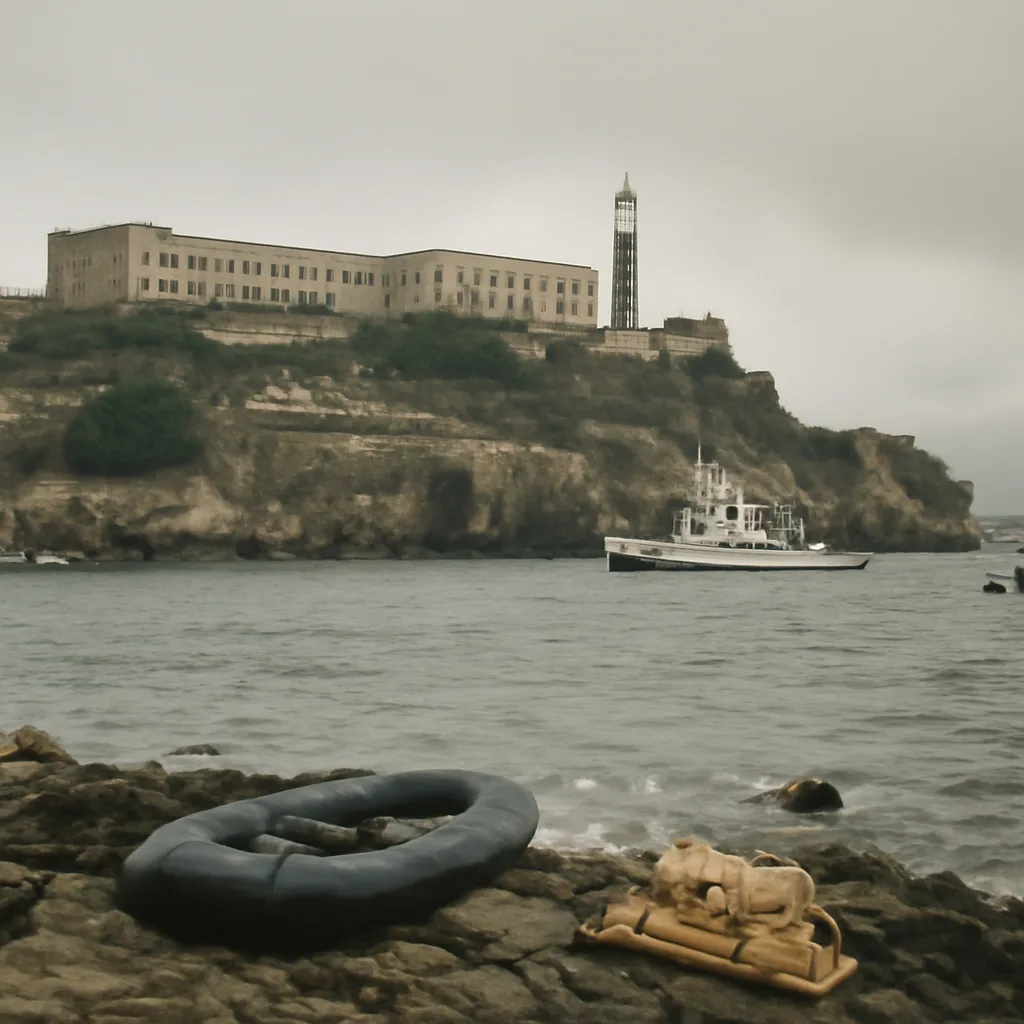
On the night of June 11, 1962, three inmates at the federal penitentiary on Alcatraz Island disappeared in what became one of the most famous prison escapes in U.S. history. The escape involved Frank Morris and brothers John and Clarence Anglin, all convicted bank robbers and considered determined and resourceful prisoners. Their disappearance triggered a massive response from the U.S. Marshals Service, Coast Guard, local law enforcement, and the Federal Bureau of Investigation. Background and preparations Alcatraz, a maximum-security federal prison operating from 1934 to 1963, housed inmates considered escape risks or particularly dangerous. Prisoners on the cellblock where Morris and the Anglins were housed undertook a months-long, improvised effort to tunnel out of their cells. The escapees used makeshift tools to widen ventilation grills and remove sections of the cell walls, concealing their work behind cardboard, paint, and false vent covers. They constructed a raft and life preservers from stolen or scavenged raincoats and other materials. The night of the escape Late on June 11, the three men exited their cells through the breached ventilation grilles, climbed into the utility corridors above the cellblocks, and reached the roof. From there they descended to the island’s shoreline and launched their inflatable craft into San Francisco Bay. Prison officials discovered the escape the following morning when guards found dummy heads made from plaster, paper and real hair—placed in the inmates’ beds to delay detection. Immediate response Authorities quickly organized a large search and rescue and law enforcement operation. The U.S. Coast Guard deployed cutters and aircraft, and the U.S. Marshals and FBI coordinated investigations and tips. Law enforcement searched shoreline areas, islands in the Bay, and inland locations. The search involved both surface and aerial patrols and questioned possible accomplices and witnesses. Despite the scale of the operation, no confirmed trace of the three men was found in the immediate aftermath. Investigations and theories Officials at the time concluded the escape was likely aided by favorable currents and thorough planning, but they did not officially confirm whether the men survived the crossing. The Bay’s cold water, strong tides, and shipping traffic make a successful escape difficult; hypothermia or drowning were considered plausible fates. Over the decades, numerous theories and reported sightings have circulated, and investigators periodically reopened aspects of the case in light of new leads. In 1979 the U.S. Marshals Service declared the men presumed drowned, but the case has never been definitively closed and remains officially unresolved in some respects. Legacy The 1962 Alcatraz escape captured public imagination and has been the subject of books, documentaries, and films. It contributed to Alcatraz’s enduring reputation and public interest in criminal justice history. The prison closed less than a year later, in 1963, for reasons including high operating costs and deteriorating facilities. The escape endures as a historical mystery because, despite extensive searches and subsequent investigative reporting, conclusive evidence proving the escapees’ survival or death has not been produced. What is verifiable Documented details include the identities of the three escapees (Frank Morris, John Anglin, Clarence Anglin), the date of the escape (June 11, 1962), the methods used to breach the cells and construct flotation devices, and the large-scale multi-agency search that followed. The ultimate fate of the three men remains unproven and subject to debate, with no universally accepted resolution supported by definitive physical evidence.