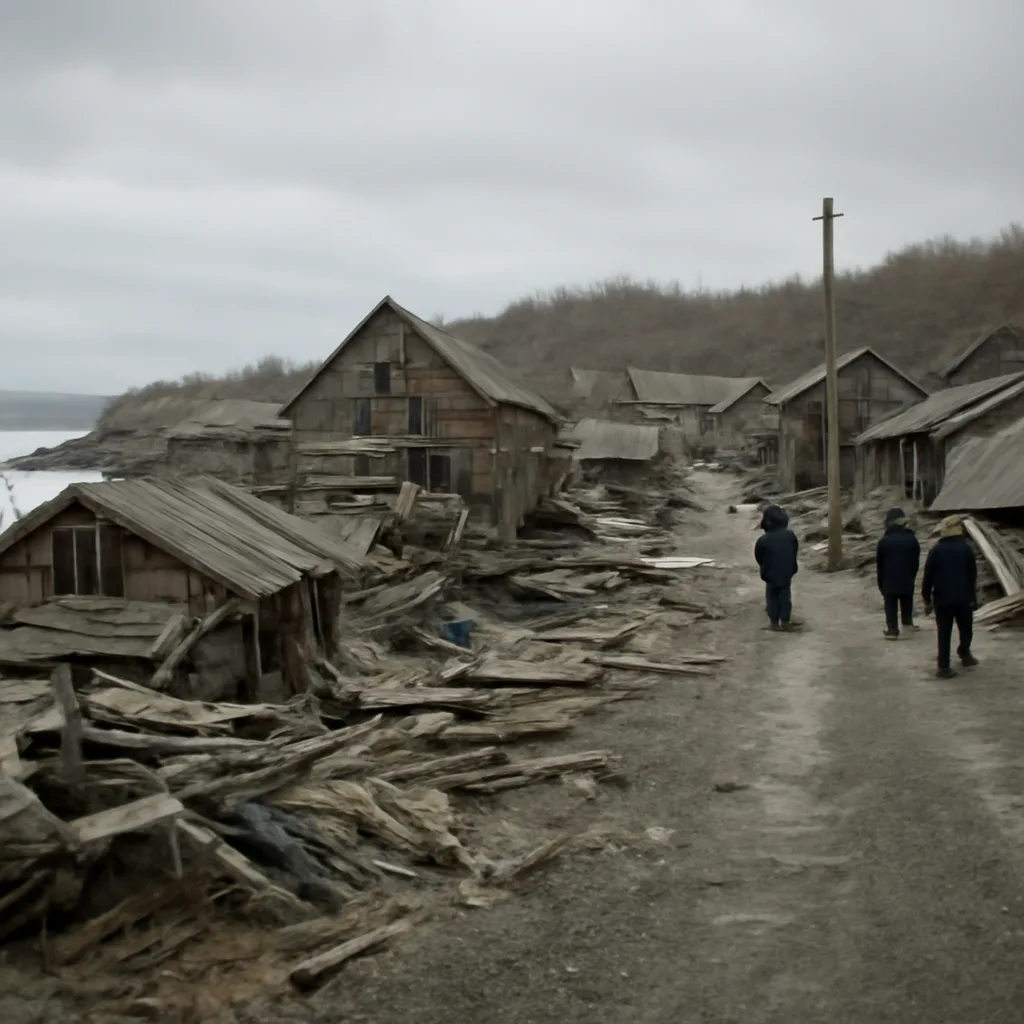
On November 30 a strong earthquake struck near the Alaska Peninsula, centered offshore of the eastern Aleutian Islands and close to the small community of False Pass. The quake produced major damage to buildings and infrastructure, triggered fires, and resulted in at least two confirmed deaths; additional injuries and damage were reported across the region. Because the epicenter was offshore and the event occurred in a sparsely populated area, impacts were concentrated in local communities and at sea but were nonetheless severe for residents and responders. Geology and magnitude The quake was a powerful seismic event typical of the tectonically active Aleutian subduction zone, where the Pacific Plate converges with and subducts beneath the North American Plate. Reports at the time indicated a large magnitude (widely reported as magnitude 7.1), with strong ground shaking felt locally and by people in nearby communities. Aftershocks followed the mainshock, as is common after large earthquakes in subduction settings. Local impacts False Pass, a small fishing community on Unimak Island near the earthquake’s location, suffered extensive damage to homes and public buildings. Several structures were reported destroyed or heavily damaged, and fires broke out in the wake of the shaking. Two deaths were confirmed in connection with the earthquake; other residents sustained injuries. Power outages and disruptions to communications and transportation complicated emergency response, with damaged roads and facilities limiting access for outside assistance. Maritime and broader regional effects Given the offshore epicenter and the Aleutians’ importance for fishing and shipping, the quake affected maritime operations. Vessels in the vicinity reported strong motion; localized harbor damage and disruptions to fishing infrastructure were reported. The U.S. Tsunami Warning/Alert Center and other agencies monitored for tsunami threats. While some evacuation advisories and small, local tsunami observations were noted in parts of the region, there was no widely destructive Pacific-wide tsunami from this event. Response and recovery Local authorities, statewide emergency management, and federal agencies coordinated response and assessment efforts. Immediate actions focused on search and rescue, firefighting where fires had started, restoring critical services such as power and communications, and conducting structural assessments to determine which buildings were unsafe. Because the affected communities are remote, logistics for bringing supplies, heavy equipment, and personnel required coordination by air and sea. Context and aftermath The November 30 quake underscored the persistent seismic hazard in Alaska’s Aleutian region and the vulnerability of small, remote coastal communities to strong offshore earthquakes. In the months following the event, recovery work included rebuilding damaged infrastructure, repairing homes, and implementing mitigation measures where feasible. The earthquake contributed to ongoing discussions about community preparedness, emergency communication plans, and infrastructure resilience in Alaska’s seismically active areas. Uncertainties and sources Specific casualty counts, damage assessments, and magnitude/station data reported in initial news accounts and agency releases varied in the immediate aftermath, as is typical for major natural disasters. Official final tallies and detailed technical analyses were produced later by agencies such as the U.S. Geological Survey, state emergency management, and local authorities. This summary reflects widely reported facts about the November 30 event and its local impacts while noting that some early figures were updated as assessments continued.