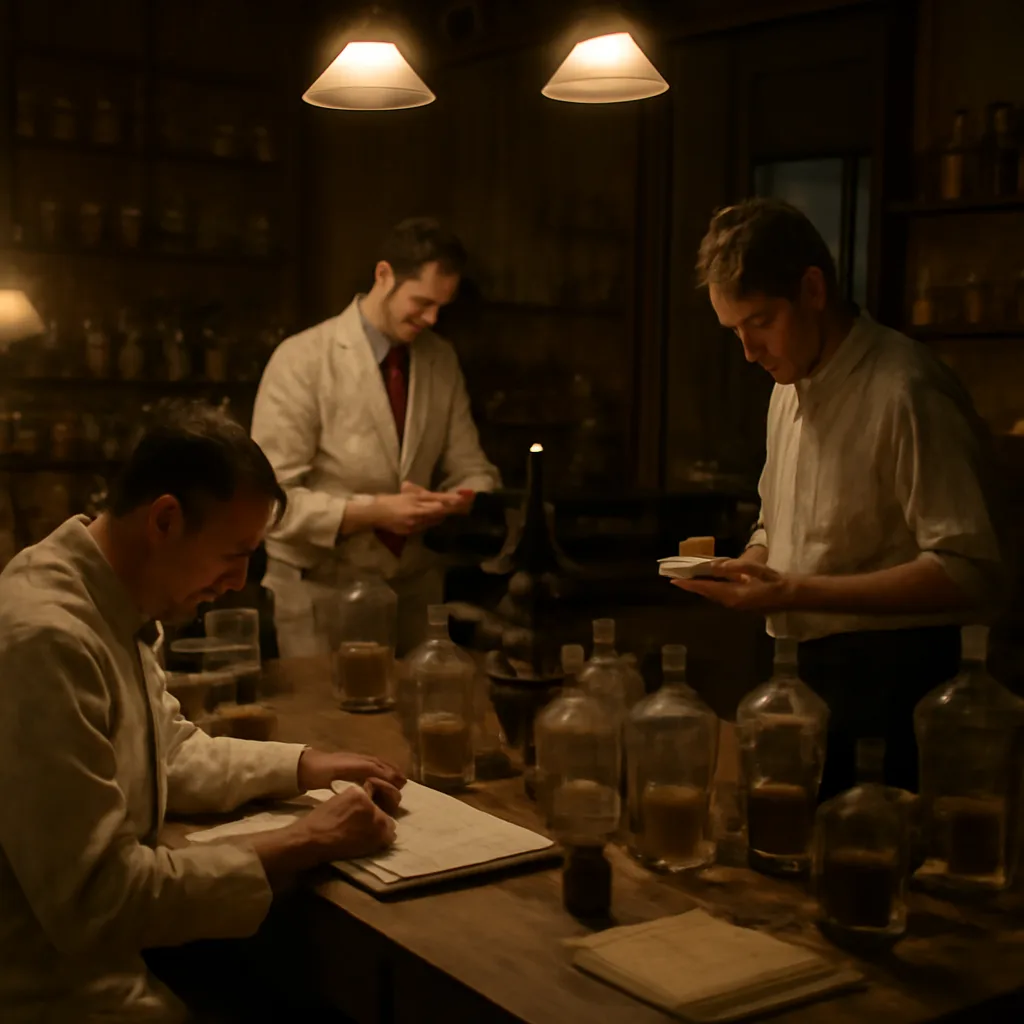
In early February 1912 a notable instance of fabricated scientific evidence came to light, provoking discussion within scientific and legal circles about standards of proof and research integrity. The episode occurred against a backdrop of growing professionalization in laboratories and rising public trust in scientific expertise—conditions that made the discovery of falsified material particularly consequential. The case involved claims presented as empirical proof in support of an argument circulating among researchers and, in some accounts, connected to legal or criminological questions. When colleagues examined the underlying material more closely, inconsistencies and anomalies prompted reanalysis. Laboratory notes, specimen provenance, or reproductions of results were scrutinized; some elements could not be independently verified or matched the stated methods. The exposure relied on contemporaneous practices of cross-checking results, replication attempts, and appeals to primary documentation—a reflection of procedural norms forming in the era. Newspapers and professional journals of the time reported on the unfolding dispute, framing it as an embarrassment for those who had promoted the original findings and as a cautionary tale about hasty acceptance of dramatic claims. Critics argued the incident demonstrated the need for clearer standards of evidence, transparency in laboratory records, and institutional mechanisms to evaluate contested findings. Defenders cautioned against jumping to conclusions without full inquiry, noting that imperfect methods and human error could account for some discrepancies. Historically, 1912 sits within a period when forensic science, pathology and laboratory biology were expanding rapidly. Institutions such as university laboratories, municipal public health offices and government investigative agencies were formalizing procedures for collecting and analyzing material evidence. This institutional growth created both opportunities for improved reliability and new vulnerabilities: centralized authority could amplify an erroneous or fabricated claim, while nascent peer-review and oversight systems were still uneven. The exposed fabrication had several immediate consequences. Peers demanded corrections or retractions in scientific outlets; some professional reputations were damaged; and the episode influenced discussions on record-keeping, chain of custody, and requirements for reproducibility. Over time, such controversies contributed to gradual reforms—stronger emphasis on documented methods, preservation of original specimens, and independent verification—measures that now form part of modern scientific and forensic best practices. It is important to note limits in the historical record: contemporary reports vary in detail and emphasis, and modern summaries must take care not to conflate distinct incidents or attribute motives without direct evidence. While the 1912 exposure is representative of early 20th-century debates about scientific trustworthiness, specific actors, institutions and the precise mechanics of fabrication differ across cases and sources. Ultimately, the 1912 exposure stands as an early example of how scientific communities responded to discovered falsification—through scrutiny, debate and incremental institutional reform—shaping evolving norms that aimed to protect the credibility of empirical inquiry.