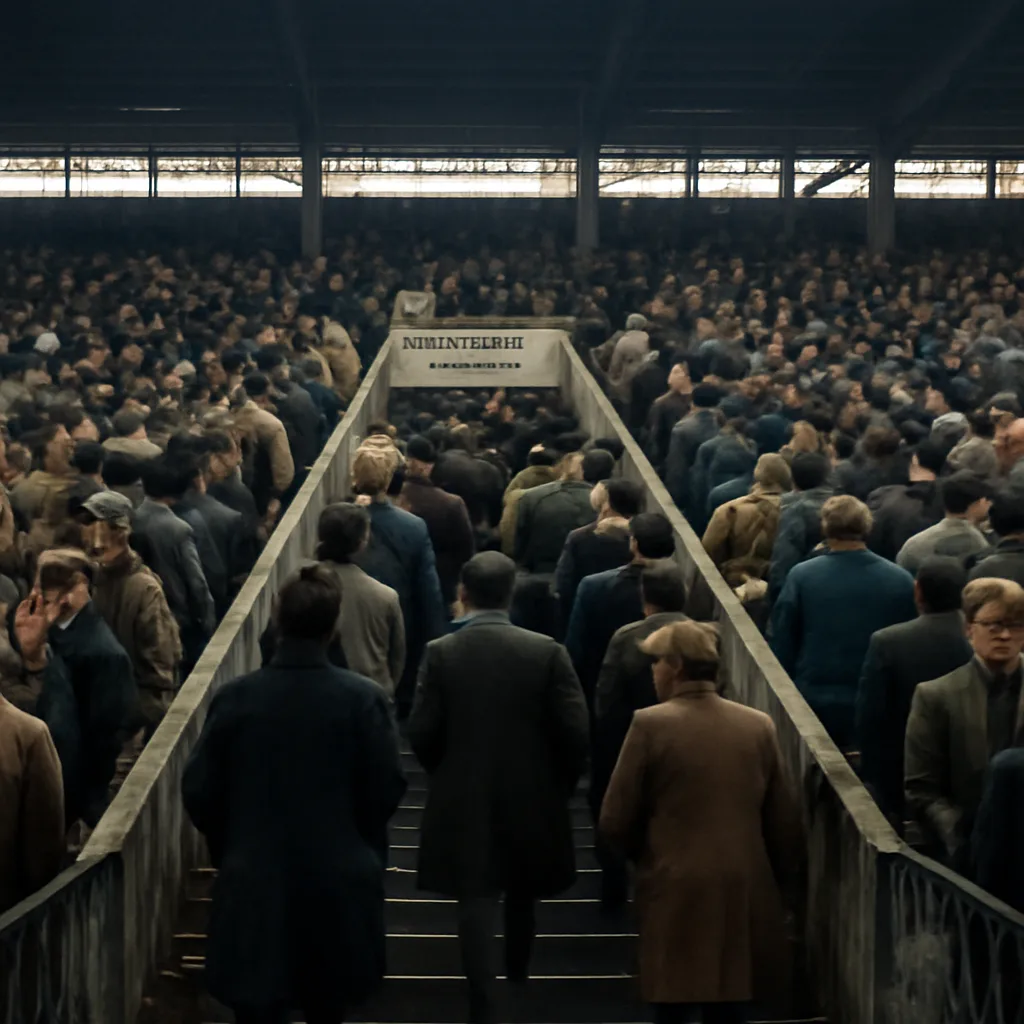
On the afternoon of January 2, 1971, during an Old Firm match between Rangers and Celtic at Ibrox Stadium in Glasgow, a crowd crush occurred on Stairway 13 of the main stand. As supporters streamed down the stairway at the end of the match, movement slowed and people became compressed on the steep, narrow flight of steps. In the resulting panic and collapse, 66 spectators lost their lives and many more were injured, making it one of the deadliest sporting disasters in British history. The stadium at that time was a mixture of older terraced and seated sections built in earlier decades. Stairway 13 led from the top tiers of the main stand to exits at street level; its configuration—with a steep incline, narrow steps, and limited lateral space—was later judged to have contributed to the severity of the incident. Eyewitness reports and official findings emphasized that a sudden stop in crowd movement created a domino effect: those lower down were pressed against people above them, leading to compressive asphyxia and trampling. Immediate rescue efforts were carried out by stadium staff, police, fire crews, and bystanders. Injured supporters were taken to nearby hospitals, and the tragic loss of life prompted deep public shock and demands for investigation. A formal inquiry followed, examining stadium design, crowd control procedures, stewarding, and exit arrangements. The investigation highlighted shortcomings in how the crowd had been managed and in the physical layout of the stairway and exits. The aftermath led to changes in stadium safety in Scotland and across the United Kingdom. Recommendations from inquiries and safety reviews contributed to later reforms in crowd management, exit routing, and the structural design of spectator facilities. Over the following decades, mounting concern about spectating safety culminated in broader stadium modernization and stricter safety standards, including controls on capacity, clearer exit routes, and improved steward training. The Ibrox stairway disaster of 1971 is often remembered alongside other stadium tragedies that influenced public policy on event safety. While stadium building and crowd-control practices have evolved since then, the event remains a somber reminder of how design and management failures can combine with large crowds to produce catastrophic outcomes. Memorials and commemorations by supporters and the local community have marked anniversaries of the disaster, honoring the victims and reinforcing lessons about spectator safety. Precise details such as the sequence of individual movements or the actions of specific named staff vary among contemporary accounts; official reports focused on systemic causes rather than assigning criminal culpability to particular individuals. The overall findings established that constrained exits, inadequate crowd flow management, and the physical characteristics of Stairway 13 were central factors in the tragedy.