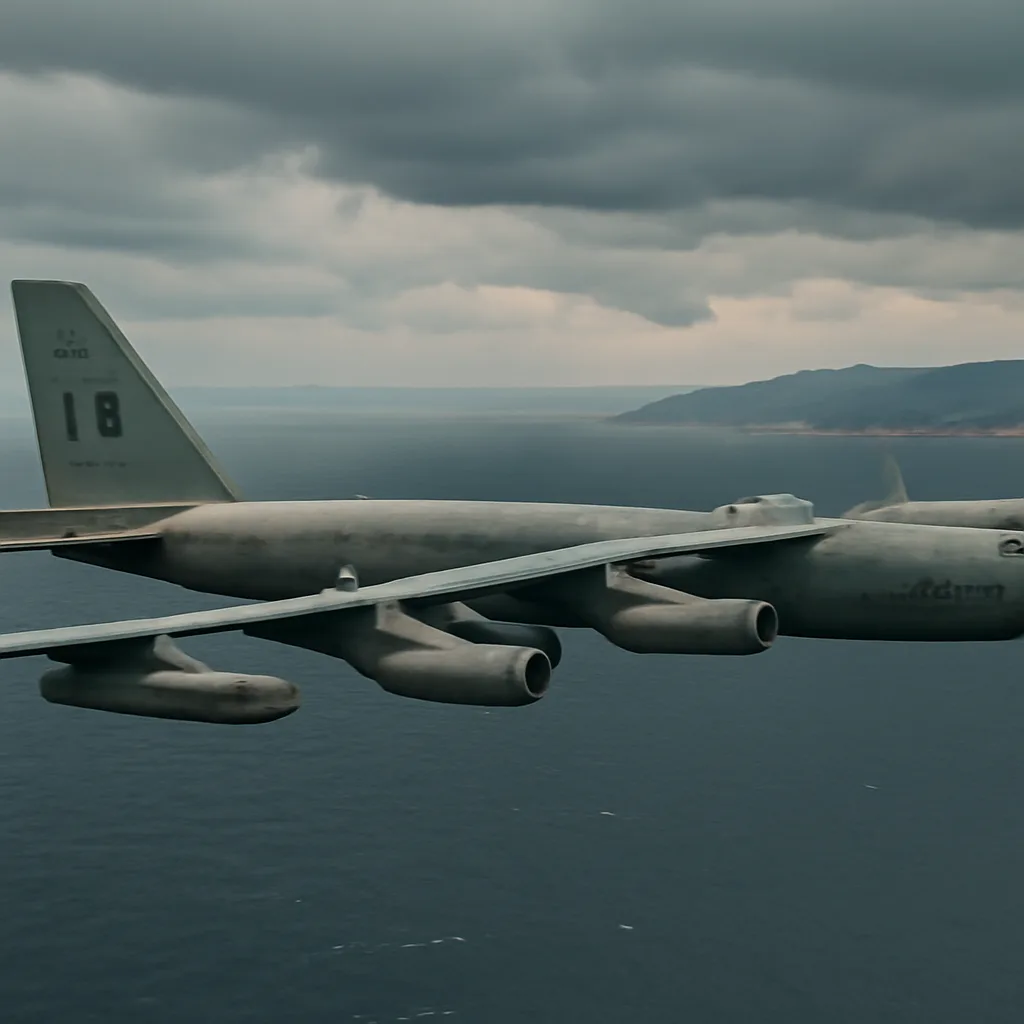
On February 9, 1968, U.S. defense officials later confirmed that a U.S. Navy plane came dangerously close to a U.S. Air Force B-52 Stratofortress carrying nuclear weapons while both were operating over the Mediterranean Sea. The incident — part of a broader set of Cold War-era accidents and near-misses involving nuclear-armed aircraft — highlighted systemic risks in operating and coordinating strategic forces at high tempo during tense periods. Context and operational environment By 1968, the United States maintained continuous strategic bomber patrols and airborne alert operations as part of its nuclear deterrent posture. Air Force B-52s routinely carried nuclear weapons on training, alert, or ferry flights; Navy and allied aircraft operated in the same airspace for surveillance, reconnaissance, and routine missions. Communications, air-traffic control, and identification procedures were less automated than today, and human factors played a significant role in deconfliction. What is known Declassified documents and subsequent Pentagon statements indicate that on February 9 an in-air close call occurred between a Navy aircraft and an Air Force bomber armed with nuclear ordnance. Accounts vary in detail: some describe the event as a near collision avoided by evasive maneuvering, while others characterize it as a serious separation lapse that could have resulted in catastrophic loss if contact had occurred. The Pentagon’s confirmation affirms that such a near-miss did take place, though exact flight paths, altitudes, and the precise sequence of events remain partially redacted or summarized in released records. Consequences and investigations Incidents like the February 1968 near-miss spurred internal reviews of command-and-control procedures, flight coordination between services, and safeguards for nuclear weapons aboard aircraft. In the wider Cold War context, multiple documented accidents and ‘‘broken arrow’’ events (accidents involving nuclear weapons) prompted changes to reduce risk: improved inter-service communication protocols, more rigorous maintenance and handling procedures for weapons, and adjustments to airborne alert policies over time. Uncertainties and public record Not all specifics of the February 9 incident are publicly available. Some official files remain classified or heavily redacted, and press reporting from the time was constrained by national-security considerations. Historians and investigative journalists have pieced together aspects of the episode from declassified memos, oral histories, and later Pentagon disclosures, but disagreement persists over some technical details and the immediate assessment of risk at the time. Broader implications The acknowledgment of this near-miss contributes to the documented pattern of Cold War-era nuclear risks arising from human error, procedural gaps, and the complexity of managing diverse platforms in shared airspace. The event is part of the historical record that has informed later arms-control discussions, safety reforms, and transparency efforts aimed at reducing the likelihood that routine operations could escalate into accidental nuclear catastrophe. Summary The Pentagon’s confirmation that a Navy aircraft narrowly avoided colliding with a nuclear-armed Air Force bomber on February 9, 1968, reinforces a long-standing historical concern about the safety of nuclear operations during the Cold War. While some operational specifics remain unclear, the episode contributed to investigations and reforms intended to tighten coordination and safety around nuclear-capable flights.