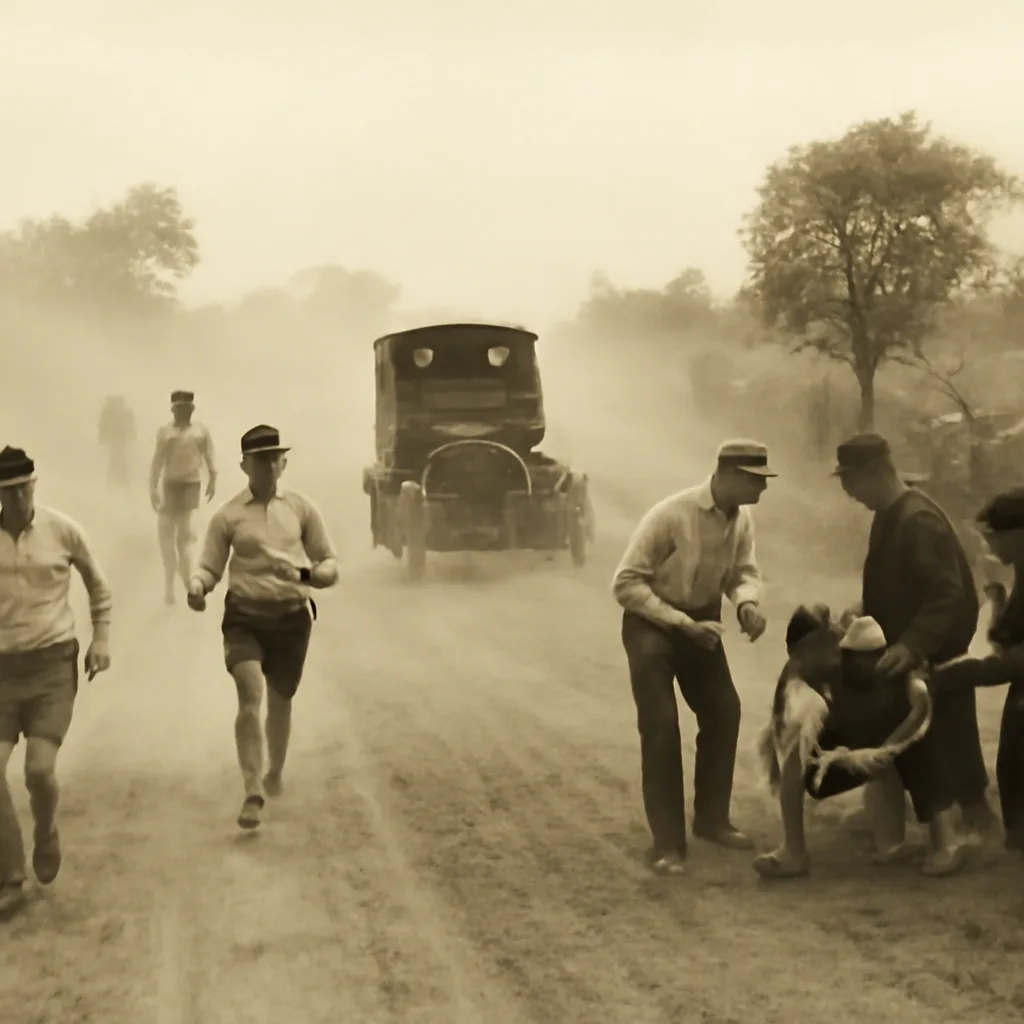
The marathon at the 1904 St. Louis Olympics is among the most infamous events in early Olympic history. Staged on August 30, 1904, the race unfolded under extreme conditions and rudimentary medical understanding. Thomas Hicks of the United States was declared the winner after a chaotic contest in which he and several other competitors suffered severe distress; Hicks received doses of strychnine mixed with brandy from his handlers during the race, a practice that nearly cost him his life. Context and conditions The race course ran on dusty, rutted country roads outside St. Louis that day. Temperatures and humidity were high; the organizers provided minimal water stations and vehicles kicking up dust made conditions worse. These factors combined with the era’s limited knowledge of hydration and endurance physiology to create dangerous circumstances for the runners. The race itself From the start, the marathon devolved into a sequence of mishaps. Some athletes collapsed from heat and exhaustion; others were hindered by the thick dust and poor course marking. Several runners received assistance or refreshments of dubious composition. The event’s chaotic support system allowed nonstandard interventions by trainers and coaches, who believed stimulants could revive exhausted athletes. Strychnine and brandy Thomas Hicks’ team administered small amounts of strychnine sulfate mixed with brandy at least twice during the race. In the early 20th century, strychnine was sometimes used in small doses as a stimulant, though it is a potent poison that can cause severe muscle spasms, convulsions, and respiratory failure. Reports from the event indicate that Hicks was barely able to continue — he reportedly had to be supported by his managers for portions of the final miles — and his condition after finishing was extremely poor. Contemporary accounts and later historical summaries indicate that the administered substances, combined with dehydration and exhaustion, left him close to death. Rules and controversy The 1904 marathon occurred before modern anti-doping rules and standardized medical oversight. While some contemporaries accepted stimulants as legitimate aid, other observers criticized the practice as dangerous and unsportsmanlike. The image of Hicks being helped across the finish line, semi-delirious and aided by his handlers, fed ongoing debates about athlete welfare, fair play, and what constitutes legitimate assistance. The race also featured other oddities — including a runner being aided by a car and a competitor reportedly drinking his own urine — all of which have been documented in primary and secondary sources as part of the broader narrative of the event’s disorder. Aftermath and legacy Hicks recovered from his ordeal but suffered lasting health effects in the short term. The episode contributed to increasing scrutiny of race conditions and the types of assistance permitted during endurance events. Over subsequent decades, the Olympics and other sporting bodies developed clearer rules on medical care, allowed substances, and in-race assistance. Today’s understanding of hydration, electrolytes, and legal medical interventions contrasts sharply with the improvisations seen in 1904. Historical notes and sources Details about the 1904 marathon and Thomas Hicks’ use of strychnine appear in contemporary newspaper reports and later historical studies of the early modern Olympics. Because reporting standards and medical terminology of the time differ from modern practice, some descriptions vary in wording and emphasis; historians rely on multiple primary accounts and archival material to reconstruct the sequence of events. The broad facts — that Hicks received strychnine and brandy during the race, that he nearly died, and that the race was run in hazardous conditions — are well supported in the historical record. The 1904 marathon remains a cautionary episode in sports history: an example of how limited medical knowledge, poor race organization, and a lack of regulatory oversight can combine to endanger athletes.