China Conducts First Nuclear Test, Escalating Cold War Dynamics
On November 17, 1964, the People's Republic of China detonated its first atomic device at Lop Nur, becoming the fifth nuclear power and altering strategic balances during the Cold War.
On November 17, 1964, the People's Republic of China carried out its first successful nuclear test, code-named "596," at the Lop Nur test site in Xinjiang. The device was a fission bomb with an estimated yield of roughly 20 kilotons. The detonation made China the fifth country to demonstrate a nuclear explosive capability, following the United States, the Soviet Union, the United Kingdom, and France.
Background and motivations
China's nuclear program began in the 1950s with assistance from the Soviet Union, though Sino-Soviet relations deteriorated later in the decade and Moscow withdrew technical support. Chinese leaders framed development of a nuclear force as essential for national security, deterrence, and international standing amid perceived threats from both the United States and the Soviet Union. Domestic scientific mobilization, resources allocated to the program, and the selection of Lop Nur as a remote test site enabled progress despite limited industrial capacity.
The test and immediate reactions
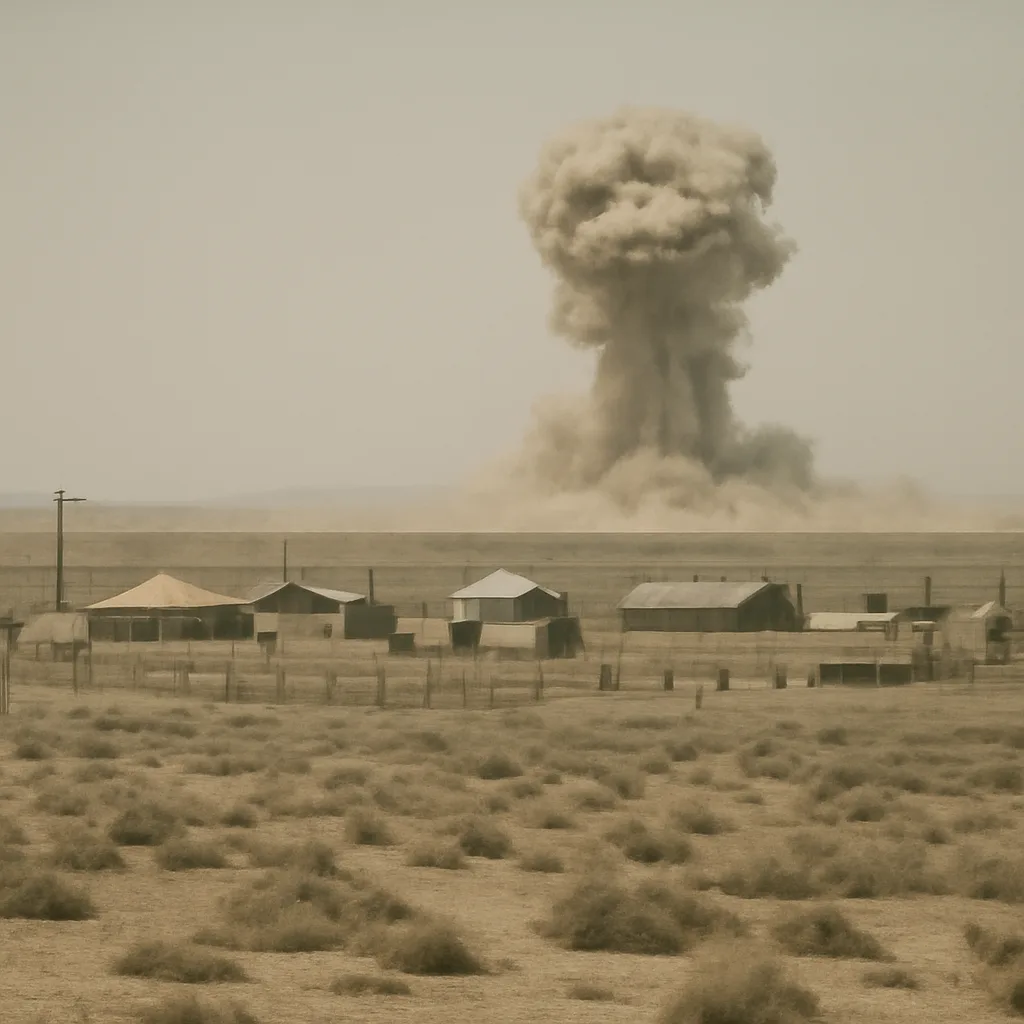
The test at Lop Nur occurred in a harsh desert environment chosen for its remoteness and relative isolation. Chinese state media confirmed the explosion within days. International reaction was swift: Western governments and regional neighbors expressed concern about nuclear proliferation and regional stability. The Soviet Union issued a cautious statement; relations between Beijing and Moscow were already strained, and the test intensified geopolitical calculations across the Cold War.
Strategic implications
China's entry into the nuclear club altered strategic calculations on multiple fronts. For the United States and NATO, it added a new variable to Asian security and global deterrence frameworks. For neighboring countries, including India and Japan, the test underscored vulnerabilities and prompted reassessments of defense and diplomatic postures. Within China, nuclear capability was presented as a means to deter foreign intervention and to bolster the country's claim to great-power status.
Arms control and proliferation context
The 1964 test occurred against an evolving international effort to curb nuclear testing and proliferation. The Partial Test Ban Treaty (1963) had banned atmospheric nuclear tests by its signatories, but underground testing and the spread of weapons technology remained concerns. China's test highlighted limits of existing agreements and contributed to later diplomatic initiatives focused on nonproliferation, verification, and arms control.
Legacy
China's 1964 test set the stage for the development of a strategic arsenal and delivery systems in subsequent decades. It also affected regional security dynamics, contributing to arms competitions and diplomatic efforts aimed at managing the risks of nuclear weapons. Historical assessments emphasize both the technical achievement represented by the test and the broader geopolitical consequences for the Cold War era.
Notes on sources and uncertainty
Technical details such as yield estimates and program timelines are based on declassified documents, contemporary reporting, and later scholarship; some specifics (for example, exact device design and internal decision-making processes) remain subject to limited public documentation and scholarly interpretation.