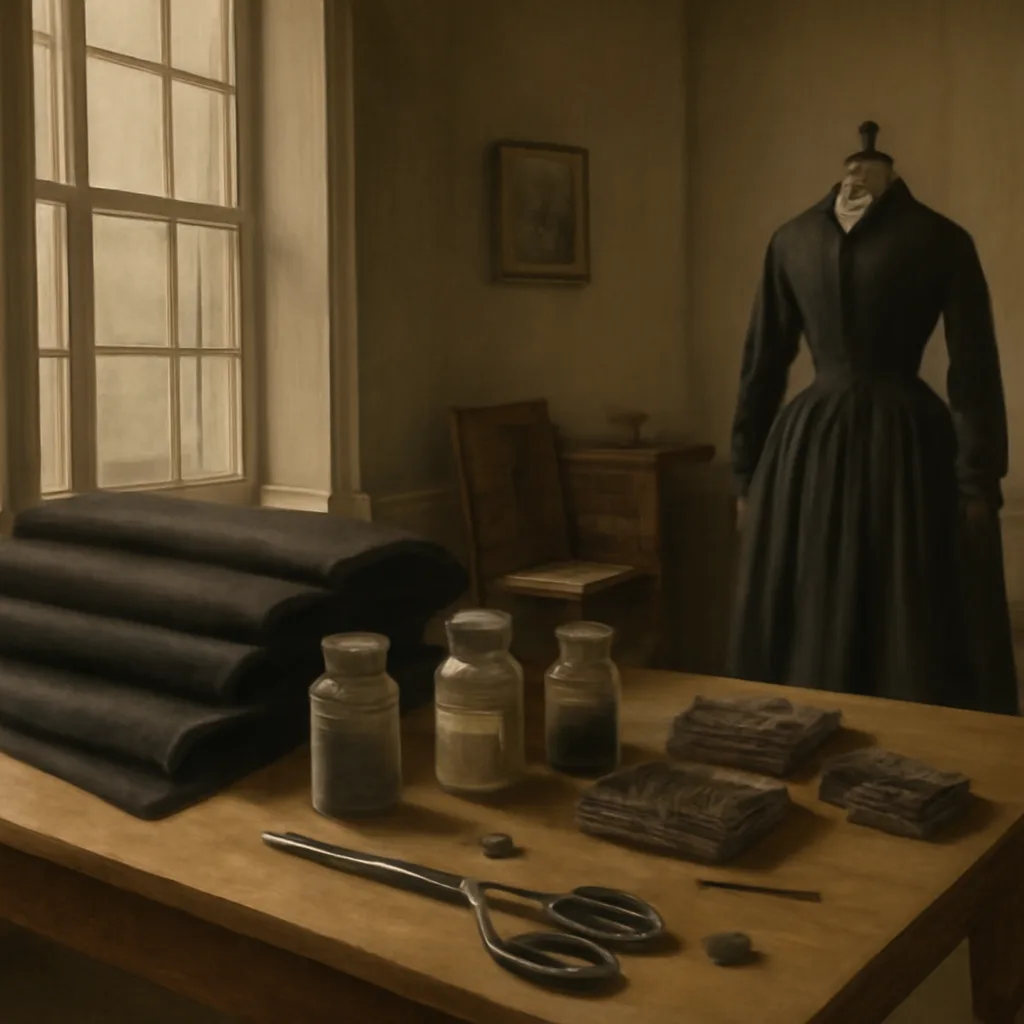
On 11 February 1862 a case reported in contemporary British medical literature connected a fatal instance of chronic lead poisoning with exposure to pigments used in clothing, particularly garments associated with Victorian mourning customs. The episode occurred amid rising industrial production of dyes and pigments and at a time when fashionable fabrics were often treated or printed with colorants containing toxic heavy metals. Context By the mid-19th century the manufacture and decoration of textiles had become increasingly industrialized. Metal-based pigments, including white lead and lead-containing compounds, were widely used in paints, printing inks and some textile colorants and mordants. At the same time, Victorian mourning practices—especially for women—prescribed specific garments and accessories, often in deep blacks or subdued shades, that could be heavily treated to achieve particular finishes. The 1862 case Contemporary reports and medical notices from 1862 describe a woman who developed progressive symptoms consistent with chronic lead poisoning: abdominal pain, constipation, weakness, and eventually severe systemic decline. Physicians investigating occupational and domestic exposures traced the most plausible source to repeated contact with cloth and trimmings that had been treated or printed with lead-based pigments. The connection was supported by the pattern of exposure and the absence of other common sources such as occupational metalworking. Medical and social reaction The case was cited by physicians as an example of non-occupational lead intoxication arising from consumer goods. Medical journals and public health commentators of the period were beginning to document similar incidents involving pigments and dyes used in wallpapers, toys, and certain household paints. While the 1862 case did not immediately produce sweeping regulation, it contributed to a gradual awareness among doctors, textile workers and a segment of the public that certain fashion materials could pose health risks. Limitations and uncertainty Primary accounts of the 1862 event were concise clinical notices rather than detailed forensic investigations. Nomenclature and diagnostic criteria of the period differ from modern standards, and retrospective interpretation relies on matching described symptoms and exposure history with what is now known about lead toxicity. There is no single, authoritative modern forensic report that reconstructs every factual detail of the case; historians and medical researchers infer the connection from the published notices and the wider pattern of related incidents in the 19th century. Legacy Although isolated, cases like the one reported in February 1862 fed into later debates about the safety of pigments and dyes. Over subsequent decades, public health campaigns, evolving manufacturing practices and, eventually, legal restrictions reduced the use of certain hazardous substances in consumer textiles and paints. The episode remains a historically relevant example of how everyday fashion and industrial chemistry intersected with public health during the Victorian era.