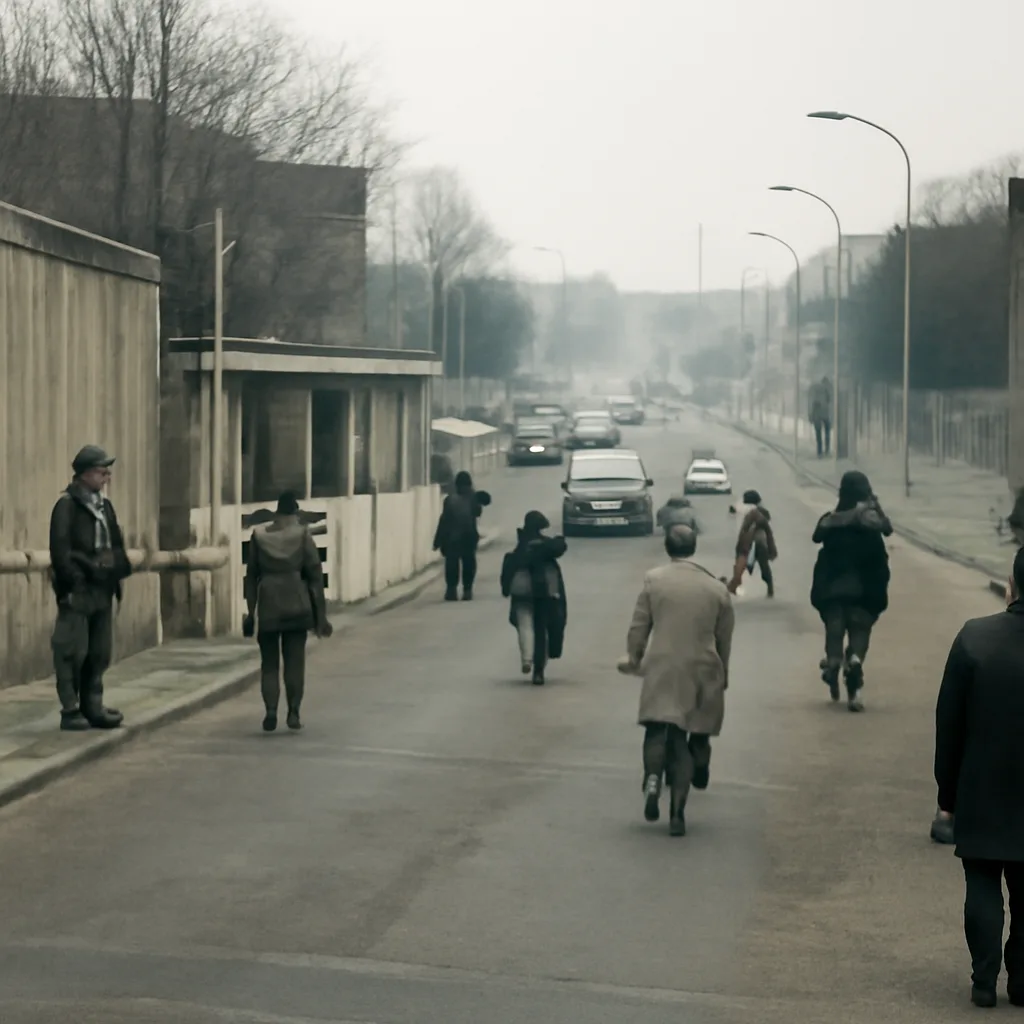
Background and context The Berlin Wall, erected in 1961, had for nearly three decades divided Berlin into East and West sectors, with heavily controlled crossing points and a fortified border. The upheavals of 1989—most prominently the mass protests in the German Democratic Republic (GDR), the opening of Hungary’s borders, and the fall of the Wall on 9 November 1989—set in motion a transition away from the GDR’s strict frontier regime. In the months that followed, the two German states and allied powers negotiated procedures to manage travel and border administration while political decisions on the future of Germany unfolded. What changed on 11 February 1990 On 11 February 1990, authorities implemented official measures to reopen and regularize a number of crossing points through the Wall for pedestrian and vehicular traffic under agreed procedures. The action formalized practices that had already been evolving since November 1989: checkpoints that had been improvised, informal, or intermittently open were brought under clearer administrative control to permit orderly transit, reduce friction, and facilitate everyday life for residents of both sectors. Practical effects The formal reopening meant clearer rules for passport and visa checks, customs procedures, and traffic control at designated crossing points. For Berliners, this reduced uncertainty for commuting, visiting family, conducting business, and accessing services across the formerly fortified divide. It also aided the coordination of public transport and emergency services that had been impeded by the previous ad hoc arrangements. Political and legal significance Administratively regularizing crossings was part of a stepwise dismantling of the GDR’s border apparatus while remaining consistent with ongoing diplomatic processes. The measure did not itself constitute reunification, which would be completed later in 1990, but it marked a concrete shift from confrontation to managed cooperation. It also reflected pressure from both domestic protest movements and international actors to normalize relations and prepare for larger constitutional and territorial changes. Public reaction and atmosphere Contemporary reports and photographic records from early 1990 describe a mix of relief, cautious optimism, and lingering uncertainty. Citizens who had been separated from relatives and friends experienced reunions and resumed travel, while administrators and police adapted to new duties under rapidly changing legal frameworks. The reopening of crossing points was therefore both a practical convenience and a symbolic affirmation that the barriers of the Cold War era were being dismantled. Aftermath and longer-term consequences The formal reopening of crossing points in February 1990 was followed by further administrative and political steps culminating in German reunification on 3 October 1990. Over the subsequent months, border installations were removed, transport links reintegrated, and joint planning undertaken for the unified city. The February measures remain a documented episode in the transitional period: not the end point, but an important procedural milestone toward restoring free movement within Berlin and the reunified Germany. Sources and historiography Details of the 1990 border-administration measures are recorded in contemporaneous government notices, newspaper coverage, and later academic studies of the GDR’s collapse and German reunification. Where accounts differ, historians emphasize that February’s reopening was primarily an administrative regularization following the substantive political breach of the Wall in November 1989, rather than an isolated political decision that alone resolved the status of the border.