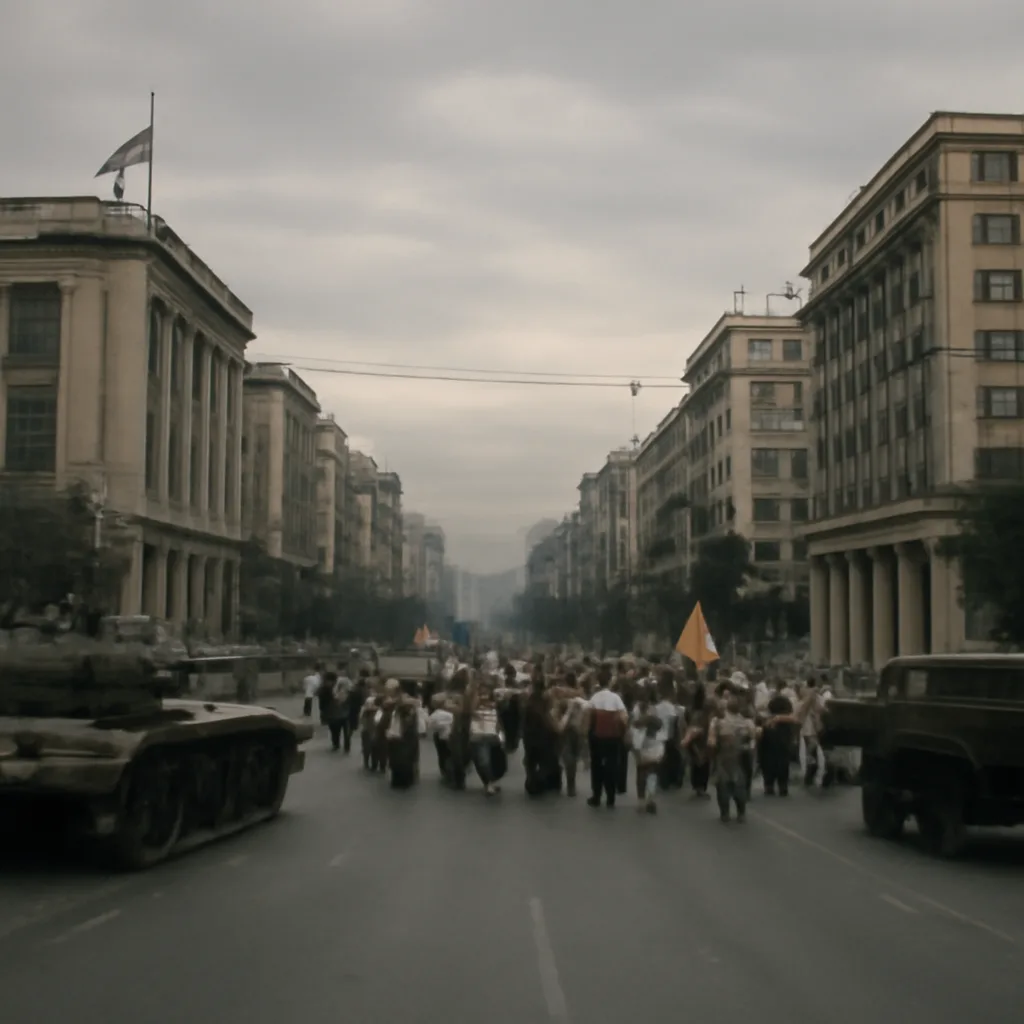
Background and buildup Greece had been governed since April 1967 by a right-wing military junta led initially by a group of colonels. The regime curtailed civil liberties, banned political parties, suppressed dissent, and ruled by decree. Over the following years opposition persisted inside Greece and among exiles abroad, while the junta’s stability relied on internal military cohesion and external geopolitical factors during the Cold War. Crisis over Cyprus The immediate trigger for the junta’s collapse was its intervention in Cyprus in July 1974. On July 15, 1974, a coup in Nicosia engineered by elements of the Greek junta sought to overthrow Cyprus’s president, Archbishop Makarios III, and install a pro-Enosis (union with Greece) government. Turkey responded on July 20 with a large-scale military invasion of northern Cyprus, citing its rights as a guarantor power and claiming to protect Turkish Cypriots. The invasion rapidly altered public perception in Greece: the junta’s gamble had produced a national tragedy and an international crisis. Domestic unrest and loss of confidence News of the Cyprus invasion and the junta’s role in precipitating it sparked mass anger in Greece. Demonstrations, strikes, and widespread condemnations by political figures and sections of the military eroded the regime’s authority. Within days, key military officers and political actors concluded that the junta could no longer govern effectively or preserve national security. The collapse unfolded not as a single dramatic street battle but as a rapid withdrawal of elite and institutional support. Resignation and transition On July 23–24, 1974, Brigadier General Dimitrios Ioannides, the junta’s hardline strongman who had directed the Cyprus coup, lost effective control. On July 24, 1974, the junta-appointed head of state, sensing the untenability of continued rule and amid pressure from other military leaders, agreed to relinquish power. He appointed Constantine Karamanlis, a pre-junta conservative statesman then in exile in Paris, to return as prime minister and lead a government of national unity. Karamanlis arrived in Athens shortly thereafter to begin the transition. Aftermath and significance Karamanlis moved quickly to restore democratic institutions: he legalized political parties, released political prisoners, lifted censorship, and organized free elections for late 1974. The national trauma over Cyprus and the collapse of the junta catalyzed a broader reckoning with authoritarian rule. The restoration of parliamentary government marked the start of the Metapolitefsi (regime change) period, a transition whose outcomes included the consolidation of democratic governance in Greece and eventual debate and reforms concerning the monarchy and civil-military relations. Notes on sources and contested details Some details about internal discussions among junta figures, precise timing of resignations, and private negotiations remain based on contemporaneous reporting, memoirs, and later historical research that sometimes conflict on specifics. The broad sequence—Cyprus coup and Turkish invasion, mass domestic opposition, withdrawal of elite support, and Karamanlis’s return and restoration of civilian government—is well attested in scholarly and primary sources.