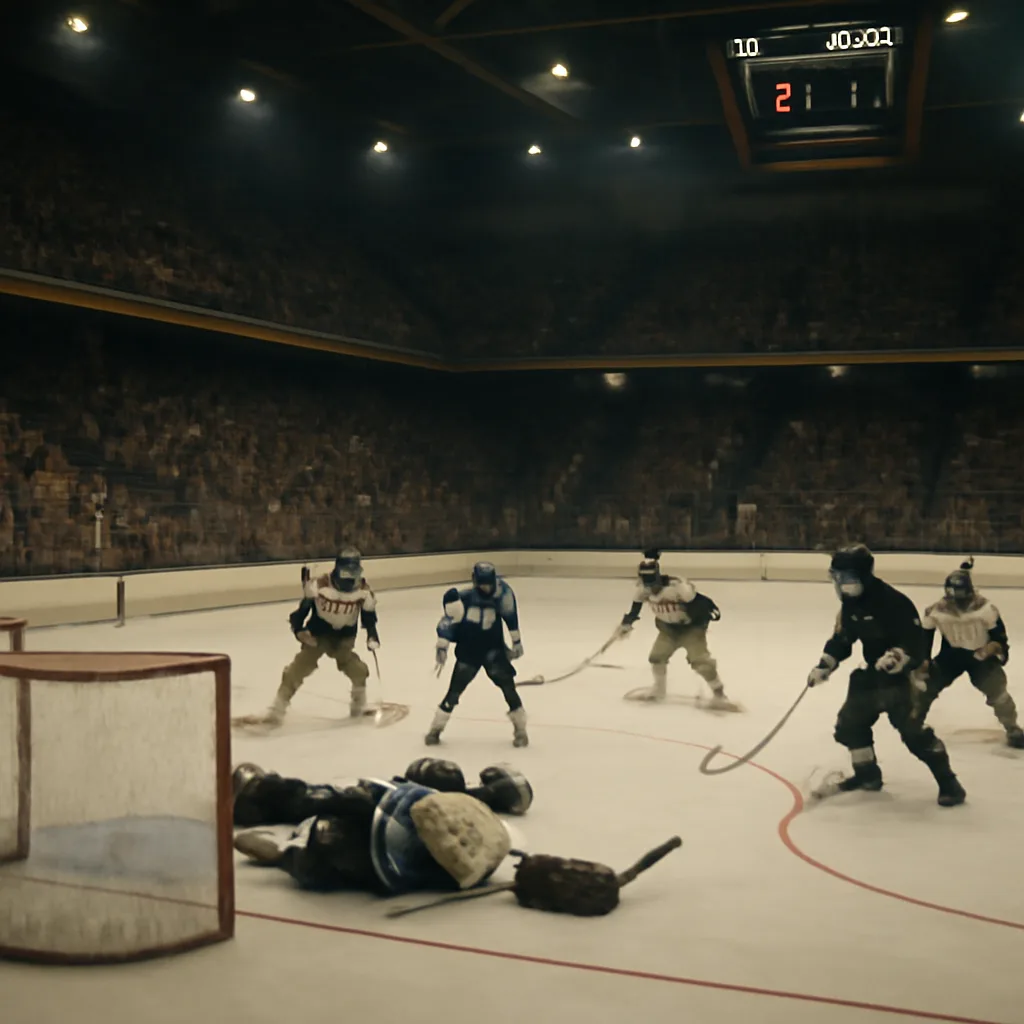
U.S. Olympic Hockey Upsets Soviet Union in 1980 'Miracle on Ice'
On February 22, 1980, the U.S. men's hockey team, composed mainly of college players, defeated the heavily favored Soviet Union 4–3 at the Lake Placid Winter Olympics — a result that stunned the hockey world and advanced the U.S. to the gold-medal game.
On February 22, 1980, at the Lake Placid Winter Olympics, the United States men's ice hockey team beat the four-time defending Olympic champion Soviet Union national team 4–3 in one of the most widely remembered upsets in sports history. The American roster was composed largely of amateur and collegiate players coached by Herb Brooks, while the Soviet team featured seasoned international professionals who had dominated world hockey through the 1970s.
The game took place in the Olympic Arena in Lake Placid, New York, during the medal-round group stage. After a scoreless first period, both teams traded goals in the second; the U.S. took the lead, the Soviets tied it, and the Americans regained a one-goal advantage. With under ten minutes remaining in the third period, the Soviets mounted pressure and tied the score 3–3. Less than four minutes later, U.S. forward Mike Eruzione scored on a wrist shot from the high slot to make it 4–3. Goaltender Jim Craig made several late saves to preserve the lead, and the final buzzer confirmed the upset.
The victory was consequential beyond a single game: it allowed the United States to advance to the gold-medal game, where they ultimately lost to Sweden and earned the silver medal. Nevertheless, the Lake Placid win carried symbolic weight. The Cold War context and the disparity in perceived experience between the teams contributed to the match’s significance in American popular memory.
Contemporaneous and subsequent coverage highlighted both the tactical preparation of coach Herb Brooks and the individual performances of players such as Jim Craig and Mike Eruzione. Brooks had emphasized conditioning, disciplined systems, and a hybrid style intended to counter the Soviets’ skilled, puck-possession game. The U.S. players’ cohesion and execution on that day were decisive factors in overcoming the Soviet team’s depth and technical proficiency.
Historical accounts note that the Soviet roster was not at full strength compared with some world championship lineups, but it remained a formidable opponent featuring experienced international stars. Scholars and sports historians interpret the game’s importance through multiple lenses: as a genuine sporting upset, as a cultural moment in the United States amid Cold War tensions, and as an enduring example of underdog achievement in international competition.
The game’s legacy has been shaped by media replay, oral histories from participants, and subsequent dramatizations. While popular narratives sometimes elevate the result to near-mythic status, careful histories distinguish between the dramatic resonance of the upset and the precise sporting circumstances. Records, box scores, and contemporary reports document the 4–3 score, the date (February 22, 1980), and the progression of goals and key saves, making the core facts well established.
In sum, the Lake Placid victory by the U.S. over the Soviet Union remains a landmark event in Olympic and hockey history: a single-game upset with lasting cultural impact and well-documented sporting details.