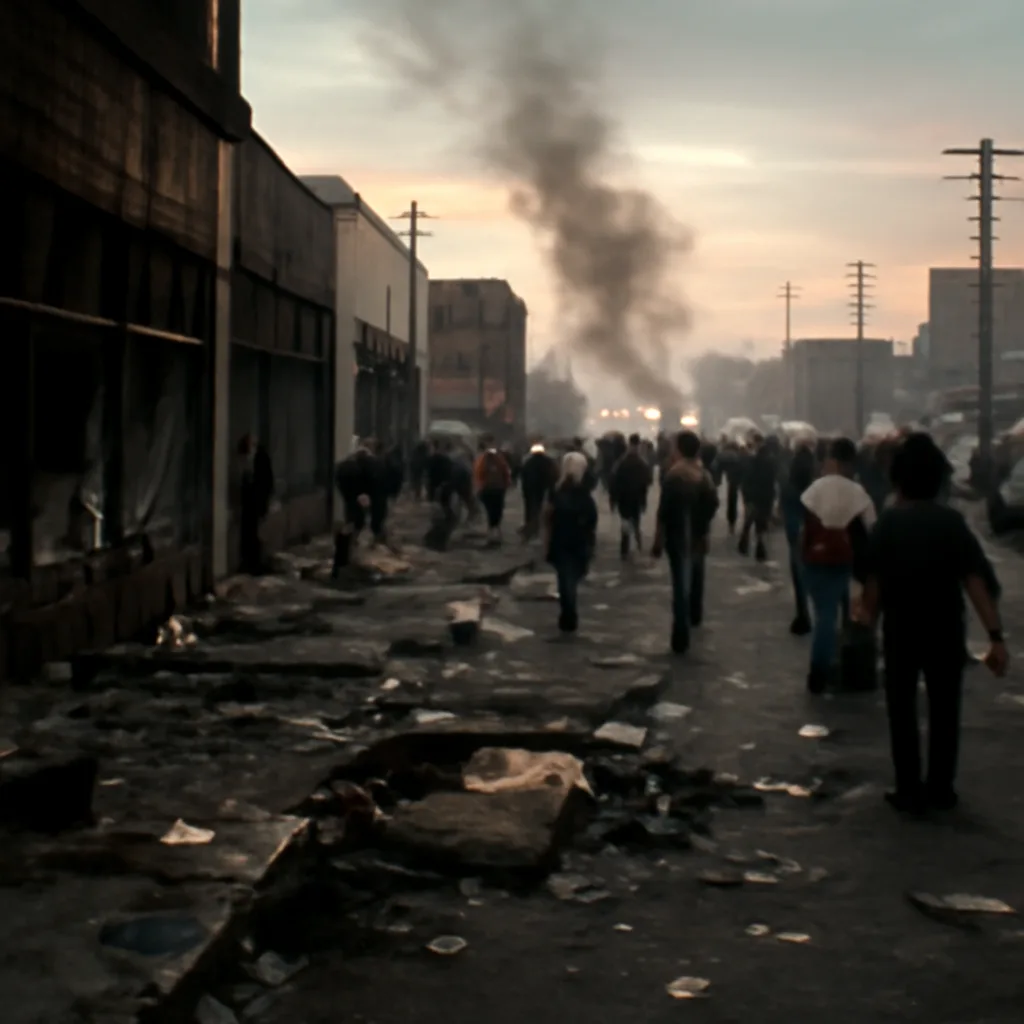
Riot Erupts in Los Angeles After Acquittal in Rodney King Beating
Following the acquittal of four LAPD officers in the videotaped beating of Rodney King, large-scale unrest broke out across Los Angeles on April 29, prompting widespread property damage, clashes with police and a national conversation about race, policing and justice.
On April 29, after a jury in Simi Valley acquitted four Los Angeles Police Department officers charged in the videotaped 1991 beating of Rodney King, widespread civil unrest erupted across Los Angeles. The acquittals touched off immediate anger in communities already strained by long-standing tensions between residents—particularly in Black and Latino neighborhoods—and local law enforcement. Within hours, streets filled with protesters; incidents of looting, arson and confrontations with police were reported across multiple neighborhoods including South Central Los Angeles, Koreatown and parts of downtown.
The unrest occurred against a backdrop of a widely viewed home video that showed officers repeatedly striking King after a high-speed chase, an image that had already ignited public debate about police use of force and racial disparity in criminal justice. The verdict, reached by a predominantly white jury in nearby Simi Valley, was seen by many as a failure of the justice system to hold officers accountable. Demonstrations began as peaceful protests in some locations but escalated as crowds grew and clashes intensified.
Responding to the scale of the disturbance, city and county officials requested assistance from the California National Guard and then-President George H. W. Bush authorized federal support. Thousands of National Guard troops, state police and reinforcements from other jurisdictions were deployed to restore order. Law enforcement imposed curfews and used methods including tear gas and riot gear in attempts to disperse crowds. The conflict resulted in significant property destruction—stores and businesses were looted or burned—and many civilian injuries. Official counts later recorded dozens of deaths, hundreds of injuries and thousands of arrests, though exact figures varied among reports.
The unrest had a pronounced economic and social impact. Entire blocks were damaged, and an estimated hundreds of millions of dollars in property losses and economic disruption affected local communities. Small businesses—particularly in Korean-American commercial districts—suffered heavy losses, which in turn inflamed tensions between different ethnic communities and residents. The disturbances highlighted longstanding grievances over police practices, economic inequality and perceived disparities in the application of justice.
In the aftermath, public officials, community leaders and activists called for reforms. The events prompted federal and local investigations, changes in LAPD oversight and renewed discussions about police training, accountability and community relations. The U.S. Department of Justice later conducted inquiries, and the incident influenced subsequent legal and policy debates about excessive force and civil rights enforcement.
Historians and commentators view the April 29 unrest as a watershed moment that exposed deep fractures in Los Angeles and catalyzed efforts—some incremental, some more substantive—aimed at addressing policing and racial inequities. The immediate violence and destruction drew widespread condemnation, while the underlying causes spurred long-term civic engagement and policy scrutiny. The event remains a focal point in discussions of race, policing and urban policy in late 20th-century America.