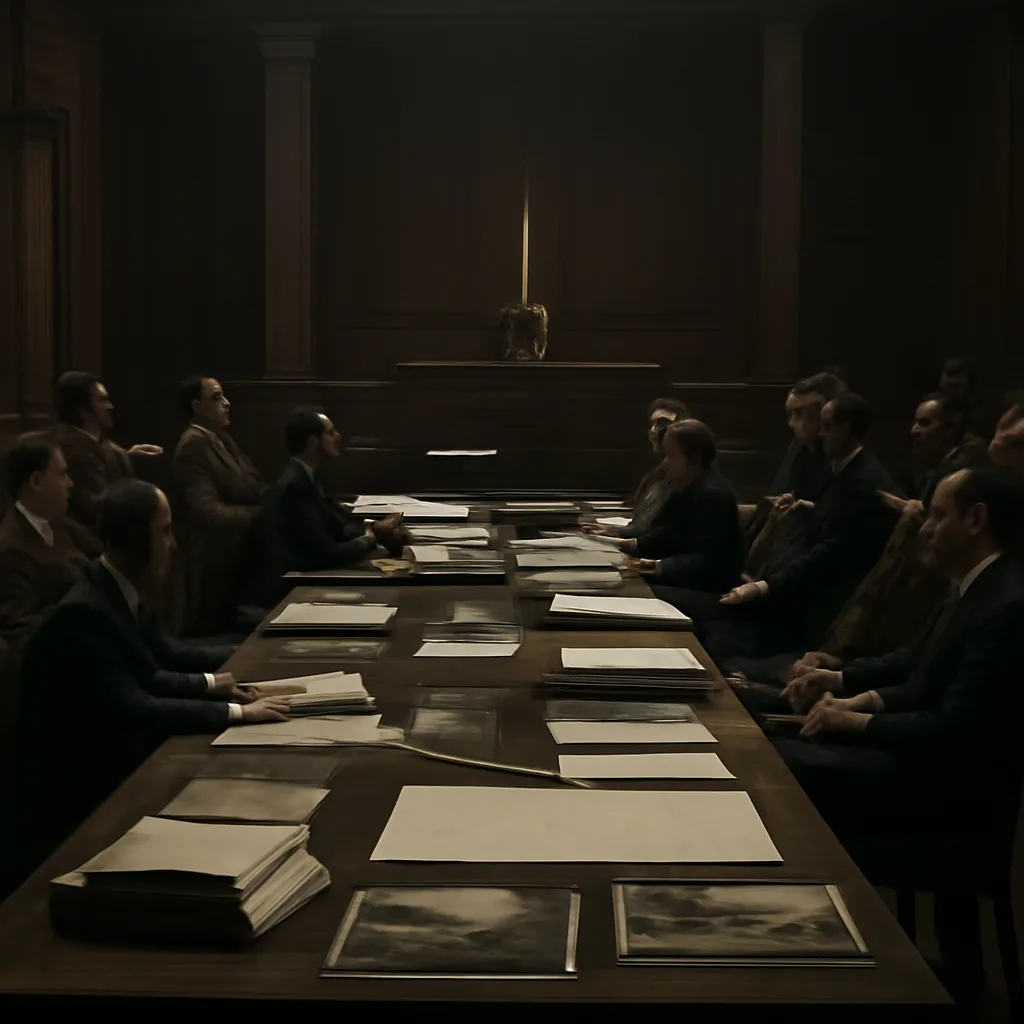
On March 24, 1947, the international community confronted, in a sustained public way, detailed evidence of medical experiments conducted on human subjects without consent during World War II. The Nuremberg Medical Trial (United States of America v. Karl Brandt, et al.), one of twelve Nuremberg follow-up trials conducted by the U.S. military after the main International Military Tribunal, had been underway since December 1946. On that date in March 1947 the trial's proceedings and the mounting documentation had crystallized into a broader public scandal: court presentations, witness testimony, and published summaries made the scope and nature of the experiments widely known and provoked sustained condemnation. The defendants were medical professionals and administrators accused of conducting and facilitating experiments on concentration-camp prisoners and other detainees—exposing them to extremes of temperature, pressure, infectious diseases, and surgical procedures—often resulting in death or permanent injury. The prosecutors presented documentary evidence from Nazi records, camp logs, and survivor testimony to show that many experiments were medically pointless, coercive, and lacked informed consent. While some accused claimed experiments were aimed at military or scientific purposes, the tribunal probed whether purported aims could ever justify the methods used. The trial differed from earlier revelations of wartime atrocity because it foregrounded the involvement of trained physicians and scientists. That professional dimension intensified the scandal: physicians were expected to adhere to a duty of care, and their participation shattered assumptions about medical ethics. Coverage in newspapers and reports for governments and professional associations publicized allegations, fostering debates in medicine, law, and public policy about consent, human rights, and professional responsibility. The Nuremberg Medical Trial culminated in verdicts issued in August 1947, but by March the accumulation of evidence and courtroom revelations had already become a focal point for international outrage and reflection. The trial helped spur concrete responses: it influenced the formulation of ethical guidelines, most notably contributing to the development and promulgation of the Nuremberg Code—a set of principles for human experimentation emphasizing voluntary informed consent and the avoidance of unnecessary suffering. Although the Code was first articulated in the trial context and published in 1947, it did not immediately become universally binding law; rather, it served as an influential ethical benchmark for later regulations and declarations. Historians note that while the Nuremberg Medical Trial brought widespread attention and prompted institutional responses, it was not necessarily the absolute first instance in history of public controversy over human experimentation. Earlier episodes—such as 19th- and early 20th-century controversies over medical practices, or industrial and colonial abuses—had generated local or disciplinary outcry. What set the Nuremberg revelations apart was the scale, the documentation from state institutions, and the global legal forum in which they were addressed. The legacy of March 1947 is uneven. The exposure of these crimes reshaped international conversations about medical ethics, helped lay groundwork for later human-subject protections (including regulations in the United States and international declarations), and remains a central reference point in teaching research ethics. At the same time, debates persisted over accountability, the adequacy of postwar justice, and the uneven implementation of ethical standards across countries and institutions. Scholars emphasize the need to situate the Nuremberg Medical Trial within longer histories of medical research and power, rather than treating it as the sole origin of modern bioethics. Sources for this summary include primary trial records of the United States of America v. Karl Brandt et al., historical analyses of the Nuremberg trials and the development of the Nuremberg Code, and scholarly work on the history of medical ethics and human experimentation. Where details are contested in scholarship, this account notes the dispute—for example, over claims of precedence for earlier scandals—and focuses on widely documented facts from the 1946–1947 trial record.