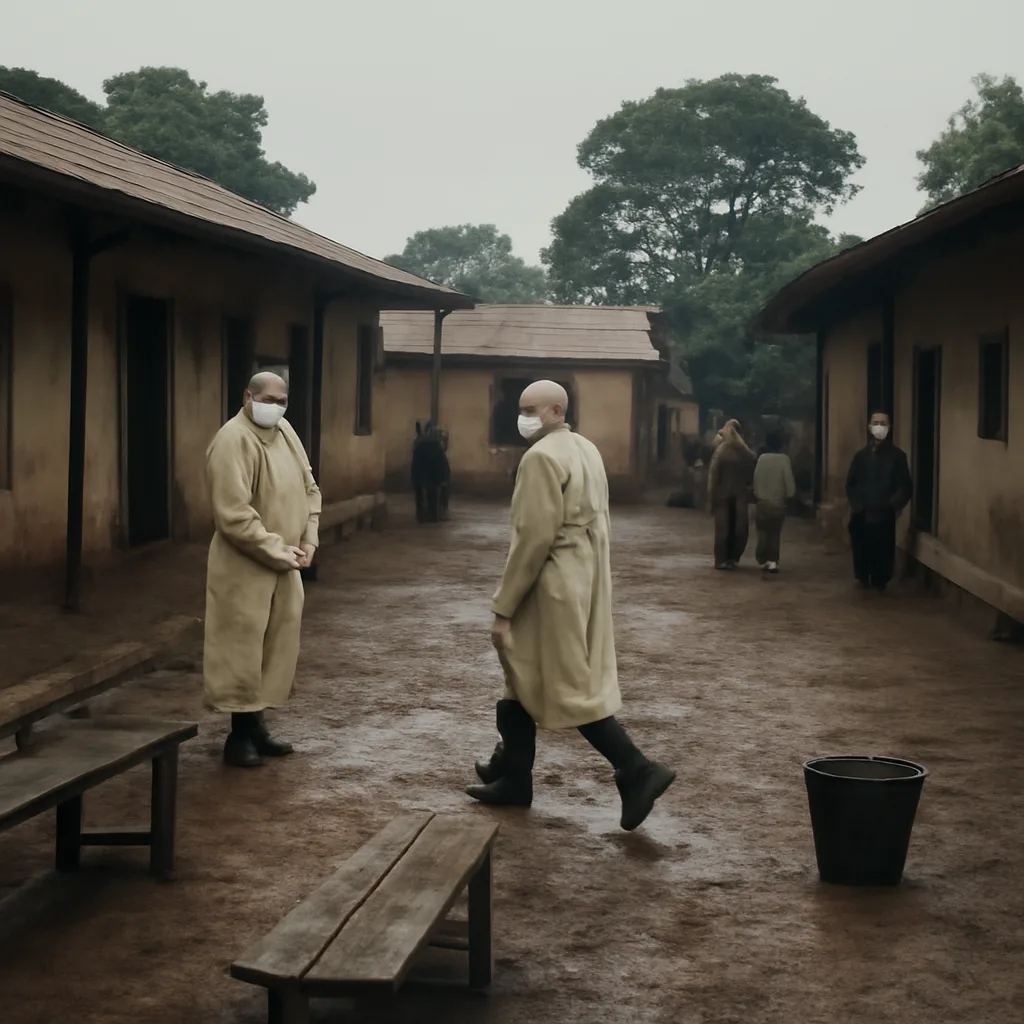
In the summer and autumn of 1976, clinicians and public-health teams identified severe outbreaks of a then-unknown hemorrhagic fever in two locations in central Africa. One outbreak occurred in Nzara, then in southern Sudan (now South Sudan), and another, more widely publicized outbreak occurred near the Ebola River in the former Zaire (now the Democratic Republic of the Congo). These events together mark the first documented recognition of what would be named Ebola virus disease. Initial reports described rapid onset of fever, vomiting, diarrhea, bleeding from mucous membranes, and high case fatality in many patients. Local health workers and visiting clinicians noted clustering of cases around hospitals and among family contacts, suggesting person-to-person transmission and the role of close caregiving practices. The severity and unusual bleeding manifestations prompted international attention from virologists and public-health officials. Laboratory investigation quickly followed. Samples sent to reference laboratories in Europe revealed a previously unknown filovirus—so named for its threadlike appearance under electron microscopy. The virus isolated from patients in Zaire was named Ebola, after the nearby Ebola River, to avoid stigmatizing the village where the outbreak occurred. Independently, virus from the Sudan outbreak was later recognized as a distinct species within the same genus. Public-health responses in 1976 included isolation of patients, barrier nursing, and limits on movement and contact around affected facilities and communities. In Zaire, an early superspreading event at a local hospital—where unrecognized cases were treated—contributed to rapid amplification of transmission. Burial practices involving close contact with the deceased were also identified as factors in sustaining transmission chains. These observations shaped early control measures emphasizing infection control, safe burial practices, and protection of healthcare workers. The 1976 outbreaks had profound consequences for research and disease surveillance. Laboratories characterized the virus’s morphology and genetic features, and clinicians documented its clinical course and high lethality. Public-health agencies expanded surveillance for viral hemorrhagic fevers in Africa, and the events catalyzed subsequent research into viral emergence, zoonotic reservoirs, and modes of transmission. While the animal reservoir was not identified in 1976, later research has implicated fruit bats as a likely reservoir for Ebola viruses, though aspects of reservoir ecology and spillover remain under study and debate. Historical records of the 1976 outbreaks are drawn from contemporaneous clinical reports, field investigations by national and international health teams, and laboratory studies published in peer-reviewed journals. Some details—such as precise chains of transmission in every cluster or the exact circumstances of the earliest animal-to-human spillover—remain uncertain or subject to ongoing research. Nevertheless, the 1976 events are widely accepted as the first documented recognition of Ebola virus disease and set the framework for how subsequent outbreaks would be investigated and controlled. Understanding the 1976 outbreaks is important not only as medical history but also as an example of how emerging infectious diseases are identified and managed. The combination of clinical vigilance, laboratory science, and public-health measures established during those first responses continues to inform preparedness for viral hemorrhagic fevers and other emerging pathogens.