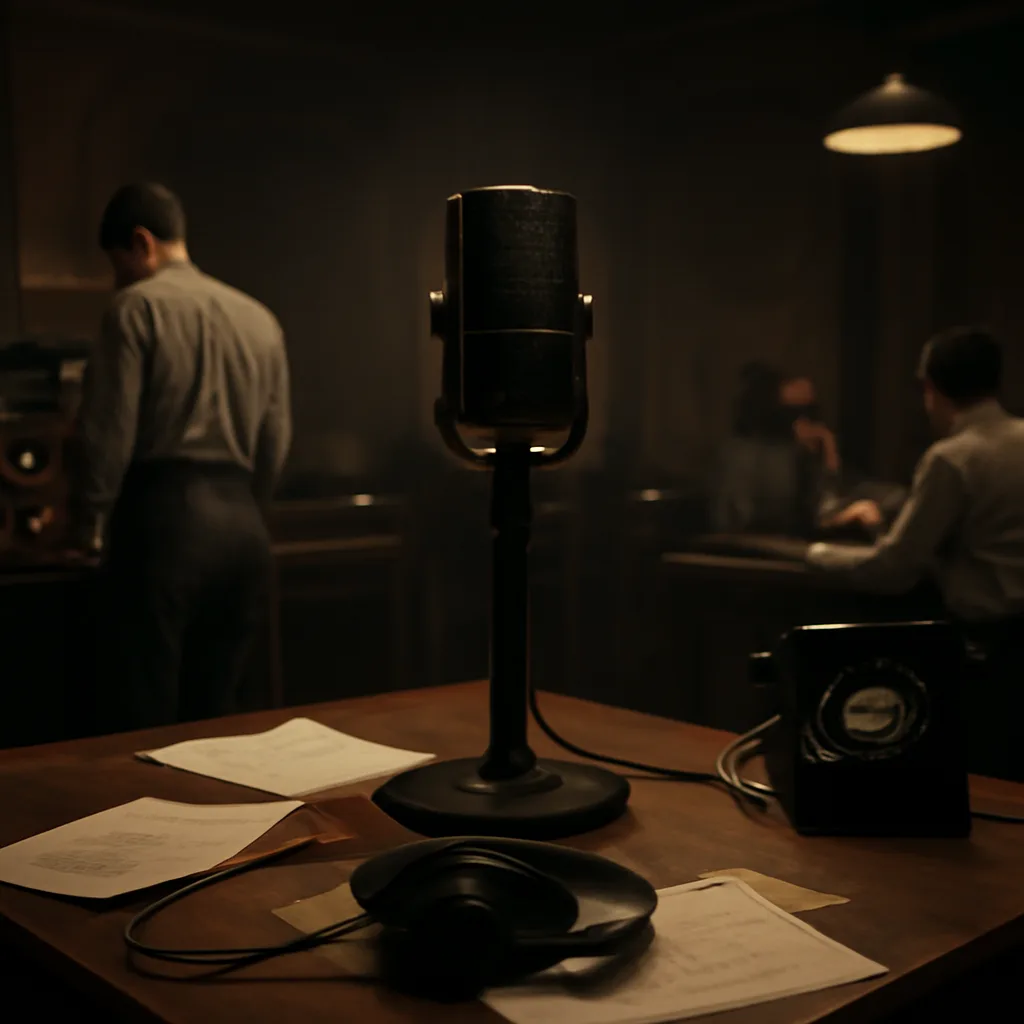
On the evening of October 30, 1938, the CBS radio series The Mercury Theatre on the Air, directed and narrated by Orson Welles, broadcast a radio adaptation of H. G. Wells’s novel The War of the Worlds. The program used a simulated news-bulletin format, interrupted by reports of explosions on Mars and subsequent Martian landings in New Jersey and nearby areas. That format, combined with realistic-sounding on-the-scene reports and the credibility of network radio, led a portion of the listening audience to interpret the drama as an actual sequence of news events. Contemporary accounts reported that listeners fled their homes, jammed highways, and called police and newspaper offices seeking information. Newspapers the next day ran prominent stories about the panic, and some local authorities reported receiving numerous calls. Radio stations and police departments in some communities issued clarifying bulletins as the show progressed. The scale of the reaction varied widely: in many places listeners understood the program was dramatized and treated it as entertainment; in others, misunderstandings led to alarm. Modern scholars note that the reports of mass hysteria were amplified by newspapers that had a competitive interest in discrediting radio, which was then an emerging mass medium. The incident has served as a seminal case study in communication, psychology and media studies. Early post-broadcast investigations, including a survey by the program’s sponsor and coverage by newspapers and agencies, produced differing estimates of how many listeners were deceived and how intense the panic was. Sociologist Hadley Cantril’s influential 1940 study, The Invasion from Mars, analyzed listeners’ reactions and cultural context, concluding that a combination of program realism, the vulnerability of certain listeners, and the contested trust in media institutions produced genuine fear among subsets of the public. Subsequent historians and media scholars have nuanced Cantril’s findings, arguing that initial press accounts overstated the extent of chaotic behavior and that most reactions were limited and varied by region, education, and listening habits. The broadcast highlighted several important issues about media effects and public trust. First, it underscored how format and presentation can influence audience interpretation: the adoption of simulated news bulletins without repeated emphatic disclaimers contributed to confusion among those who tuned in late or listened without hearing program introductions. Second, it exposed tensions between different media industries: newspapers, fearing competition from radio for news and advertising, amplified accounts of panic, shaping public perception of the event’s severity. Third, the episode prompted broadcasters and regulators to consider ethical responsibilities for realistic portrayals and led to discussions about labeling and disclaimers in news-style programming. Although popularly described as the first mass-media hoax panic, the 1938 broadcast did not create the social dynamics of rumor and panic—historical outbreaks of mass fear and hoaxes predate radio—nor was it an intentional public deception on the scale of some hoaxes. Rather, it became the most widely documented case of a modern mass-media-induced panic because of the reach of network radio, contemporary reporting, and later academic attention. The event’s legacy persists in debates about misinformation, media literacy, and how new communication technologies can reshape collective responses to perceived threats. Scholars continue to reassess the episode, distinguishing between sensational contemporary press coverage and the more measured realities revealed in later research. The 1938 broadcast remains an instructive episode: a historically significant instance showing how format, context, and institutional competition can converge to produce widespread alarm, and how retrospective narratives can magnify or attenuate the perceived scale of public reaction.