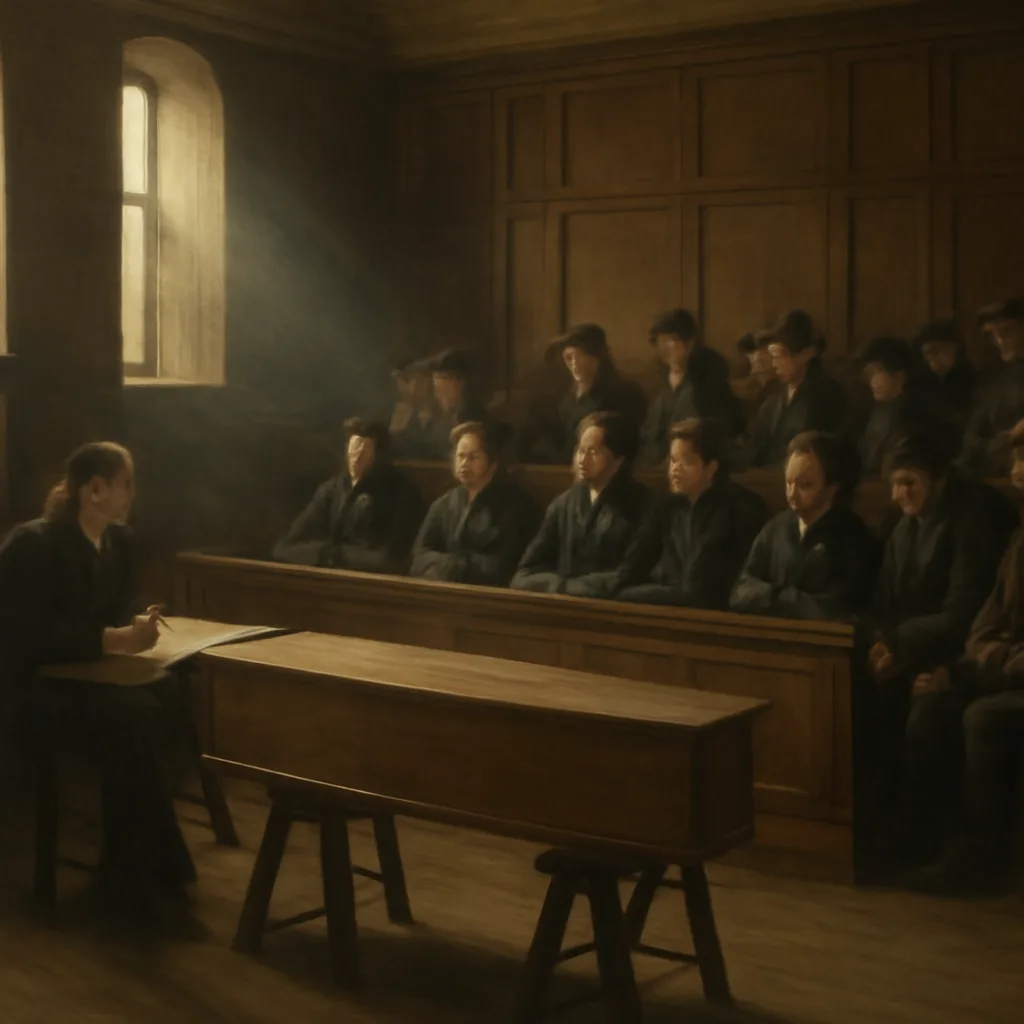
In early March 1845 a criminal case in Britain drew attention because it raised a question rarely addressed in courts at the time: could a person doing violence while sleepwalking be held legally responsible? Contemporary reports describe an inquest and legal proceedings that make this episode the earliest well-documented British instance in which somnambulism was advanced as central to a homicide defense. Available nineteenth-century newspaper accounts and legal summaries indicate the sequence began with a violent death investigated by local authorities. During the inquest, witnesses and medical men testified about the defendant’s prior history of sleepwalking and about circumstances observed at the scene that suggested the act might have occurred while the defendant was unconscious. Coroners’ juries in that era frequently relied on lay testimony and the opinions of local physicians; here, those elements fed public and professional debate about criminal responsibility when actions occurred during sleep. The case did not create a settled legal rule. Instead, it joined a small but growing corpus of nineteenth-century British and European episodes in which courts and inquests grappled with somnambulism, automatism, and insanity. At that time the law distinguished between acts committed with conscious intent and those arising from mental disorder or involuntary states. Medical understanding of sleepwalking was limited and contested: some physicians treated it as a form of insanity or as a nervous disorder, while others viewed it as a benign parasomnia with occasional dangerous manifestations. These competing views made judicial outcomes unpredictable. Reportedly, expert testimony in the 1845 proceedings varied. Some medical witnesses argued that true somnambulism could produce complex, goal-directed behavior executed without awareness; others warned against accepting self-reports or isolated incidents as proof of involuntary action. Judges and juries were left to weigh conflicting evidence without the benefit of modern sleep science. The result in specific cases of the period depended heavily on local facts, the persuasiveness of witnesses, and broader social attitudes toward mental illness and moral culpability. This 1845 matter later figured in legal and medical discussions because it helped highlight gaps in forensic knowledge and the need for clearer standards about responsibility in cases of automatisms. Over subsequent decades, courts in Britain and elsewhere continued to confront similar claims, gradually developing doctrines—such as the distinction between insane automatism and non-insane automatism—that shaped criminal liability. Those later doctrines relied on evolving psychiatric and neurological evidence that was unavailable to midcentury judges. Because surviving contemporary reports are fragmentary and sometimes inconsistent, historians treat the 1845 episode with caution. It is best understood not as a single definitive legal turning point but as the earliest well-documented British instance demonstrating how sleepwalking could complicate homicide investigations and trials. The case illustrates nineteenth-century tensions among medicine, law, and public opinion when unconscious states were invoked to explain violent acts.