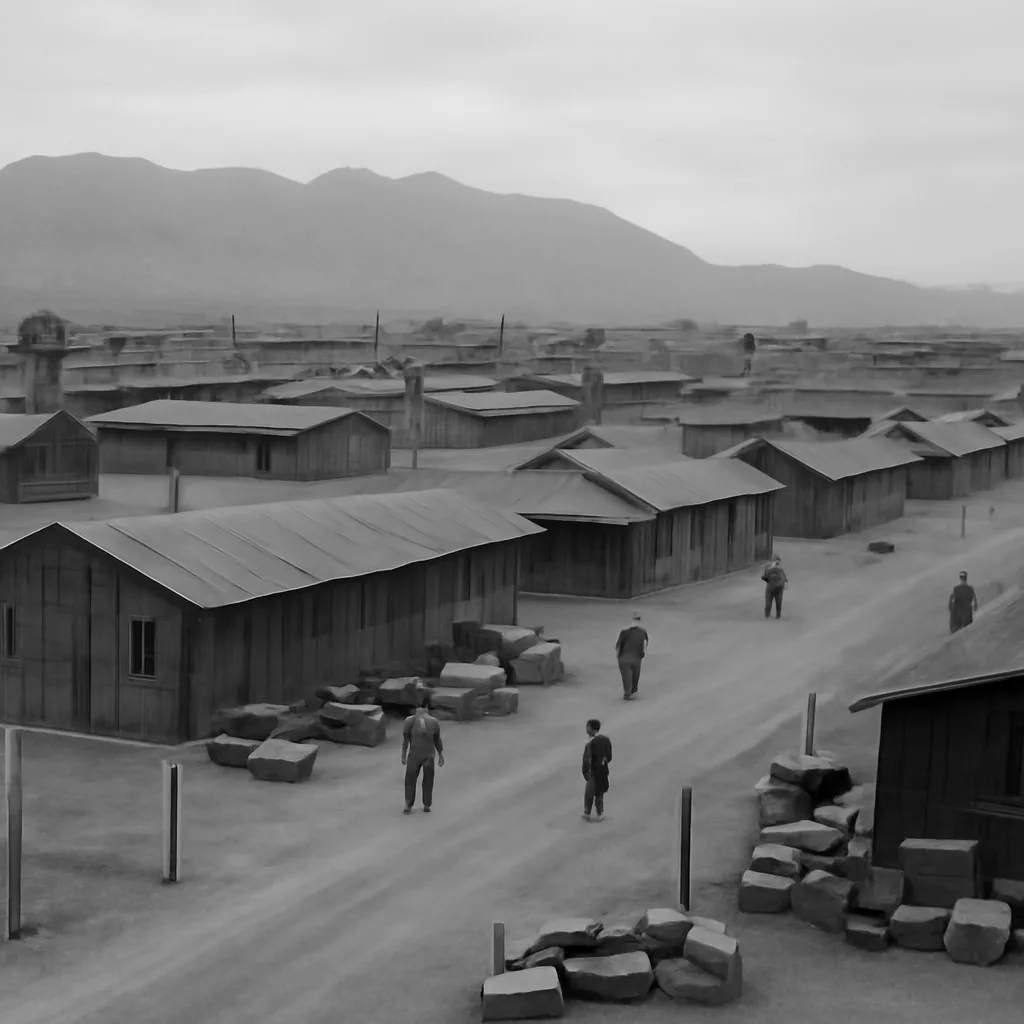
Background Following the December 7, 1941, attack on Pearl Harbor, the Roosevelt administration and wartime military authorities expressed concerns about espionage and sabotage on the U.S. West Coast. In February 1942, President Franklin D. Roosevelt signed Executive Order 9066, authorizing military commanders to designate exclusion zones and remove persons deemed a threat. Over the next months, roughly 120,000 people of Japanese ancestry—most of them U.S. citizens—were forcibly relocated to assembly centers and then to inland detention camps. The Case The Supreme Court decision on January 18, 1944, principally refers to Korematsu v. United States, in which Fred Korematsu, an American citizen of Japanese descent, challenged his conviction for remaining in a restricted military area in violation of an exclusion order. Korematsu argued that the exclusion and evacuation orders were unconstitutional and based on racial prejudice rather than legitimate military necessity. The Ruling In a 6–3 decision, the Court upheld Korematsu's conviction and the government's exclusion orders. The majority opinion accepted the government’s argument that the wartime circumstances justified the measures taken for national security, and the Court deferred to the military judgment that the presence of persons of Japanese ancestry posed a security risk. The decision applied a form of judicial review that gave heightened deference to the asserted military necessity during wartime and allowed racial classifications in this context. Dissent and Criticism Three justices dissented, sharply criticizing the majority for permitting racial discrimination and for failing to scrutinize the factual basis for the military’s claims. Dissenters argued that the exclusion orders were rooted in racial prejudice and lacked individualized determinations of disloyalty or dangerousness. Over time, many legal scholars, civil libertarians, and the public have regarded the decision as a grave injustice and a constitutional error. Aftermath and Historical Assessment The Korematsu decision remained part of Supreme Court precedent for decades, but its acceptance eroded over time. In the 1980s a coram nobis case successfully vacated Korematsu’s conviction in federal court by showing government suppression and distortion of evidence during the original proceedings. In later years, the Supreme Court explicitly repudiated Korematsu’s holding in obiter dicta: in the 2018 decision in Trump v. Hawaii, the Court stated that the Korematsu decision was “wrong the day it was decided.” The internment itself has been widely condemned: in 1988 Congress passed and President Ronald Reagan signed the Civil Liberties Act, which formally apologized and provided limited reparations to surviving internees. Historians cite a mix of wartime fear, racial prejudice, economic pressures, and political failures as factors that produced the exclusion and incarceration program. Legacy Korematsu remains a central study in constitutional law and civil liberties—an example of how courts balance national security claims against individual rights, and how race-based governmental actions can be rationalized in crises. The episode continues to influence debates about emergency powers, racial profiling, and the responsibilities of courts to scrutinize government claims of necessity. Sources and Limits This summary draws on widely documented historical records and legal scholarship about Korematsu v. United States and the World War II exclusion and internment program. Where assessments differ—such as the degree to which military officials genuinely believed there was a security risk versus acting on racial prejudice—historians and legal commentators note those disputes; the consensus view in later decades is that the exclusions were unjustified and rooted substantially in racial bias.