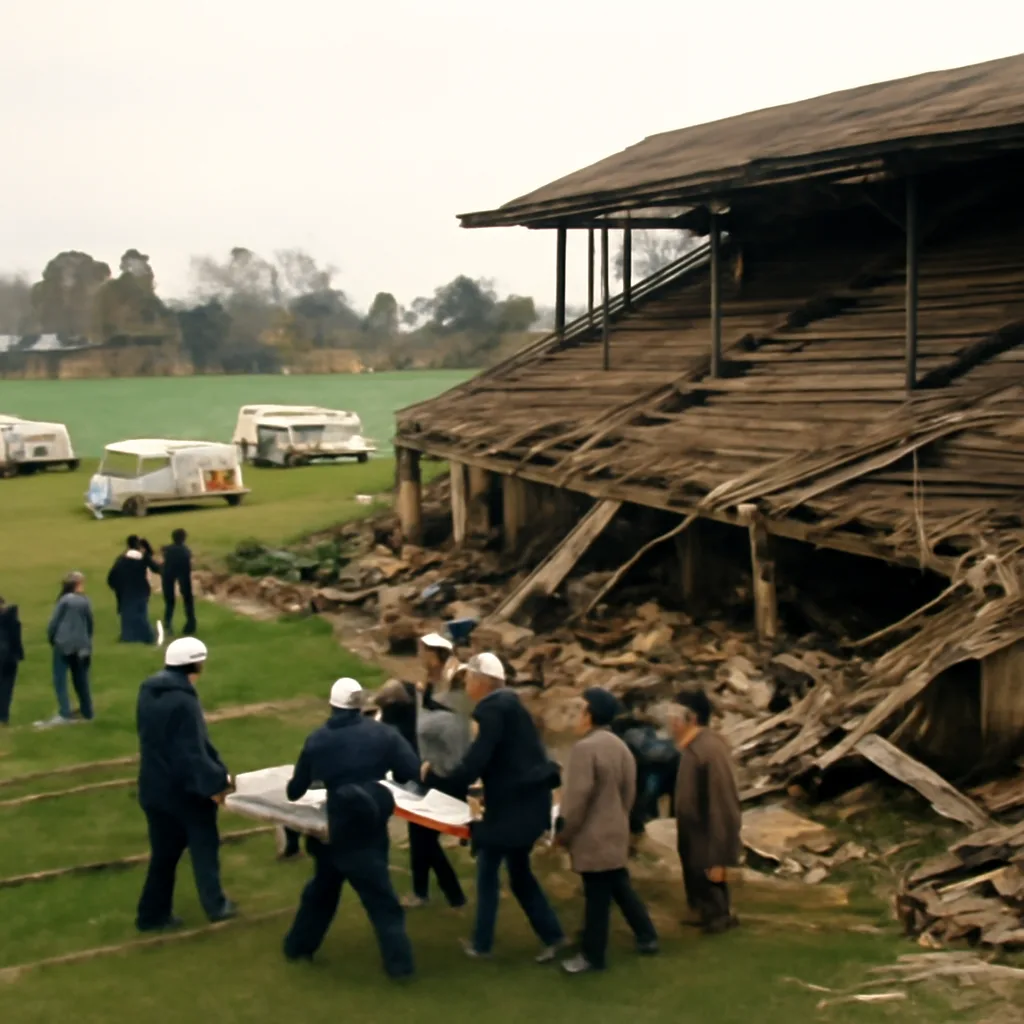
On January 16, 1982, a spectator terrace at an inter-club cricket match gave way beneath a large crowd, producing a sudden collapse that resulted in dozens of deaths and numerous injuries. The event occurred during a period when many sports grounds, especially at club level, still relied on aging or improvised stands to accommodate growing spectator numbers. Exact casualty totals reported at the time varied as rescue and identification efforts continued over subsequent days. Local accounts and contemporaneous press coverage described a packed terrace, with attendees drawn by favorable weather and the match’s competitive interest. Witnesses reported that a section of the wooden or concrete terrace—accounts differ by source and location—buckled and fell, sending spectators down onto a lower level or onto the ground. Immediate casualties included both people who fell with the structure and those crushed in the resulting crowding and panic. Emergency services and volunteer rescuers worked at the scene to extricate trapped people and transport the injured to nearby hospitals. After the collapse, authorities launched inquiries into the cause. Investigations generally focused on three areas: the physical condition and design of the terrace, the load placed on the structure by attendance exceeding intended capacity, and the inspection and maintenance regime carried out by stadium owners or operators. Reports from similar incidents in other countries during the same era suggested that inadequate maintenance, corrosion or rot in structural members, and poor crowd management were common contributing factors; individual findings for this specific 1982 collapse identified a combination of structural failure and overcrowding as central issues. The tragedy prompted a re-evaluation of safety standards at local and regional sporting venues. In the aftermath, some jurisdictions tightened requirements for regular structural inspections, clearer published capacity limits, and improved crowd-control measures such as ticketing, barriers, and stewarding. Where terraces were built of timber, many clubs accelerated plans to replace them with more robust materials or to install seating that reduced the risk of large, unregulated standing crowds. The human impact was long-lasting. Families of victims, injured survivors, and club communities experienced emotional and financial hardship. Commemorations and local memorials were organized in subsequent years in some communities to remember those who died. The incident also entered discussions about the responsibilities of clubs and local governments to ensure spectator safety at non-professional venues. While this terrace collapse is one among several stadium disasters of the 20th century, it illustrates common vulnerabilities of the era: aging infrastructure, rapidly increasing spectator numbers, and uneven regulatory oversight. The lessons drawn from the 1982 tragedy contributed to broader changes in stadium safety practices, though implementation varied by place and resource availability. Exact details—such as the final confirmed death toll, the precise structural defects, and individual legal outcomes—can differ between contemporary reports and later summaries; where figures or judicial findings are needed, consulting archived local newspapers, official inquiry reports, or court records from the relevant jurisdiction will provide the most authoritative information.