
Pentagon Acknowledges Past Ocean Dumping of Chemical Munitions
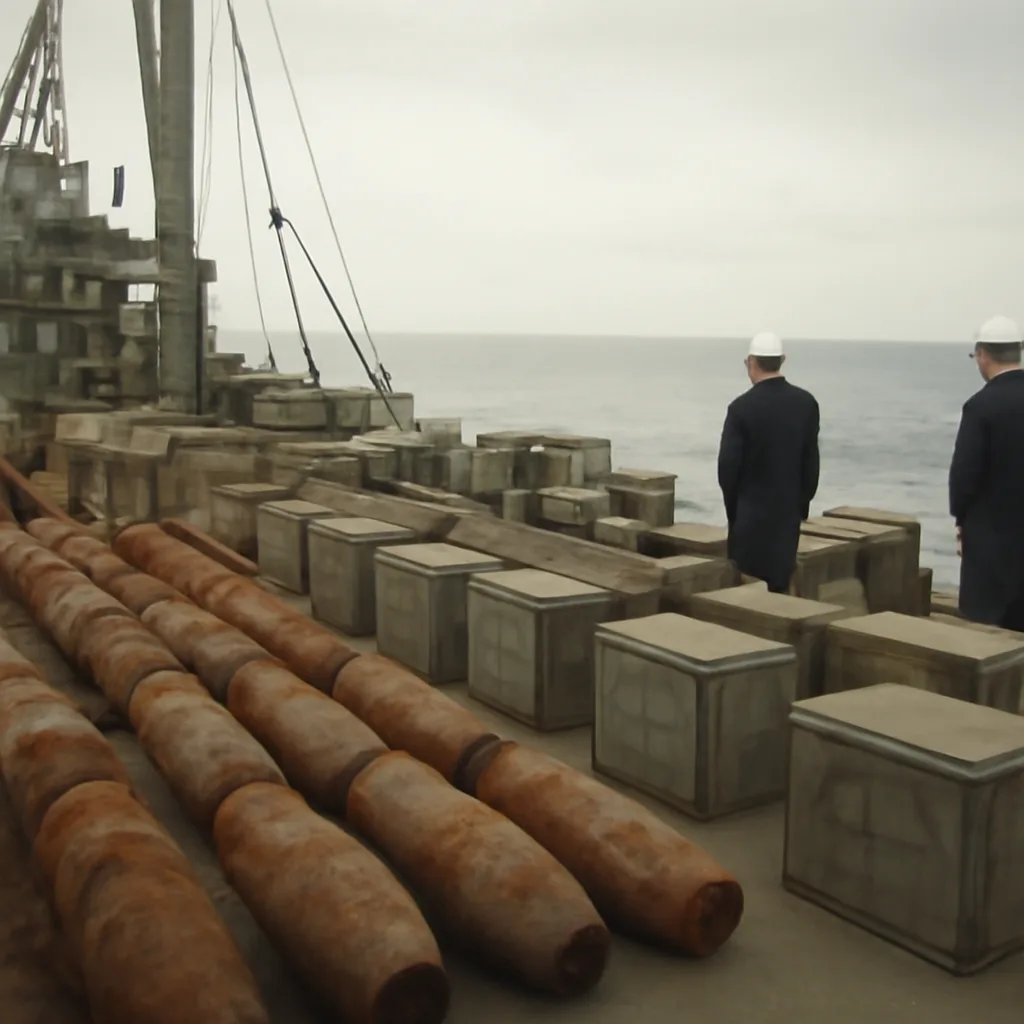
On January 10, 1987, the U.S. Department of Defense publicly acknowledged that it had disposed of chemical munitions in ocean waters in the decades following World War II, a revelation that renewed scrutiny of Cold War-era disposal practices and environmental impacts.
On January 10, 1987, the Pentagon publicly confirmed that U.S. military forces had disposed of chemical munitions in oceanic waters during the mid-20th century. The acknowledgment came amid growing environmental concern and investigative reporting about Cold War-era disposal practices, and it prompted renewed attention from lawmakers, scientists and environmental groups.
Background
During and after World War II and throughout the early Cold War, U.S. military and federal agencies accumulated large quantities of chemical agents and obsolete munitions. As stockpiles grew and storage or demilitarization options were limited, a range of disposal methods were employed. Historical records show that, in some instances, sea dumping was used to dispose of chemical munitions, conventional explosives and other hazardous materials. At the time, sea disposal was sometimes viewed by officials as a readily available method to remove dangerous ordnance from land storage and to reduce costs compared with land-based destruction.
The 1987 Admission
The Pentagon’s 1987 acknowledgment did not represent the first allegation that the military had used ocean dumping; investigators, journalists and activists had raised questions for years. What changed in 1987 was a more explicit confirmation from Defense Department officials that chemical munitions had been among the materials disposed of at sea. The admission highlighted specific episodes and general practices rather than asserting a single, comprehensive catalogue of all disposal sites or quantities.
Scope and Uncertainties
Contemporary government statements and later declassified documents indicate disposal occurred in various locations, including offshore sites in both the Atlantic and Pacific. Exact inventories, precise sinking locations and the long-term fate of specific chemical agents remain incompletely documented in the public record. Scientific understanding of how dumped munitions degrade and how agents might be released into marine environments has increased since the mid-20th century, but uncertainties persist regarding the condition of many submerged munitions and the timeline of potential environmental impacts.
Responses and Consequences
Following the admission, Congress, federal agencies and environmental organizations increased calls for assessment and remediation where feasible. The issue intersected with broader efforts to regulate ocean dumping and to develop safer demilitarization technologies. Legal and policy changes over subsequent decades restricted sea disposal and expanded monitoring and reporting requirements for hazardous wastes, while some research programs sought to locate and evaluate known or suspected dump sites.
Historical Context
The Pentagon’s 1987 statement must be read in the context of evolving environmental law and public expectations. Mid-20th-century disposal practices reflected a different regulatory environment and different scientific assumptions about persistence and risk. By the 1970s and 1980s, as environmental regulation strengthened and public scrutiny intensified, past practices came under renewed examination.
Ongoing Issues
Scholars, government scientists and nongovernmental organizations continue to study and debate the scale and consequences of ocean dumping of munitions. While some sites have been investigated and some assessments completed, many questions about environmental exposure pathways, human health implications for coastal communities and the care of maritime heritage remain subjects of active research and policy discussion.
This account summarizes acknowledged facts and the state of public documentation as of later reviews; where archival records are incomplete or contested, scholars note uncertainties rather than definitive conclusions.