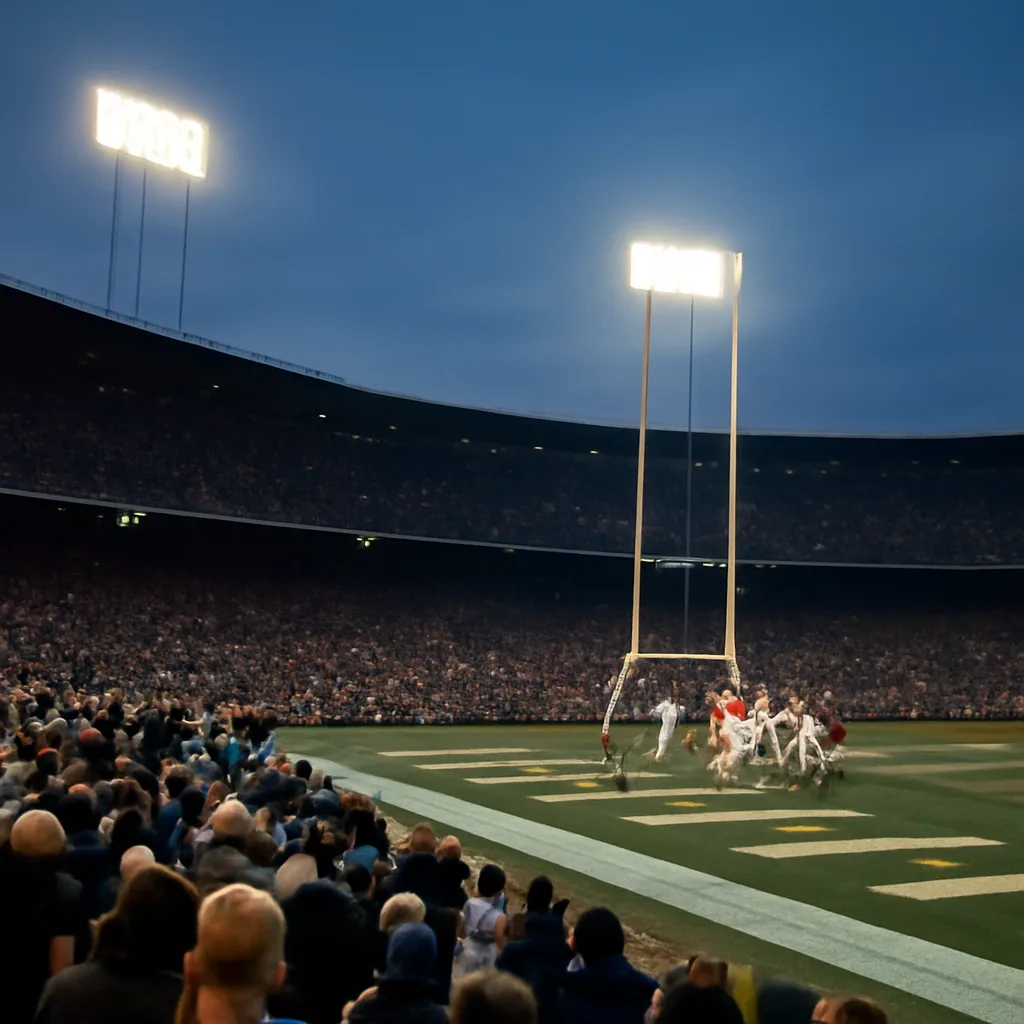
On January 10, 1982, at Candlestick Park in San Francisco, a play lasting only a few seconds reshaped NFL history. With 58 seconds left and the 49ers trailing the Dallas Cowboys 27–21, San Francisco faced a third-and-three from the Dallas 6-yard line. The 49ers had driven into scoring position behind rookie quarterback Joe Montana. On a play called 'Throwback,' Montana rolled right and lofted a high pass toward the back of the end zone. Dwight Clark, a 6-foot-4 wide receiver known for his reliable hands, extended and tipped the ball high above his head, securing it with both hands for a touchdown reception that put the 49ers ahead 28–27. The catch came at the culmination of a comeback drive and came to be known simply as 'The Catch.' It gave San Francisco its first NFC Championship and sent the 49ers to Super Bowl XVI, where they defeated the Cincinnati Bengals. The play is often credited with beginning the 49ers' rise under head coach Bill Walsh and quarterback Joe Montana, marking the start of a dominant period for the franchise through the 1980s. Contemporary accounts highlight the combination of Montana's poise and Clark's athleticism. The Cowboys had been a dominant team in the 1970s and early 1980s, and the 49ers' victory symbolized a passing of the torch in the NFC. Candlestick Park's cold, windy conditions and the packed crowd amplified the drama, and NBC's broadcast captured the immediate celebration on the field. Over time, 'The Catch' achieved near-mythic status in American sports culture. It is frequently cited in historical rankings of greatest plays and remains a touchstone in 49ers lore. Historians and sportswriters note that while the single play was crucial, it was also the product of sustained organizational changes—Walsh's West Coast offense, shrewd personnel decisions, and Montana's emergence—that transformed the franchise. Some details are subject to the limits of memory and reportage: broadcasters, players and fans have offered varied recollections of the exact feel of the throw and reception. But game records, scoring summaries and contemporaneous newspaper accounts confirm the sequence—Montana's pass to Clark for a touchdown with 58 seconds remaining, followed by the 49ers' 28–27 victory over the Cowboys in the NFC Championship on January 10, 1982. The play's legacy persists beyond scorelines. It influenced how teams valued accurate, rhythm-based passing and receivers with strong hands in contested situations. For fans in San Francisco and across the league, the image of Clark reaching and securing the ball remains one of the most enduring photographs and broadcast moments of the NFL's modern era. Dwight Clark retired from professional football in 1987 and later served in various roles related to the 49ers organization. He passed away in 2018. Joe Montana continued to build a Hall of Fame career. Together, their connection on that January night is remembered as a defining instant that altered the course of the franchise and became an iconic chapter in NFL history.