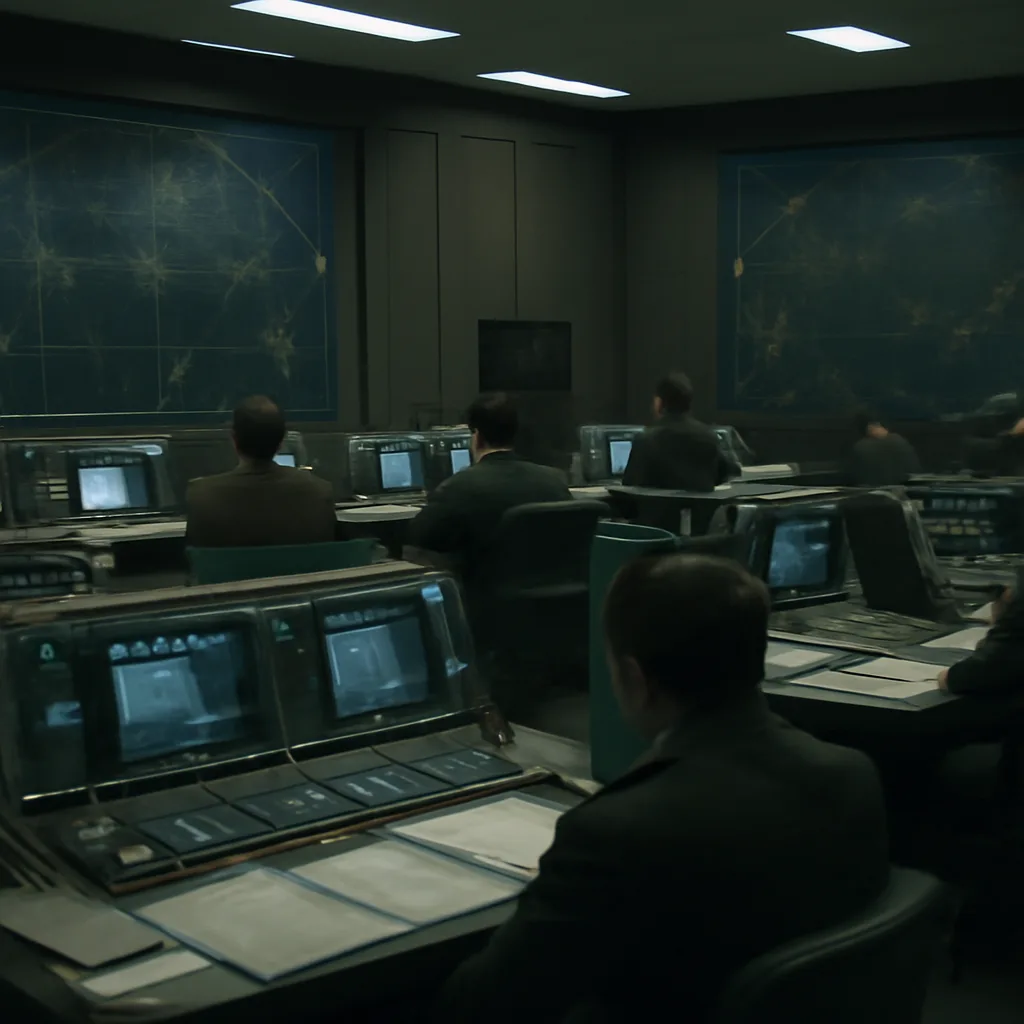
On February 9 — the year commonly cited in reporting is 1980 — U.S. defense officials and later declassified records show an alarm indicating a possible nuclear detonation was triggered and relayed through military channels, prompting temporary high-level attention and concern. The Pentagon now characterizes the incident as an accidental scare caused by erroneous sensor reporting and misinterpretation, rather than proof of a real detonation. Context Cold War-era early warning and monitoring systems were designed to detect a range of indicators, from missile launches to seismic and atmospheric signals consistent with nuclear explosions. Those systems combined automated sensors, human analysts, and interagency reporting procedures intended to prevent false alarms while ensuring rapid response to genuine attacks. What happened According to Pentagon summaries and related declassified documents, a sequence of automated alerts and human reports on February 9 produced a message that suggested a nuclear detonation had occurred. The alert passed through military channels, prompting senior officials to review the data. Further analysis and corroborating information, however, did not support the initial alarm. Investigators traced the trigger to faulty or misread sensor data and procedural miscommunications, and concluded that the evidence did not indicate an actual nuclear explosion. The incident was subsequently categorized as a false alarm or accidental scare. Why it mattered Any signal implying a nuclear detonation can be destabilizing in a bipolar strategic environment such as the Cold War. Even short-lived alarms can generate heightened alert levels, cause rapid information-sharing among commanders and civilian leaders, and risk precipitating miscalculation if errors go uncorrected. Officials and scholars who have reviewed the case emphasize that the episode underscores the perennial vulnerabilities of complex warning systems: hardware failures, human error, incomplete data, and the pressures of time-sensitive decision-making can combine to produce alarming but ultimately incorrect conclusions. Aftermath and lessons Following this and similar incidents over the decades, military and civilian agencies worked to improve sensor reliability, cross-check procedures, and analytic protocols to reduce false positives. Declassification of records related to Cold War-era alerts has allowed historians and policymakers to reassess how warning systems functioned and how close misinterpretations sometimes brought adversaries to the edge of crisis. Remaining uncertainties Public records and official summaries provide a general outline of events, but some operational details and contemporaneous internal deliberations remain partially classified or summarized. Where precise technical attributions or the full chain of communications are not publicly documented, descriptions rely on available declassified reports and official statements; historians note that certain specifics may never be fully disclosed. Conclusion The February 9 alarm attributed to a possible nuclear detonation is now regarded by Pentagon accounts as an accidental scare driven by faulty reporting and interpretation of sensor data. The incident is part of a broader historical record that highlights the risks posed by false alarms in nuclear-era warning systems and the ongoing efforts to mitigate those risks.