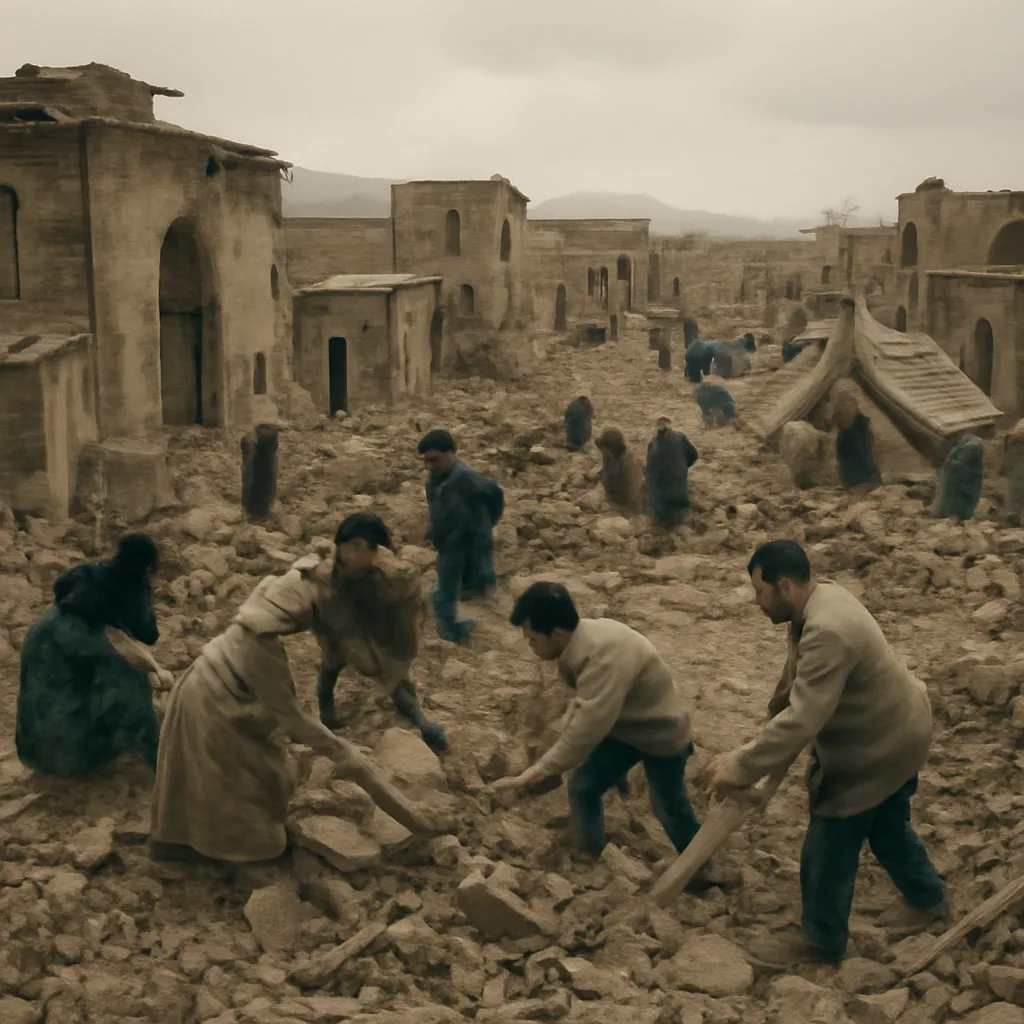
On November 28, 1977, an earthquake struck Iran and generated significant destruction in affected areas. Contemporary international and regional news accounts from the late 1970s reported damaged buildings, disrupted services and local emergency responses, though precise casualty counts and magnitude estimates differ between sources. Documentation from that era is uneven, and some details remain uncertain or contested by later compilations. Seismic context Iran lies across the active collision zone between the Arabian and Eurasian plates, a tectonic setting that has produced frequent moderate to large earthquakes throughout history. In the 1970s Iran experienced multiple damaging quakes; the November 1977 event fits into this broader pattern of seismicity. Local construction practices and the prevalence of older masonry structures in many towns contributed to vulnerability to ground shaking. Impacts and damage Reports at the time described widespread structural damage in towns near the epicentral area, including collapsed or heavily damaged houses and public buildings, interruptions to utilities and transport, and local evacuations. Rural communities with traditional construction often bore the brunt of the destruction. Available contemporaneous press accounts and later catalogues differ on the number of injured and dead, and some figures published subsequently are estimates rather than confirmed counts. Response and aftermath Local emergency services, neighbors and relief groups undertook rescue, sheltering and recovery efforts in the days following the quake. Given the communication limitations and political context of late-1970s Iran, full assessments of damage and human toll were not consistently reported to international agencies, contributing to variation in later historical records. Historical record and uncertainties Primary source material for this event includes period newspaper reports and seismic bulletins; however, comprehensive seismological analyses and consolidated casualty databases from that period are limited. As a result, different references may list varying magnitudes, epicentral locations or casualty estimates. Where modern seismic catalogues provide revised parameters, they may differ from initial contemporary reports. Researchers and readers should therefore treat some numerical details from the period as provisional unless corroborated by multiple independent sources. Significance The November 1977 earthquake is one of several mid- and late-20th-century events that illustrate Iran’s recurring seismic risk and the consequences for communities built with vulnerable construction. The episode underscores long-standing challenges in post-disaster assessment and record-keeping, especially in eras and regions where systematic national reporting to international agencies was limited. Sources and further reading Contemporary newspaper coverage from late November 1977 and regional seismic bulletins of the era form the main documentary basis for accounts of this event. Later seismic catalogues and historical earthquake compilations may provide revised parameters; users interested in precise magnitudes, locations or casualty figures should consult multiple seismological databases and archival news reports. This summary avoids presenting disputed numeric details as definitive.