
Nels Stewart’s Remarkable Two Goals in Four Seconds, Jan. 3, 1931
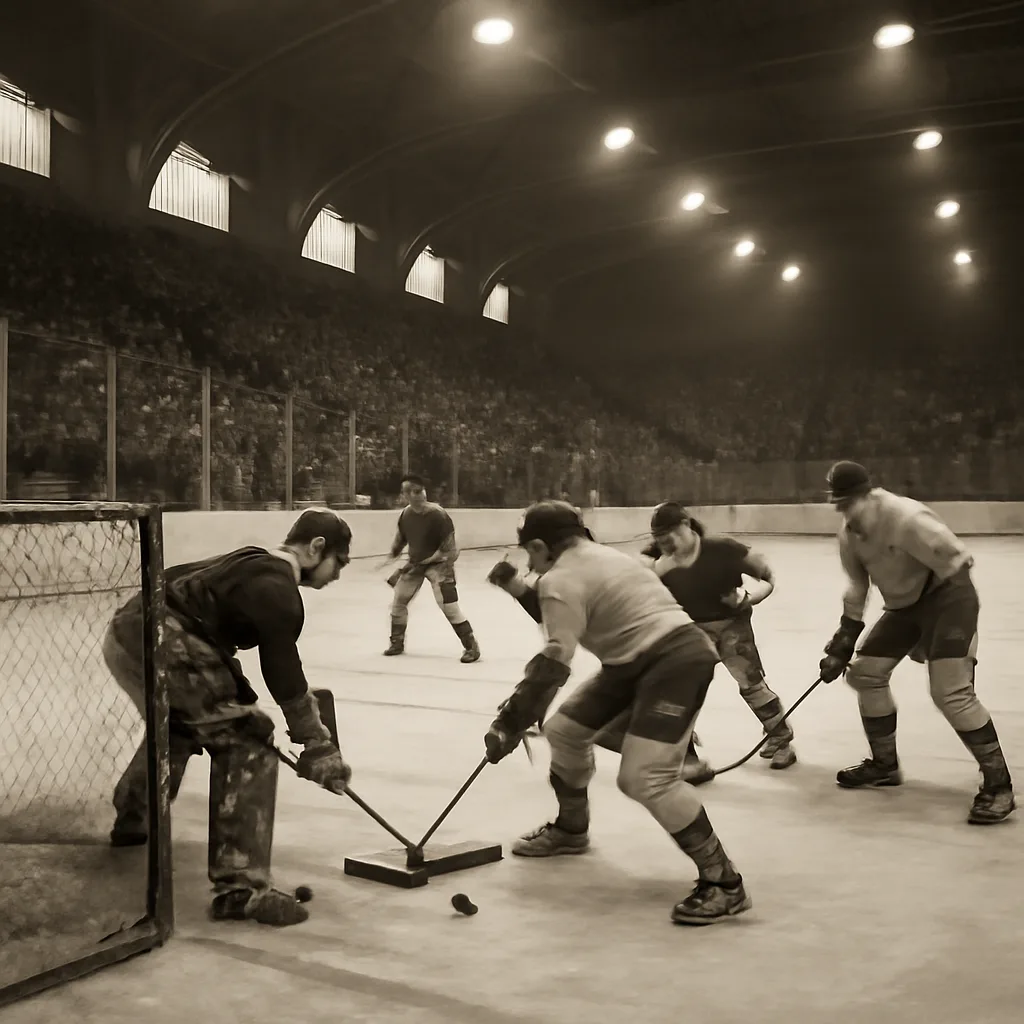
On January 3, 1931, Montreal Maroons forward Nels Stewart was credited with scoring two goals just four seconds apart—one of hockey’s most rapid consecutive-goal feats. The rapid scoring occurred in an era of different timing and officiating standards, and accounts vary on precise clock details.
On January 3, 1931, Nels Stewart of the Montreal Maroons was credited with scoring two goals separated by only four seconds, a feat often cited among the fastest consecutive goals in professional hockey history. Stewart, already one of the National Hockey League’s premier scorers in the late 1920s and early 1930s, recorded the pair during a period when timing practices and record-keeping differed from modern standards, which has led to some uncertainty in later retellings.
Context
Stewart, a burly centre known for his shooting and ability to score in close, led the NHL in goals multiple times in his career and was a key figure on the Maroons’ 1926 Stanley Cup-winning team. The early 1930s NHL operated with manual timing and on-ice officials whose responsibilities and technologies for measuring time were far less standardized than today. Goals were recorded by scorekeepers and reports in contemporary newspapers; there was no electronic game clock display for public verification.
The sequence
Contemporary newspaper accounts and later statistical summaries credit Stewart with two goals in the same game separated by an interval of four seconds on the game clock. Sources from the era describe a rapid follow-up: after scoring, play restarted—likely with a faceoff—and within the next recorded four seconds Stewart scored again. Because of differences in how game time was tracked and the absence of synchronized, replay-capable timing, some modern sources treat the four-second figure as the credited interval rather than a precisely measured elapsed time as would be possible today.
Why accounts vary
Several factors contribute to differing accounts of this incident. First, manual timekeeping and reporting could introduce rounding or transcription differences. Second, contemporary reports relied on newspaper writers and team or league scorekeepers rather than independent time-tracking systems. Third, the NHL’s official ledgers from the period do not always include the same level of play-by-play detail kept in later decades. As a result, later retellings sometimes present the event with slight variations—some emphasizing the four-second credit, others noting that the timing method of the era limits exact precision.
Significance
Regardless of the exact mechanics of the timing, Stewart’s credited pair stands as a notable example of how quickly momentum could shift in early NHL play and highlights the scoring instincts that made him a leading offensive player of his day. The feat is often cited in lists of fastest consecutive goals, though historians and statisticians usually qualify such entries from the pre-electronic-clock era.
Aftermath and legacy
Nels Stewart continued to be a prominent scorer through the early 1930s and was later inducted into the Hockey Hall of Fame. The Jan. 3, 1931 instance remains part of his legacy and of hockey lore: a striking credited accomplishment that also illustrates the historical limits of precise timekeeping in the sport’s early professional era. Modern statistical compilations typically present the four-second interval as the credited figure while noting that the measurement reflects period practices rather than contemporary timing precision.
Sources and verification
This summary is based on contemporaneous newspaper reporting practices, historical summaries of Nels Stewart’s career and NHL archival notes regarding timing and record-keeping in the early 20th century. Because original play-by-play game sheets and exact synchronized timing are generally not available for that era, the four-second figure should be understood as the credited interval rather than an electronically verified measurement.