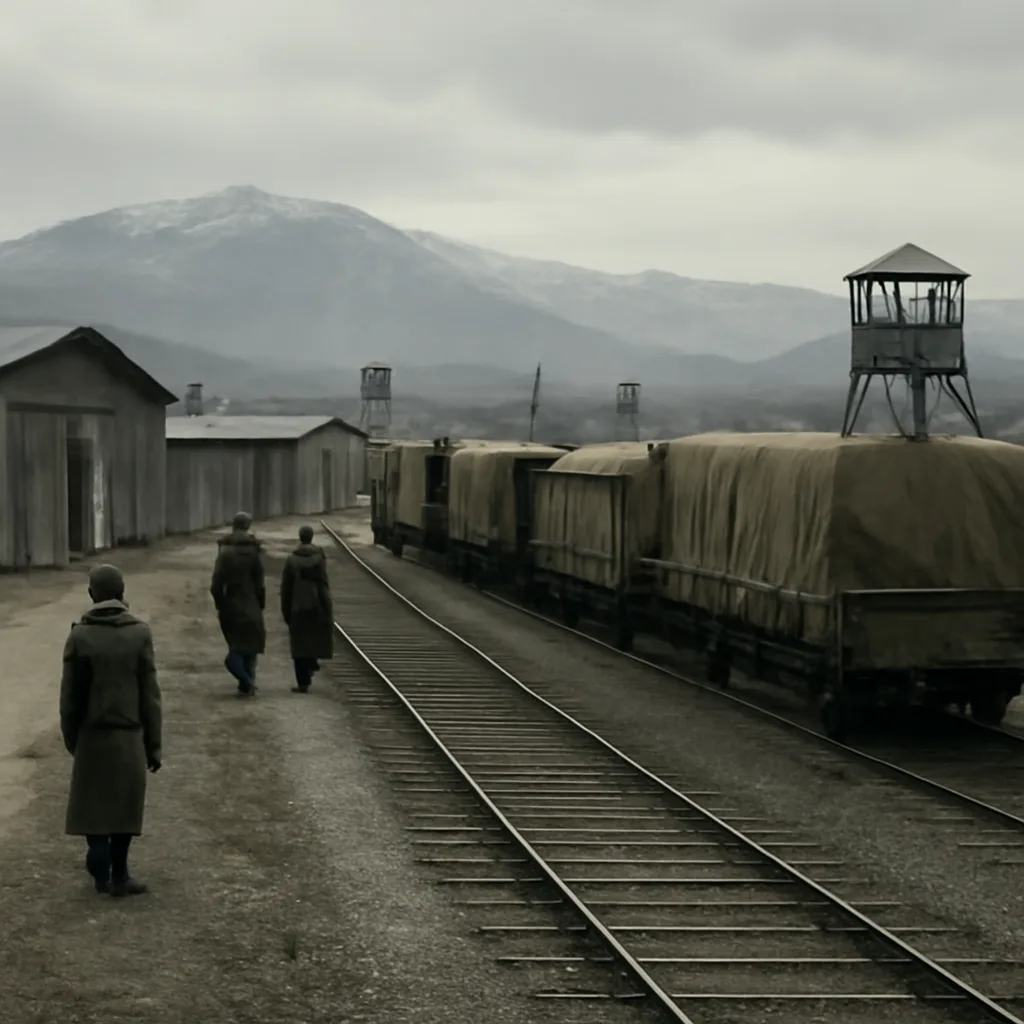
In December 1965 a series of incidents involving Soviet nuclear weapons and their storage logistics in the Caucasus region raised the prospect of a much larger catastrophe. Precise details remain partially obscure because Soviet authorities tightly controlled information at the time, but available declassified records, later scholarly reconstructions, and contemporaneous reporting point to a chain of accidents and safety lapses that nearly led to detonation or wider dispersion of radioactive material. Context The Soviet Union in the 1960s maintained dispersed storage and transport arrangements for nuclear warheads across its territory, often colocated with conventional munitions and military rail networks. Safety procedures existed but were variable in implementation; human error, maintenance shortfalls, and poor record-keeping contributed to several documented accidents elsewhere in the Soviet arsenal during the Cold War. The incidents of December 1965 Open-source reconstructions identify December 12, 1965, as a focal date for at least one serious event involving nuclear munitions in the Sukhumi (then Soviet Georgia, now in the disputed region of Abkhazia) storage and handling complex. Reports and later research indicate that during routine movement or maintenance of warheads, mechanical failures and handling errors caused impacts, fires, or other damaging conditions that endangered the safety mechanisms of nuclear devices stored there. Sources indicate that some warheads suffered damage to conventional explosive components or to containment systems that, under unfavorable conditions, could have produced a violent dispersal of radioactive materials. Several accounts suggest that emergency responses were improvised, and that the situation required involvement from higher-level Soviet military-technical specialists to secure weapons and prevent escalation. The secrecy surrounding the affair meant there was no public evacuation, international notification, or transparent investigation recorded at the time. Risk and near-miss aspects The primary hazard in such accidents is twofold: (1) inadvertent detonation of the conventional high explosives used in implosion-type nuclear devices, which can scatter radioactive material (a so-called "dirty bomb"–like dispersal) even without achieving a nuclear yield; and (2) conditions that could compromise safety interlocks and permissive systems, increasing the theoretical risk of an unintended nuclear detonation. Available documentation does not establish that a nuclear yield occurred in December 1965; later analyses treat the event as a near miss in which weapon components were damaged and required emergency technical mitigation. Aftermath and secrecy Because Soviet authorities classified incidents involving nuclear weapons, official acknowledgement was minimal or absent. Some details emerged later through memoirs of military personnel, journalistic inquiries after the Soviet collapse, and partial archival releases, but many operational specifics remain disputed or incomplete. The incident contributed to later efforts—both within the USSR and internationally—to strengthen physical security, personnel reliability, and accident-response protocols for nuclear arsenals. Historical significance The December 1965 accident is part of a broader pattern of Cold War nuclear-weapon safety incidents that underline how human error, mechanical failure, and secrecy could combine to create substantial risk. While this particular occurrence did not result in a publicly confirmed nuclear detonation or a documented large-scale radiological release, it exemplifies the precariousness of nuclear stewardship in an era of rapid deployment and intense military secrecy. The episode bolsters historical arguments for transparency, robust safety engineering, and international mechanisms to reduce the dangers posed by nuclear weapons and their mishandling. Uncertainties and sources Key details remain uncertain: exact location specifics within the Sukhumi complex, the precise number and type of warheads affected, and the full sequence of technical failures. The account above synthesizes declassified fragments, secondary scholarship on Soviet nuclear accidents, and post-Soviet journalistic reconstructions. Where records conflict or are lacking, this summary notes the limits of verification rather than inventing particulars.