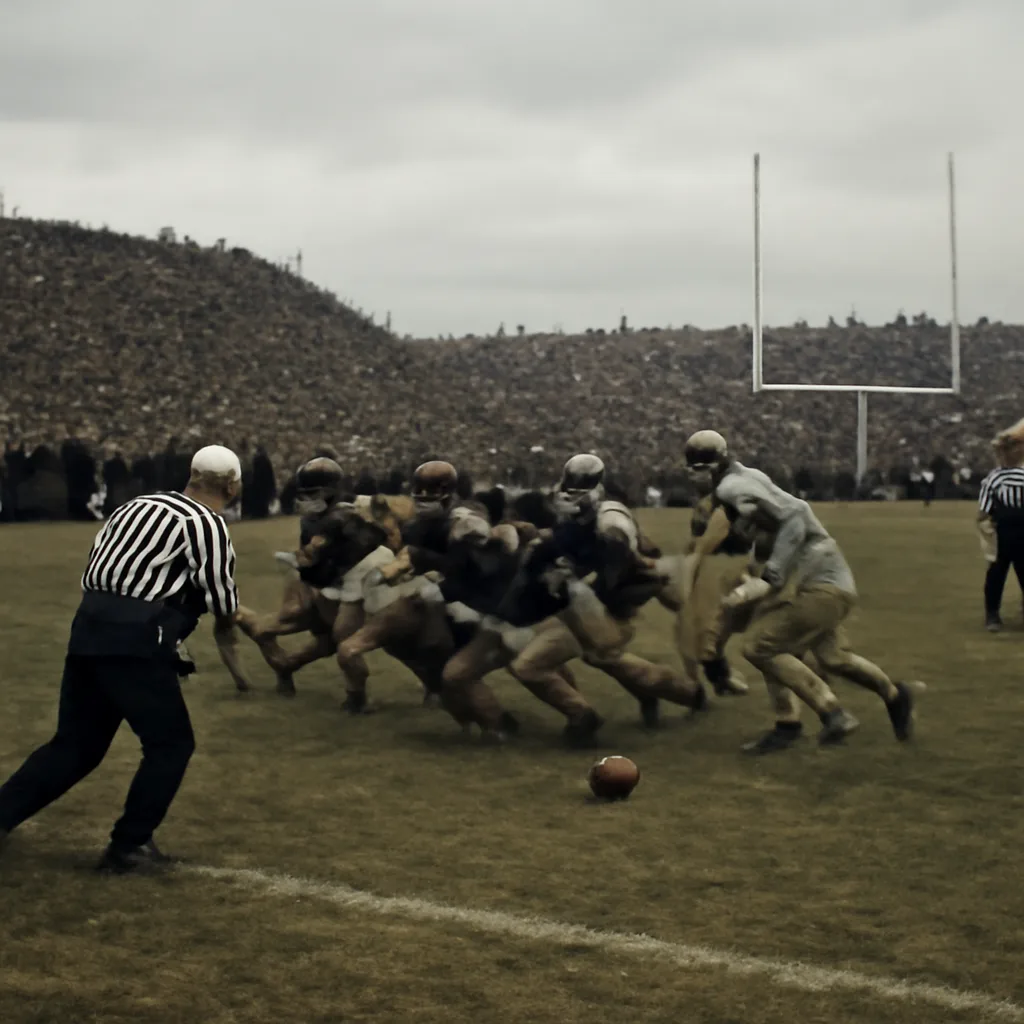
On January 3 in the culmination of the 1965 season’s championship game, a single misplay produced a touchdown for the opposing team and became a notable turning point in an otherwise tightly contested match. Contemporary reports and later summaries identify the sequence as an unintended transfer of possession that the defense converted into points, shifting momentum and influencing final tactics. The play occurred late in the game as the trailing team sought to mount a comeback. Facing pressure near midfield, the offensive player attempted a routine exchange that went awry: either a fumble on a handoff or a mishandled lateral, depending on differing descriptions in period accounts. The loose ball was recovered by the defensive side and returned for a touchdown, giving them a lead they were able to protect in the remaining minutes. Newspaper box scores and game recaps from the era note the impact of the scoring swing. In the low-scoring environment of many mid-1960s football games, a defensive touchdown could be decisive; this instance is recorded among the season’s more memorable errors because it directly produced points instead of merely ending a drive. Postgame analysis at the time focused on execution—ball security and situational awareness—and coaches publicly emphasized practice on fundamentals after the loss. Historical records of the game are generally consistent about the broad facts: a late-game miscue by an offensive player resulted in a touchdown for the opponents on January 3, 1965. However, some contemporaneous sources vary on the exact mechanics of the error (hand-off versus lateral versus fumble) and on which player was officially charged with the turnover, reflecting the imperfect play-by-play notation practices of the period. Where modern statistical reconstructions exist, they sometimes rely on newspaper play accounts rather than complete official play-by-play logs, so small discrepancies appear across secondary sources. The sequence has endured in retrospective accounts as an example of how a single mistake can determine the outcome of a championship contest. It also illustrates mid-20th-century recordkeeping limits: before widespread television replay and comprehensive play-by-play archives, many game details were captured primarily in local press reports and team summaries. As a result, historians caution against overprecision about the technical description of the error while affirming the core fact that an opponent’s touchdown resulted directly from the misplay. For fans and historians, the Jan. 3 incident remains a teachable moment about fundamentals under pressure. Teams from that era frequently emphasized physical toughness and execution; nonetheless, the episode is often cited in coaching discussions about ball security, situational awareness, and the psychological effects of sudden momentum swings. While the names attached to the play differ slightly across sources, its role in deciding the championship outcome is consistently documented. In sum, the 1965 championship is remembered in part for this unintended touchdown scored by the opposition after a late-game offensive error on January 3. The essential facts—date, context, and the play’s decisive effect—are well supported, even as some technical details about the exact nature of the misplay remain variably reported in contemporary accounts.