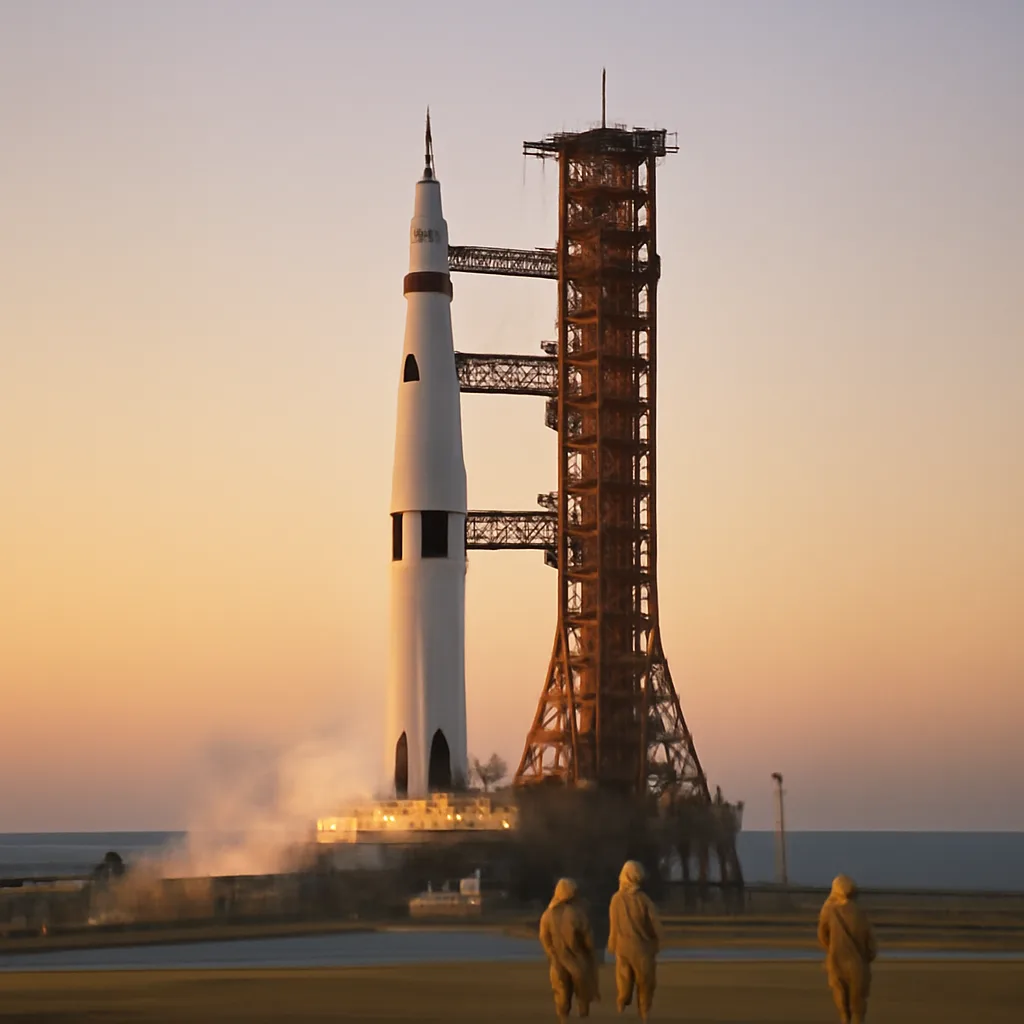
On August 20, NASA launched Voyager 2 toward the outer planets, beginning one of the most ambitious planetary exploration missions of the 20th century. Voyager 2 was built as part of a twin-spacecraft program — Voyager 1 and Voyager 2 — designed to take advantage of a rare planetary alignment in the late 1970s that would permit a Grand Tour of the outer solar system using gravity assists to reduce travel time and propellant needs. Voyager 2's mission profile called for flybys of Jupiter and Saturn, with a further extended mission to continue outward to Uranus and Neptune — a capability unique to Voyager 2 because of its specific trajectory. The spacecraft carried a suite of scientific instruments to study magnetic fields, charged particles, planetary atmospheres, moons, and rings. Its investigations at each planet produced detailed observations that transformed scientific understanding of the giant planets and their systems. At the time of launch, the project was the culmination of years of engineering and planning. The Voyager spacecraft were equipped with radioisotope thermoelectric generators (RTGs) for long-duration power, multi-instrument payloads for remote sensing and in situ measurements, and robust communications systems for the vast distances they would traverse. Engineers designed the mission for longevity and resilience, anticipating decades of data return far beyond the primary planetary encounters. Voyager 2's encounters yielded multiple firsts: the mission delivered the first close-up observations of Uranus and Neptune, revealing previously unknown moons, complex ring structures, and unexpected atmospheric phenomena. Across all encounters, the spacecraft returned high-resolution imagery and in situ data that reshaped models of planetary magnetospheres, atmospheric dynamics, and satellite geology. After completing its planetary objectives, Voyager 2 continued outward on an extended heliospheric mission, measuring the properties of the solar wind, cosmic rays, and the heliosphere's boundary regions. Decades after launch, Voyager 2 crossed the heliopause and entered interstellar space, joining its twin in providing direct measurements from beyond the bubble of charged particles dominated by the Sun. The Voyager program also carried a cultural artifact: each spacecraft carried a gold-plated phonograph record containing sounds and images selected to portray the diversity of life and culture on Earth. That inclusion reflected the program's recognition of both scientific and humanistic aspects of space exploration. Voyager 2's launch and subsequent successes represent a landmark in planetary exploration, demonstrating the value of long-duration missions, the utility of gravity-assist trajectories, and the importance of designing spacecraft for operations far beyond initial mission timelines. The mission's data continue to inform planetary science and heliophysics, and the spacecraft remain symbols of sustained scientific curiosity and engineering achievement.