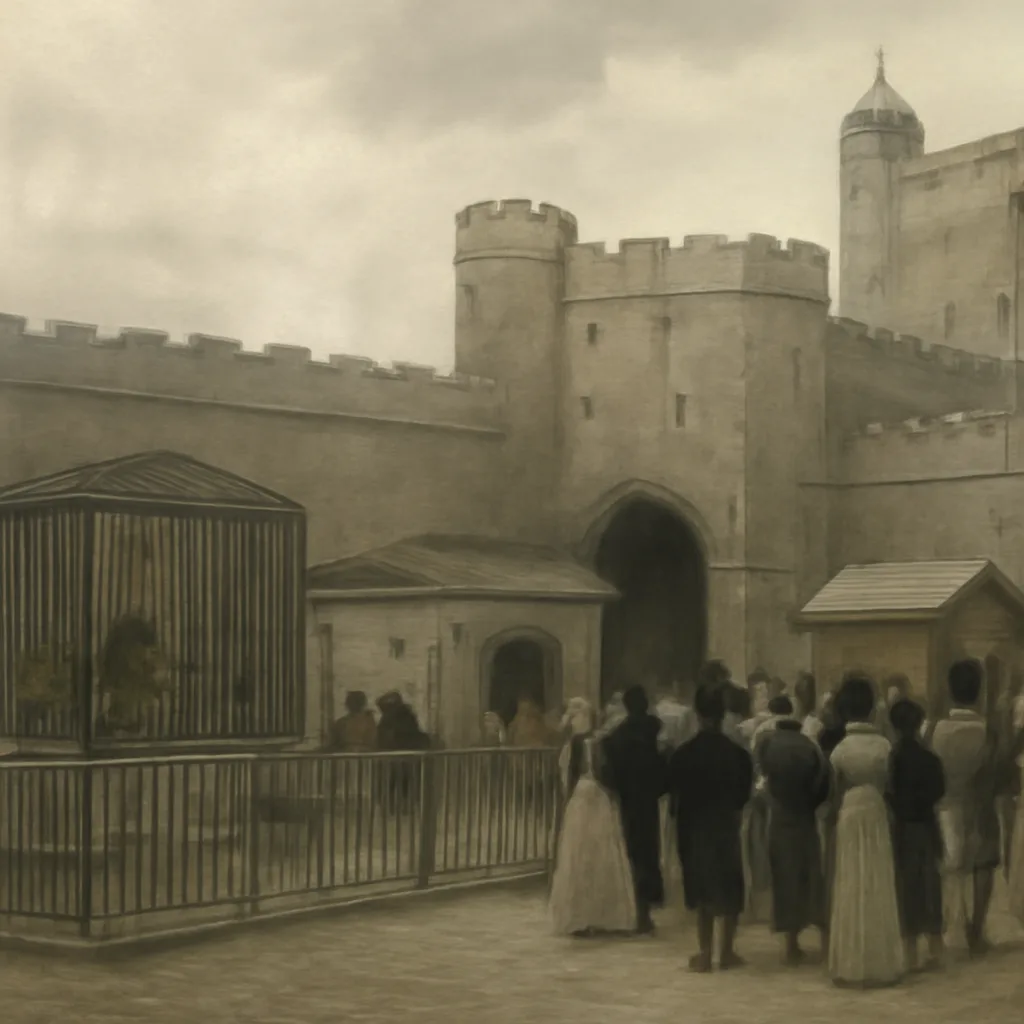
In the early 19th century the Tower of London housed a collection of exotic animals—lions, leopards, bears, and other species—kept by the monarchy for centuries as a royal menagerie. Long associated with royal pageantry and diplomatic gift exchange, the menagerie began to draw public interest beyond courtly circles. On April 27, 1828, the Tower opened its gates to regular daily visitors for a charge, making it effectively London’s first public zoo in the sense of a standing collection accessible to paying members of the public. The Tower menagerie’s origins reach back to medieval and early modern monarchs who received animals from ambassadors and merchants; animals were symbols of prestige and power. Over time the collection became an informal tourist attraction. By the late 18th and early 19th centuries increased urbanization, growing interest in natural history, and improvements in transport and print culture encouraged wider public visits. Authorities at the Tower formalized visiting arrangements and instituted regular hours and admission, reflecting a shift from exclusive royal spectacle toward a public institution. The animals at the Tower were kept in a mix of medieval cages and purpose-built enclosures. Contemporary observers noted cramped conditions and rudimentary husbandry compared with later zoological standards. The Tower collection predated the establishment of planned scientific menageries and zoological gardens designed expressly for collection, study, and recreation—most notably the London Zoo at Regent’s Park, which opened to fellows of the Zoological Society of London in 1828 as well (and to the public in 1847). Whereas the Regent’s Park institution emerged from a scientific and conservationist impulse, the Tower’s opening to public paying visitors represented an earlier, more ad hoc stage in the evolution of public animal collections. Public access to the Tower menagerie contributed to debates about the proper treatment and display of animals. Naturalists, writers, and members of the public increasingly questioned cramped enclosures and advocated for better conditions and for establishments devoted to education and scientific study. These discussions helped shape later practices: purpose-built cages, attention to diet and health, and the development of exhibits intended to inform as well as entertain. The Tower menagerie declined in the mid-19th century as newer institutions assumed the functions of public display and scientific collection. In 1831, for example, many of the Tower’s animals were transferred to the recently founded London Zoo and other menageries. The Tower’s role as a public zoo thus proved transitional: it introduced a broader public to exotic animals on a regular basis but also underscored the limitations of medieval and royal menageries in meeting emerging standards for animal care and scientific study. Today historians view the Tower menagerie as an important early chapter in the history of public zoological institutions. It illustrates how royal collections, public curiosity, and the rise of natural history converged in urban Britain, setting the stage for institutions that combined public access with research and, later, conservation aims. Where precise administrative dates and exact lists of animals vary among contemporary accounts, historians rely on archival records—Tower inventories, visitor accounts, and government correspondence—to reconstruct the menagerie’s late-stage public opening and its subsequent dispersal to newer establishments.