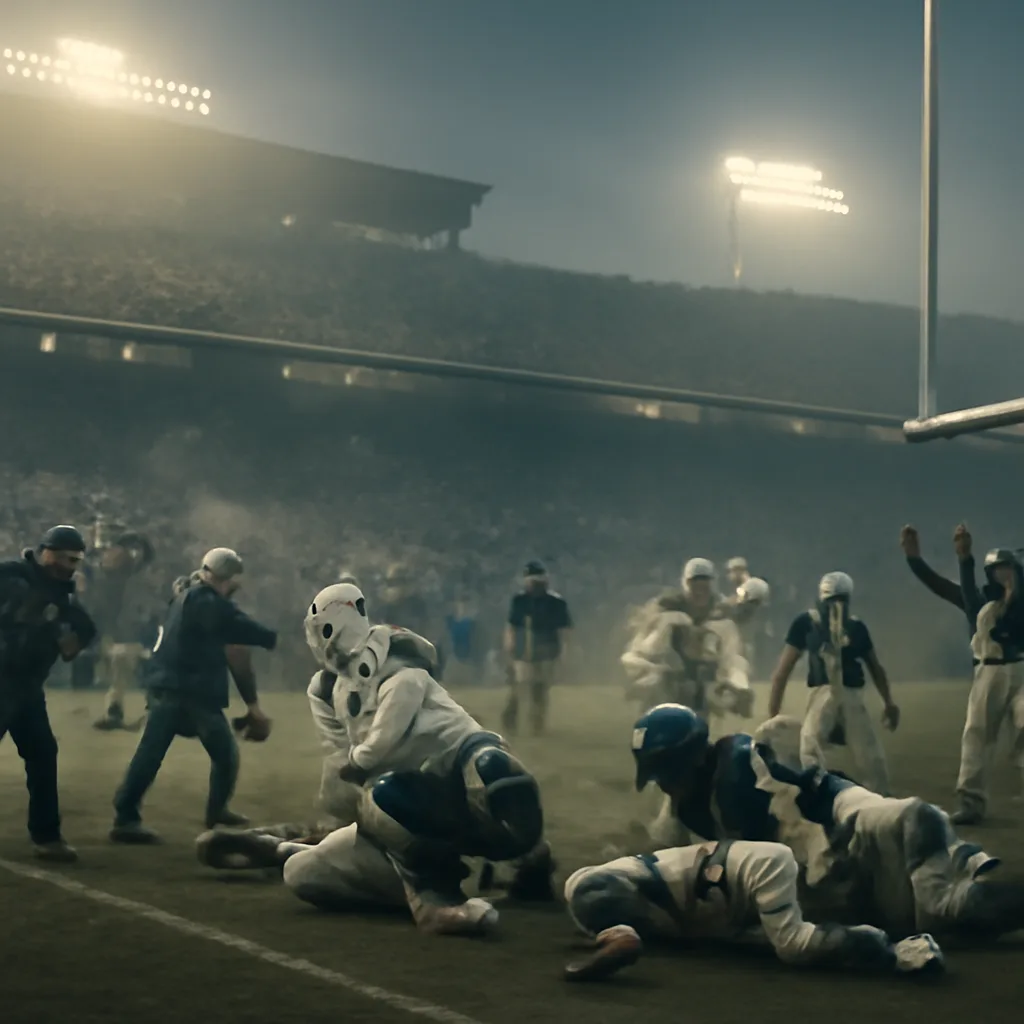
Leon Lett's premature celebration costs Cowboys a touchdown
On January 31, 1993, Dallas Cowboys defensive lineman Leon Lett celebrated a blocked field-goal return too early in a playoff game against the Buffalo Bills, touching the ball before crossing the goal line and losing the touchdown. The play turned a potential game-clinching score into possession for the Bills and helped force overtime.
On January 31, 1993, during an AFC divisional playoff game at Texas Stadium, Dallas Cowboys defensive tackle Leon Lett was involved in one of the NFL's most infamous premature celebrations. The Cowboys led the Buffalo Bills late in the fourth quarter when Bill Bates blocked a Bills field-goal attempt. The ball skittered toward the Cowboys' sideline; Nose tackle Leon Lett recovered it and began to celebrate before crossing the goal line. As he reached out and extended the ball in apparent triumph, the live ball touched him while it was on the ground and was ruled a fumble. Buffalo's Don Beebe hustled down the sideline, picked up the live ball, and knocked it free near the goal line. Officials ruled that the Bills recovered and advanced the ball, and after replay review the play stood. Instead of a defensive touchdown and an apparent Cowboys sealing of the game, Buffalo retained possession and was able to continue the drive. The Bills later tied the game and then won in overtime, ending Dallas's season.
The play is commonly summarized as a case of premature celebration and is often cited in discussions of hustle and situational awareness. It had immediate consequences for the outcome: a blocked kick that might have produced an immediate turnover-return score was transformed into a continuation of the Bills' opportunity, which they converted into an extended drive and, ultimately, a victory in overtime. The sequence was widely replayed in media coverage and has since become a recurring highlight in NFL retrospectives about crucial mistakes and postseason drama.
Accounts of the game note the broader context: the Buffalo Bills were a dominant team of the early 1990s, appearing in multiple Super Bowls, and the Cowboys were emerging as a championship contender under coach Jimmy Johnson. While the blocked kick and Lett's reaction are the most remembered moments from this contest, the game's outcome reflected both teams' resilience and the razor-thin margins of postseason football. Leon Lett later acknowledged the mistake in interviews and the play entered popular memory as a cautionary example for players to finish plays fully before celebrating.
This occurrence is distinct from other famous late-game miscues because it was immediately visible and decisive: a player relinquished an assured score or turnover by breaking the rules of play and relaxing while the ball remained live. The incident influenced coaching emphasis on finishing plays and situational discipline, and it endures in NFL lore as a vivid illustration of how a single moment of inattention can alter a game's result.