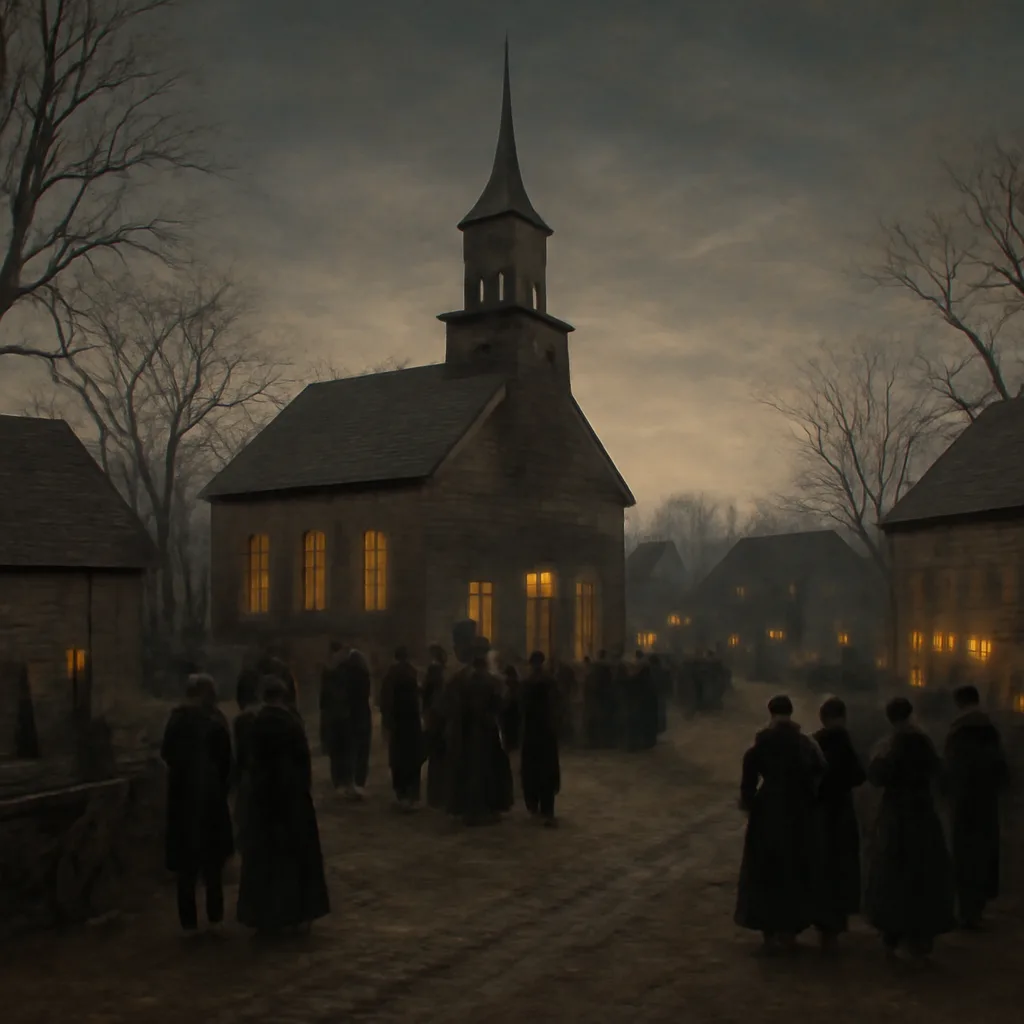
In late February and early March 1692, colonial Massachusetts entered a period of intense legal and communal upheaval as magistrates began formal interrogations of individuals accused of witchcraft in Salem Village and Salem Town. The earliest examinations were held by local magistrates, including Jonathan Corwin and John Hathorne, who questioned several young women whose unexplained fits and accusations had drawn widespread attention. These preliminary interrogations preceded the establishment of a special court system and set in motion arrests, congregational disputes, and a climate of suspicion. Background: The accusations arose within a context of local tensions. Salem Village (now Danvers) had long been divided over issues such as ministerial authority, property lines, and family rivalries. Social stressors — recent smallpox outbreaks, frontier conflicts with Native American groups, harsh winters, and economic strains — exacerbated fears. In this environment, episodes of illness and strange behavior among some young women were quickly interpreted through the prevailing religious worldview, which took the existence of diabolic witchcraft seriously. Initial examinations: Beginning in late February 1692, afflicted individuals exhibited convulsions, contortions, and other behaviors interpreted as signs of bewitchment. Neighbors identified several community members as suspects. On March 1 and the days immediately following, justices of the peace in Salem began taking formal depositions and holding examinations. The sessions involved question-and-answer proceedings, observations of the behavior of the afflicted in the presence of the accused, and the collection of sworn testimonies from neighbors. These early interrogations were not trials in the modern sense but rather fact-finding sessions that could lead to warrants and arrests. Legal and evidentiary practices: Colonial magistrates relied on a combination of eyewitness testimony, the visible fits of the afflicted, and spectral evidence — testimony that the spirits or specters of the accused appeared to victims. Spectral evidence, controversial even then, would play a significant role in later proceedings. Physical examinations for “witch’s marks” and tests such as the search for pins or pricks were also used. Legal protocols of the time did not provide defendants the protections later common in Anglo-American law; accused individuals were typically not represented by counsel, and confessions or admissions, when obtained, carried great weight. Consequences and escalation: The March interrogations led to formal indictments and arrests. Over the subsequent months, the situation escalated: a special court, the Court of Oyer and Terminer, was convened in May 1692 to handle the growing caseload. Dozens of men and women were accused; several were executed that summer and fall. The interrogations of March thus mark the procedural beginning of a broader series of investigations and prosecutions that would have profound legal and social consequences in Massachusetts Bay Colony. Historiographical notes: Contemporary records of the examinations include magistrates’ notes, depositions, and later accounts compiled by participants and observers. Some aspects of exactly who was questioned on specific dates or the precise content of all depositions remain matters for scholarly reconstruction; historians rely on surviving court records, town documents, and correspondence to piece together the timeline. Modern analysis situates the interrogations within religious, social, and political contexts rather than interpreting them as isolated instances of individual malice. Legacy: The interrogations that began in March 1692 initiated a series of events that led to the imprisonment and execution of several accused people and left a lasting mark on American legal and cultural memory. In subsequent decades and centuries, the Salem episodes prompted debate over evidentiary standards, the dangers of moral panic, and the intersection of law, religion, and community conflict.